
Somewhere in Jodhpur right now, a workshop is hand-finishing a batch of wooden pull-along animals. In Surat, a factory floor is packing soft toys by the thousand. In a small unit outside Chennai, a team is assembling STEM kits headed for overseas buyers.
A chunk of that is already going to Australia. And a much larger chunk could be.
Australia isn’t a flashy market. It doesn’t get the press that the US or Europe does. But for Indian toy and baby product manufacturers, it might quietly be one of the best opportunities sitting right in front of them, underdeveloped, high-spending, and genuinely hungry for what India makes well.
The problem isn’t demand. The problem is that most Indian exporters either don’t know where to start, get stuck in the compliance maze, or burn money on freight mistakes they didn’t see coming. This guide is for them.
Why Australia? Because the Numbers Actually Make Sense
Australia has 26 million people and one of the highest household spending rates on children’s products in the Asia-Pacific. Parents here aren’t bargain hunting they’re spending on quality, safety, and things that last. Wooden toys, educational kits, organic baby products these aren’t niche categories in Australia, they’re mainstream shelf staples.
A few things driving demand right now:
Educational toys have exploded. Montessori-influenced play, sensory development products, early literacy kits Australian parents research this stuff obsessively. The educational toys export to Australia opportunity is real and growing year on year.
STEM toys science, technology, engineering, and mathematics are no longer just for gifted kids. Australian schools push STEM from early ages, and parents reinforce it at home. Indian manufacturers who’ve cracked STEM toy quality are walking into a waiting market.
Wooden toys carry a premium in Australia that Indian makers often underestimate. The wooden toys export from India pipeline to Australia has been growing steadily, especially Channapatna-style and Rajasthani craft pieces. Environmental consciousness among Australian buyers is real, and they will pay more for wood over plastic.
Baby care products cotton accessories, organic skincare, feeding tools round out the picture. Australia’s new parent demographic is well-informed and willing to pay for the right product.
India’s edge here isn’t just price. It’s the combination of price, craft depth, manufacturing scale, and an increasingly strong compliance ecosystem. That’s a combination most competitor countries can’t fully match.
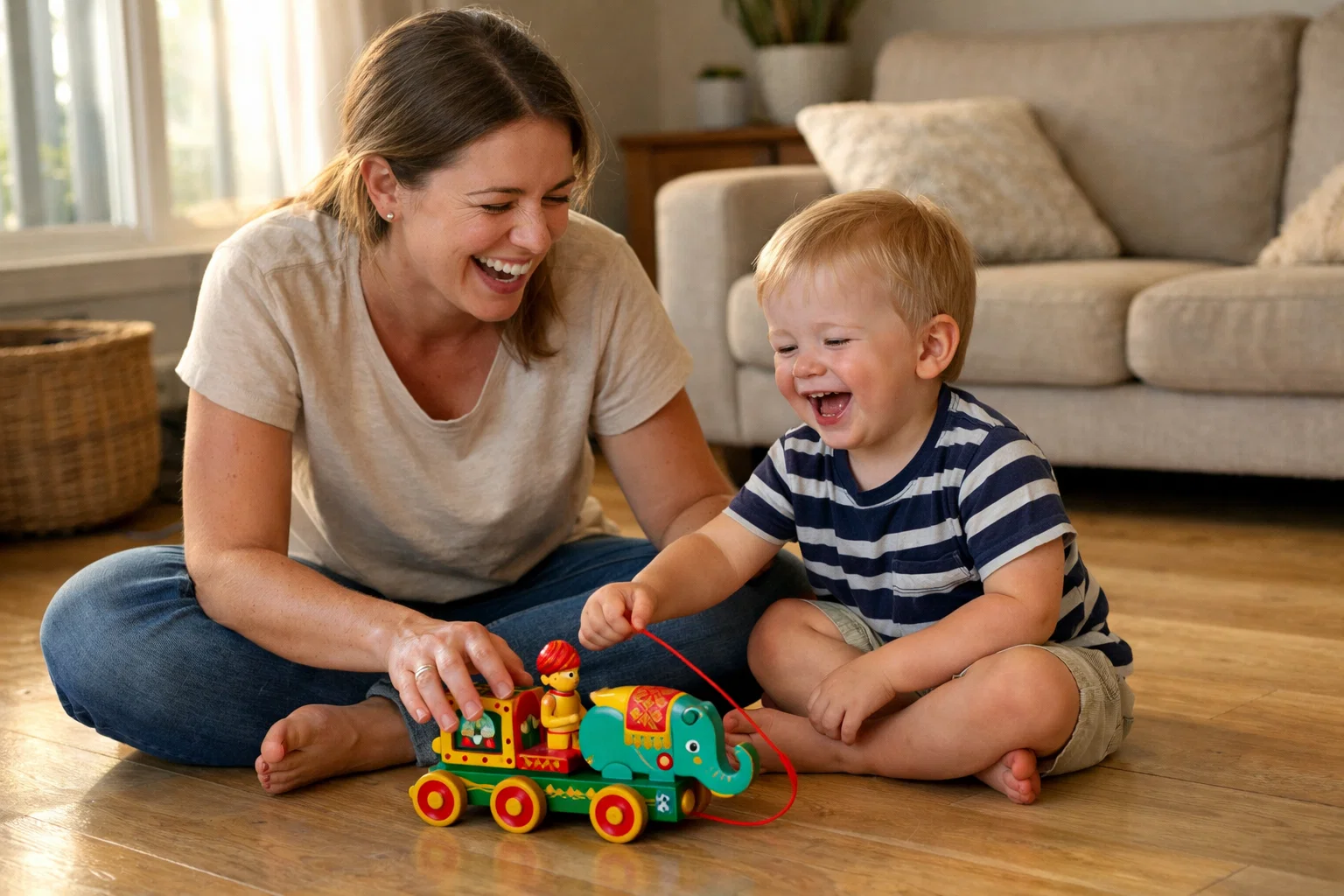
What Can You Actually Export
Not every product travels equally well. Here’s where Indian manufacturers have genuine, proven strength:
Plastic toys – are India’s volume play. Bath toys, garden sets, ride-ons, the plastic toys export from India machine runs efficiently, and Australia’s price-conscious mass-market retailers are buyers. Margins are thinner but volumes are high.
Soft toys – stuffed animals, character plush, sensory toys, come primarily from West Bengal and Delhi NCR clusters. The soft toys manufacturer base here is large and experienced. Australian buyers in particular are drawn to non-toxic, hypoallergenic variants, so certifications matter.
Wooden toys – are where Indian craftsmanship genuinely shines internationally. Wooden toys export from India commands better margins and attracts premium buyers. The key is finishing quality and the ability to meet packaging and labeling standards without the product losing its handmade character.
Educational and STEM toys – require more investment in product development and testing, but the payoff is higher value per shipment and stickier buyer relationships. Being a credible STEM toys exporter science, technology, engineering, and mathematics means investing in the compliance piece properly.
Private label baby products deserve a separate mention. Australian brands and retailers regularly source private label ranges from Indian manufacturers organic cotton baby clothing, baby skincare, feeding accessories. If you can offer private label baby products from India with consistent quality and compliant labelling, you’re not just a supplier you become a long-term manufacturing partner.
Compliance: The Part Nobody Enjoys But Everyone Needs
Compliance is the single biggest reason good Indian manufacturers lose Australian business they should have won. Not because their products are unsafe, usually they aren’t. But because the paperwork, certifications, and testing weren’t in order when the buyer asked.
BIS Certification
Under India’s Toys Quality Control Order, 2020, BIS certification is mandatory for toys manufactured and sold domestically. The relevant standards are the IS 9873 series, aligned with ISO 8124 internationally.
For export, BIS doesn’t automatically satisfy Australian requirements, but it does signal that you’re a serious manufacturer running a compliant operation. BIS-certified toy exports are a credibility marker that Australian importers and sourcing managers notice. Get it done regardless.
What Australia Actually Requires
Australia’s mandatory standard for toys is AS/NZS 8124, administered by the ACCC. The key requirements:
- Toys for children under 36 months must meet strict physical, mechanical, flammability, and chemical safety requirements
- Age labelling is mandatory, “Not suitable for children under 3 years” where applicable
- Choking hazard warnings for small parts
- Strict limits on phthalates and heavy metals especially for anything a young child might put in their mouth
- All packaging must show supplier identification and country of origin
Third-party test reports from accredited labs are almost always required before an Australian buyer will place an order. Budget for this. It’s not optional, it’s entry-level.
The Documents You Need – No More, No Less
Getting toy export documentation from India to Australia right is what separates a smooth shipment from a customs headache.
Standard Export Documents
- Commercial invoice: buyer, seller, product description, HS code, unit price, total, Incoterms
- Packing list: carton-by-carton breakdown of contents, weights, dimensions
- Certificate of Origin: from FIEO or your Chamber of Commerce, confirms Indian origin
- Shipping bill: filed on ICEGATE before goods can leave India
- Bill of lading / Airway bill: your carrier’s document, doubles as title
Toys-Specific Documents
- BIS certificate
- AS/NZS 8124 third-party test reports
- Safety data sheets for chemical components
- Declaration of conformity to Australian mandatory standards
- Age grade assessment
Have all of this ready before goods reach the port. Scrambling for documents after the fact costs money, damages relationships, and sometimes costs you the shipment entirely.
Duties and Taxes
From India’s Side
India levies zero export duty on most toy and baby product categories. The export duty on toys to Australia from the Indian side is nil for standard product categories. The government actively wants toy exports to grow PLI scheme, RoDTEP incentives – so you’re pushing in a supported direction.
On the Australian Side
Import duties on toys in Australia are generally 0% under the Most Favoured Nation rate. Australia is not a protectionist market when it comes to children’s products.
The tax to factor in is GST – 10%, which applies to commercial imports above AUD 1,000 at the point of import. For B2C shipments under AUD 1,000, the overseas seller collects GST at checkout under Australia’s Low Value Threshold rules.
Wooden toys or products using natural untreated materials may attract minor DAFF biosecurity inspection levies small amounts, but worth knowing about.
DDP: Worth Understanding
DDP shipping to Australia – Delivered Duty Paid means you as the exporter take responsibility for all costs including duties, taxes, and customs clearance at the Australian end. More and more Australian importers and e-commerce platforms are requesting DDP terms because it removes all compliance burden from their side.
It requires a reliable Australian customs broker in your corner and means your invoice value is higher. But it gives you a competitive edge buyers love simplicity, and if you can offer landed pricing with no surprises, you become a much easier supplier to work with.
Freight: Air, Sea, and What It Actually Costs
The Choice
Air freight makes sense for samples, first test orders, high-value low-weight products, or urgent replenishments. Transit time is 3–7 business days from Mumbai, Chennai, or Delhi to Sydney, Melbourne, or Brisbane. The per-kg cost is significantly higher.
Sea freight is where the economics work for volume. Transit time is 18–28 days. Full Container Load (FCL) for large orders, Less than Container Load (LCL) for smaller consignments. For established toy exporters shipping bulk, sea is the primary mode — air is the exception.
What to Budget
Freight costs from India to Australia for toys rough benchmarks:
- Air freight: ₹400 – ₹700/kg
- Sea LCL: ₹8,000 – ₹18,000 per CBM
- Sea FCL (20-foot container): ₹65,000 – ₹1,20,000
These vary with season (Q4 pre-Christmas rates spike), routing, and carrier. Don’t lock in a pricing strategy based on off-peak rates without understanding seasonal fluctuation.
Freight Forwarder vs Shipping Platform
A freight forwarder from India to Australia handles complex shipments – DDP arrangements, FCL containers, customs broker coordination. For large or complicated consignments, having an experienced forwarder is worth every rupee.
A multi-carrier shipping platform like ShipGlobal works better for regular e-commerce volume – multiple smaller shipments, automated documentation, rate comparison across carriers, and centralised tracking. For most growing toy exporters, the answer is both: a platform for day-to-day shipments, a forwarder for the heavy-lift jobs.
How to Actually Export Toys to Australia: Step by Step
This is the sequence for exporting toys to Australia that works in practice:
OEM and Private Label: The Higher-Value Play
OEM Manufacturing
OEM toy manufacturers in India: Original Equipment Manufacturers produce to a buyer’s exact specification. The buyer brings the design, the material brief, and the target price. You build it under their brand.
India’s OEM capability in toys is genuinely competitive mould customisation, material flexibility, packaging capability, BIS infrastructure. Australian brands sourcing OEM from India are doing so because the quality-price equation works, and the compliance ecosystem has matured enough to reduce risk.
Private Label
Private label baby products from India is a growing and high-margin business. The buyer comes with a brand name, not a design brief. Your job is to produce a quality product organic cotton bodysuit, wooden rattle, baby skincare range that they sell under their own label.
The relationship here is longer-term than a pure OEM transaction. Australian buyers who find a private label partner they trust don’t switch easily. Quality consistency and packaging capability are what they’re evaluating most.
The Real Problems Exporters Run Into
Compliance failures at the border are expensive and embarrassing. The fix is doing the testing and certification work properly before the first shipment, not after the first rejection.
Freight costs eating into margins hit hardest on smaller shipments. Consolidate where you can, lean on sea freight for bulk, and use a platform that gives you aggregated rates rather than walk-up carrier pricing.
Customs delays almost always trace back to a documentation error, a wrong HS code, or a missing test report. Double-check everything before goods leave your facility.
No tracking visibility makes both you and your buyer nervous. A shipping platform with real-time centralised tracking fixes this one dashboard, all shipments, live status.
Final Thoughts
Australia is not complicated. It’s demanding on compliance, on quality, on labelling but it’s fair. Manufacturers who meet the standard get rewarded with repeat business from buyers who value reliability.
India has the product, the manufacturing depth, and increasingly the compliance infrastructure to be a serious long-term supplier to the Australian toy and baby market. What’s usually missing isn’t capability it’s the operational setup that lets you ship consistently, correctly, and cost-effectively.
Sort your certifications. Know your codes. Pick your freight setup carefully. And then get your first container on the water.
The Australian market is genuinely there for the taking. It just rewards the exporters who do the groundwork properly.
Frequently Asked Questions (FAQs) for Exporting Toys and Baby Products from India to Australia
Commercial invoice, packing list, certificate of origin, shipping bill (ICEGATE), and bill of lading. Plus BIS certificates, AS/NZS 8124 test reports, and age grade assessments for toys. Get everything ready before goods reach the port.
Not a direct Australian customs requirement – but every serious Australian importer will ask for it. It’s your proof of safety compliance and a non-negotiable trust signal.
Most toys fall under Chapter 95 – 9503 for general toys, 9501 for wheeled toys, 9502 for dolls, 9503.00 for soft toys. Baby products may fall under 3924 or 6111. Always verify with a customs broker before filing.
Air freight: ₹400–₹700/kg. Sea LCL: ₹8,000 – ₹18,000/CBM. FCL (20ft): ₹65,000 – ₹1,20,000. Using a multi-carrier shipping platform cuts costs by 20 – 40% versus booking directly.
Most toys attract 0% customs duty. A 10% GST applies to imports above AUD 1,000. For B2C shipments under AUD 1,000, GST is collected at checkout by the seller. Factor both into your DDP pricing.