
Direct exporting gives Indian businesses access to global markets and higher profit potential, but it also brings significant operational, compliance, logistics, and payment-related challenges. Many SMEs struggle because they underestimate export documentation, customs procedures, shipping costs, and international trade risks. Businesses that invest in proper planning, compliance management, reliable logistics partnerships, and strong export systems are far more likely to build sustainable and profitable international operations while reducing costly export disruptions.
For many Indian businesses, expanding into international markets looks like the next big growth opportunity – and for good reason. The idea of selling products straight to overseas customers, without getting bogged down by intermediaries, sounds like a very attractive prospect. Higher margins, building relationships with buyers one-on-one and having better control over your brand are just a few of the major reasons companies are keen on Direct Export models.
But global trade is definitely not as simple as it appears from the outside. While lots of businesses successfully break into new markets, a lot of Indian exporters struggle with operational, financial and compliance issues that can really undermine their profitability – or even force them to pack it in altogether.
Far too many small and medium-sized businesses waltz into exports assuming that international demand will guarantee success. The harsh reality is that global trade involves a whole heap of documentation, logistics, regulations, customs procedures, payment management and international coordination. And unless you’re properly prepared, even a great product can fall flat in international markets.
So getting a grip on the practical challenges of exports is absolutely crucial before you start investing heavily in international business expansion.
Understanding the Direct Export Meaning in India
Before you take the plunge, it’s essential to have a clear understanding of the direct export meaning in India first. Direct exporting is when you sell goods straight to foreign buyers without relying on export houses, agents or other trading middlemen. In this system, the exporter is responsible for handling all the international sales, logistics, shipping, buyer communication and compliance procedures on their own.
The growing popularity of digital trade platforms and government export promotion schemes has made the direct export meaning in India more relevant than ever. Many Indian manufacturers are now trying to directly connect with international distributors, wholesalers and retailers in a bid to boost profits and expand globally.
This model does offer a lot of benefits – greater control, potentially better earnings – but it also transfers all the operational responsibility to the exporter. Every single step – from export documentation to customs clearance to payment collection – has to be done spot on.
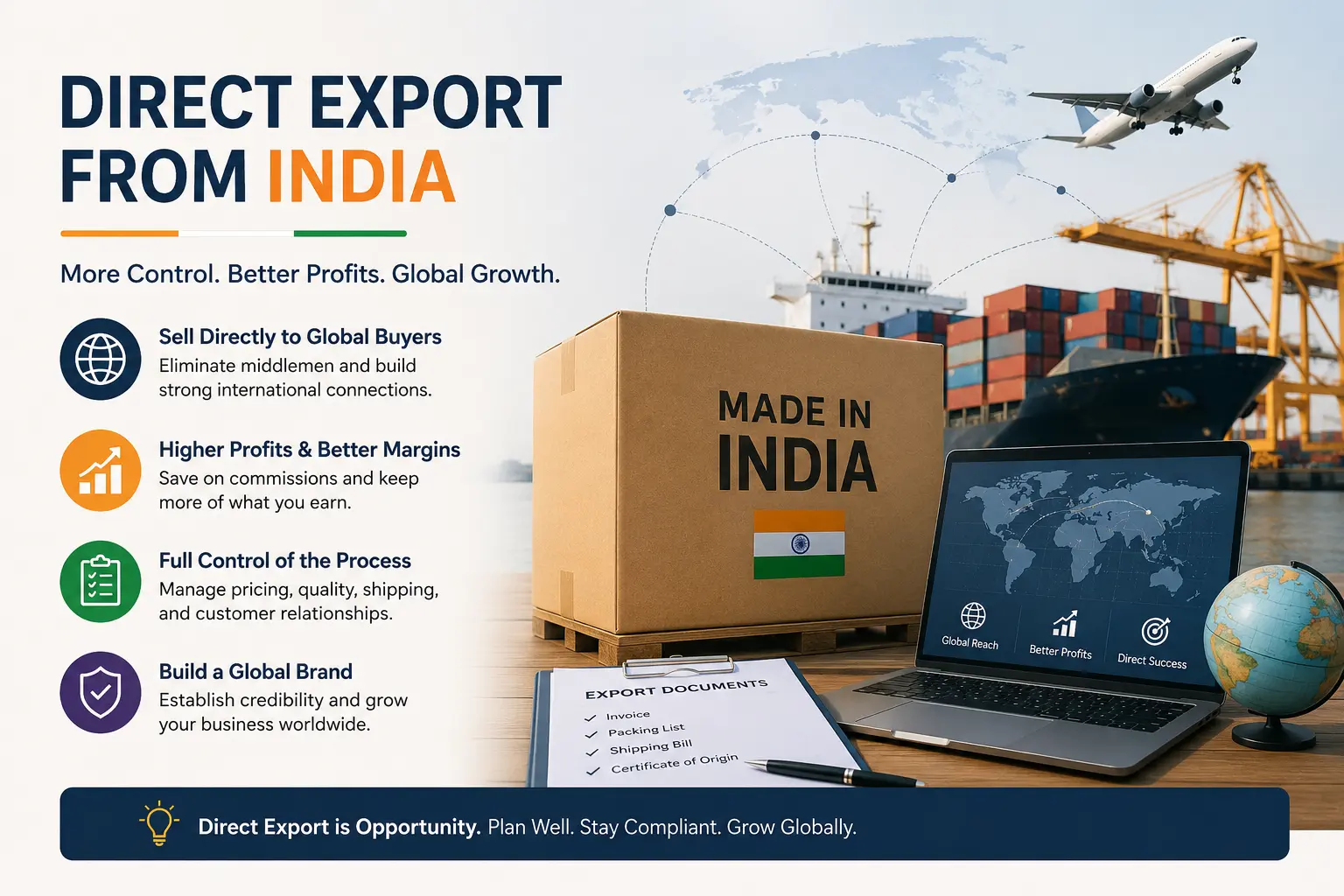
Why Direct Export Looks Attractive to Indian Businesses
Indian brands are naturally drawn to international trade because exports give them the chance to tap into bigger customer bases and premium markets. Businesses often think that exporting directly will let them avoid all the commissions paid to middlemen while improving their overall profitability.
For many companies, exports are also a way to establish a global brand identity. A successful export business can create long-term credibility, improve product reputation and boost production scale. Exporting directly also gives businesses more flexibility in pricing and customer relationships.
However the initial attraction often hides the operational complexity involved in managing international trade independently. A lot of exporters only realise what they’ve let themselves in for when they see just how tough it is to handle everything on their own.
Disadvantages of Direct Exporting That Businesses Often Overlook
🚢 Common Export Challenges for Businesses
Key operational and financial challenges exporters commonly face in international trade
One of the biggest reasons exporters struggle is they don’t have a clue about the real disadvantages of direct exporting. Many businesses focus only on revenue opportunities without understanding the responsibilities that come with international trade.
The primary disadvantages of direct exporting include a massive operational burden, complex documentation, international compliance obligations, and payment risks and logistics management challenges. Unlike domestic trade, exports involve multiple external agencies like customs departments, banks and foreign authorities.
Small businesses handling all those responsibilities internally can be a real nightmare to deal with. Export operations require not only dedicated people but also a good understanding of the technical side of things and proper systems in place. Without those resources, exporters are more likely to hit delays, get slugged with penalties and suffer financial losses.
Beyond that there’s the issue of international buyers who expect to be treated as professionals. They want shipments on time and products of a certain quality more-or-less every time. Businesses that aren’t operationally ready are going to struggle to meet these expectations.
Export Compliance Challenges India Exporters Frequently Face
Exporting is a minefield of compliance and regulations , and the amount of export compliance challenges India businesses are up against has made the whole process a lot more complicated than it used to be.
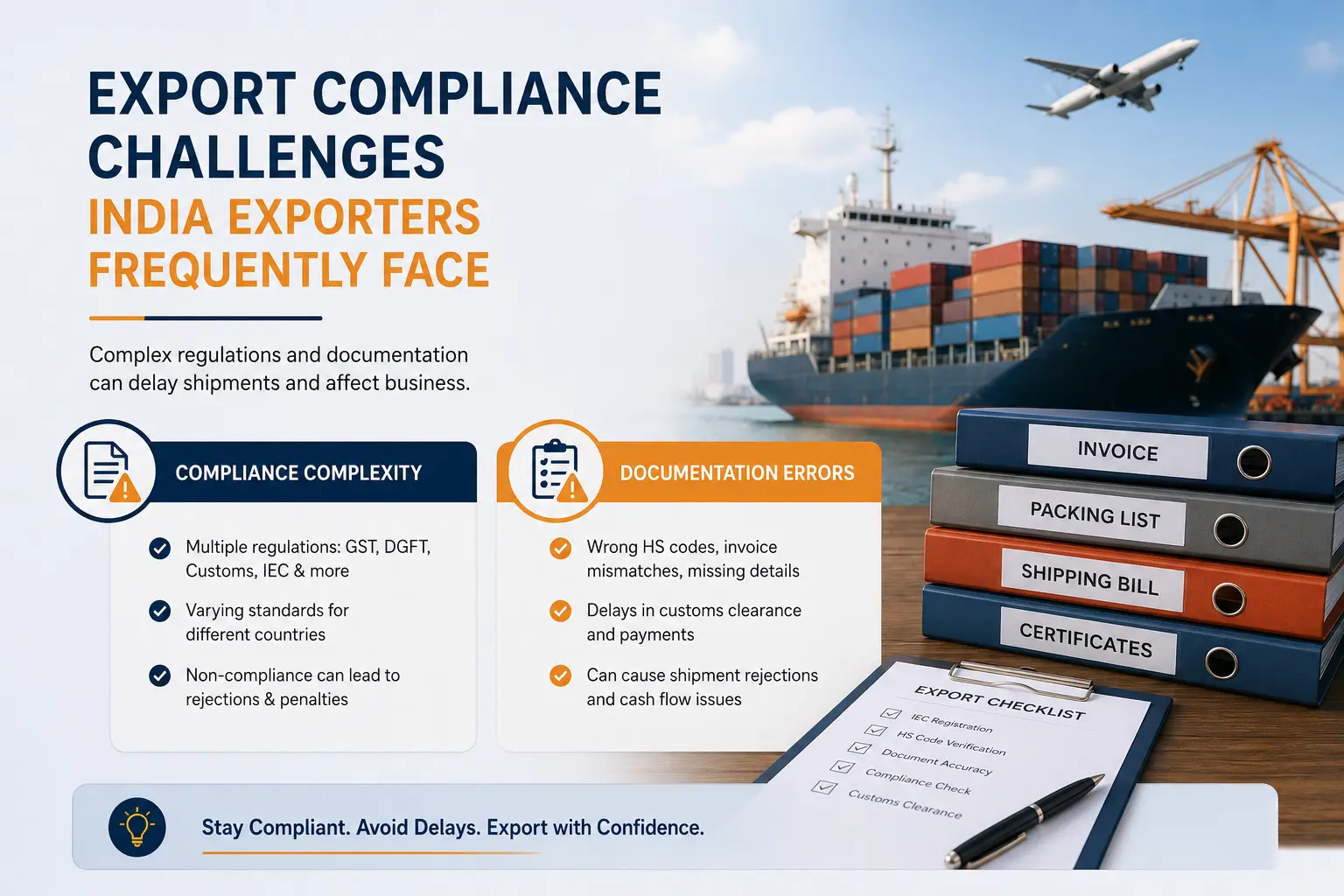
Indian exporters have to comply with a whole range of rules related to GST, DGFT customs filing, IEC registration, export incentives and country-specific product standards to name just a few. The complexity dof these regulations becomes even more apparent when you’re exporting to a highly regulated place like Europe or the States.
Different countries have their own packaging and labelling standards, product certifications and testing requirements. Even a minor slip-up can lead to a shipment being rejected or being stuck with the customs folks.
Many SMEs go under because they underestimate the amount of documentation and regulatory know-how you need to get exports flowing smoothly. Businesses that lack dedicated export compliance teams are going to struggle to sort this stuff out.
Export Documentation Errors Can Wreak Havoc
One big reason for export failure is just getting the paperwork wrong. Even the smallest export documentation errors can delay a shipment, block payments, or attract customs penalties.
Exporting is an exercise in carefully juggling multiple documents like invoices, packing lists, shipping bills, and certificates of origin, insurance papers and transport documents. And everything has to match up perfectly across all the different systems and authorities.
Common export documentation errors you might see include using the wrong HS codes, invoice mismatches, missing signatures, inaccurate shipment details and inconsistent product descriptions. And if you do get some of these mistakes wrong, you can expect the customs clearance to go up in smoke or be a nightmare with the bank.
In Letter of Credit transactions, the banks are going to want to make sure all the documentation is 100% accurate before they bother releasing payments. And if there’s even a tiny discrepancy, you can bet on delays or even having the payment rejected. This can create some serious cash flow problems, especially for smaller businesses.
Customs Clearance Problems in India That Export Businesses Face
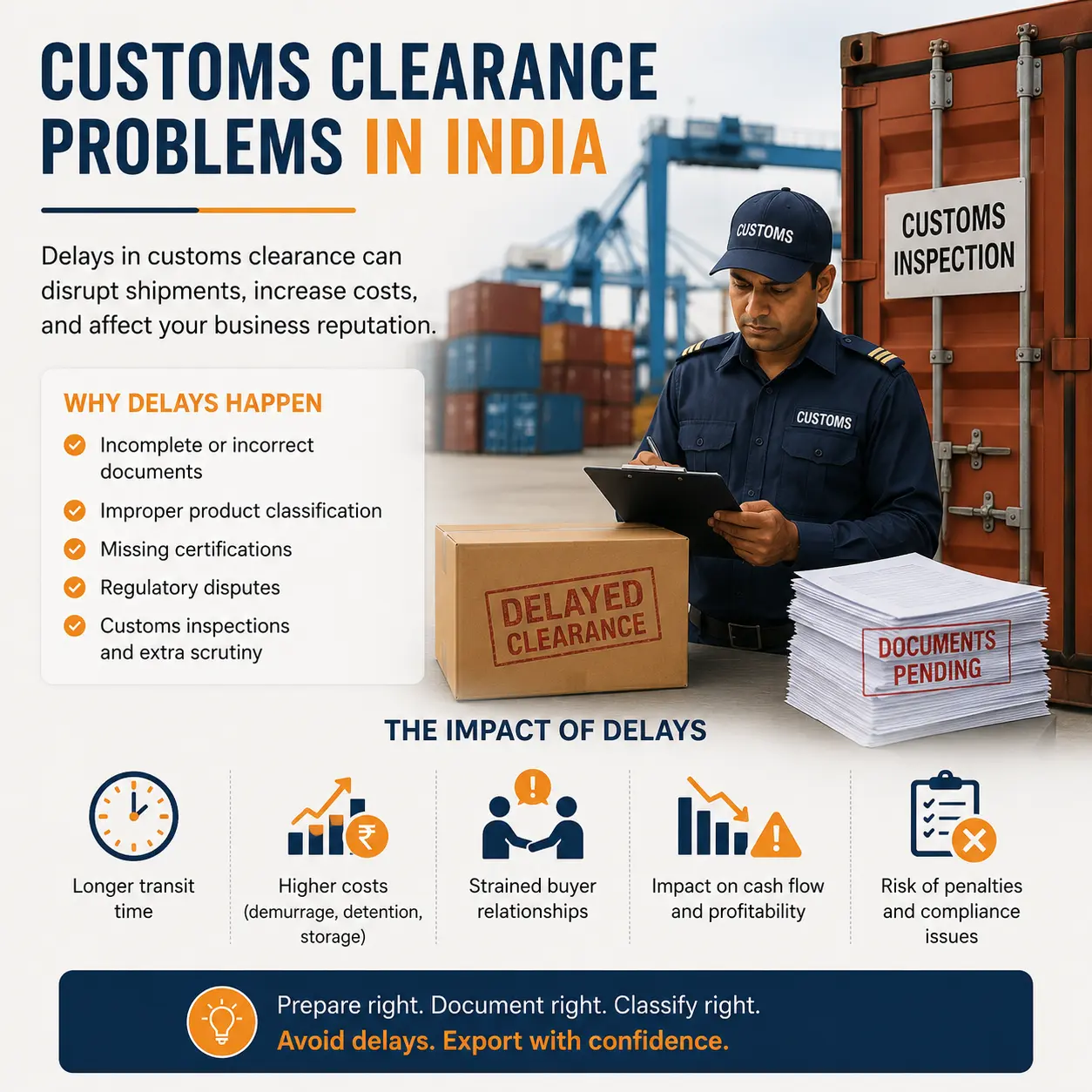
Exporters are always coming across customs clearance problems India which is just a nightmare to deal with. Customs procedures can become a real time-suck when documents are incomplete or products aren’t properly classified.
The problem is that delays just add to the operating costs. Containers sitting at the ports may attract detention charges, demurrage fees and storage costs. Repeated delays can damage relationships with international buyers who just expect their gear to turn up on time.
Common reasons for delays include customs inspections, documentation mismatches, missing certifications, and regulatory disputes. In some cases, exporters may also get extra scrutiny depending on the type of products being shipped.
For businesses that are operating on pretty thin margins, repeated customs delays can really cut into their bottom line.
International Shipping Issues That Exporters Face in Global Trade
And then you’ve got the shipping issues, which are just outside your control many of the time. Several international shipping issues exporters face today are just things you’ve got to accept.
Global supply chains are super sensitive to all sorts of global events – you know, political stuff, fuel prices, bad weather, congestion at the ports, and (of course) container shortages. All of this makes delivery timelines a complete mystery.
Freight rates can jump or drop overnight – so businesses need to factor in these changes or they risk thinning out their profit margins big time. And it’s not just that – delayed ships, damaged cargo and disruptions to shipping routes can really complicate the picture.
For international buyers, it’s pretty much expected that exporters will be able to get their goods to them on time. So when shipments get delayed over and over, trust just evaporates fast.
High Logistics Costs Continue to Crush Exporters in India
India’s exporters are facing a major problem with the high cost of getting goods to their customers. Compared to some of the other big manufacturing centres around the world, it’s pretty pricey.
Exporters have to pay for stuff like moving goods around on land, renting warehouses, getting things off and on ships, dealing with customs and insurance – it’s a whole list. All that adds up and makes it tough to compete.
For low-margin industries like handicrafts, textiles, food and consumer goods, the logistics costs are a total killer. Small exporters are especially struggling to keep their prices competitive because they can’t afford to pay for all these operational costs.
A lot of businesses just don’t factor these costs into their pricing at all, which later comes back to bite them in the form of lower profits.
Payment Risks in Exports Keep Getting Steeper
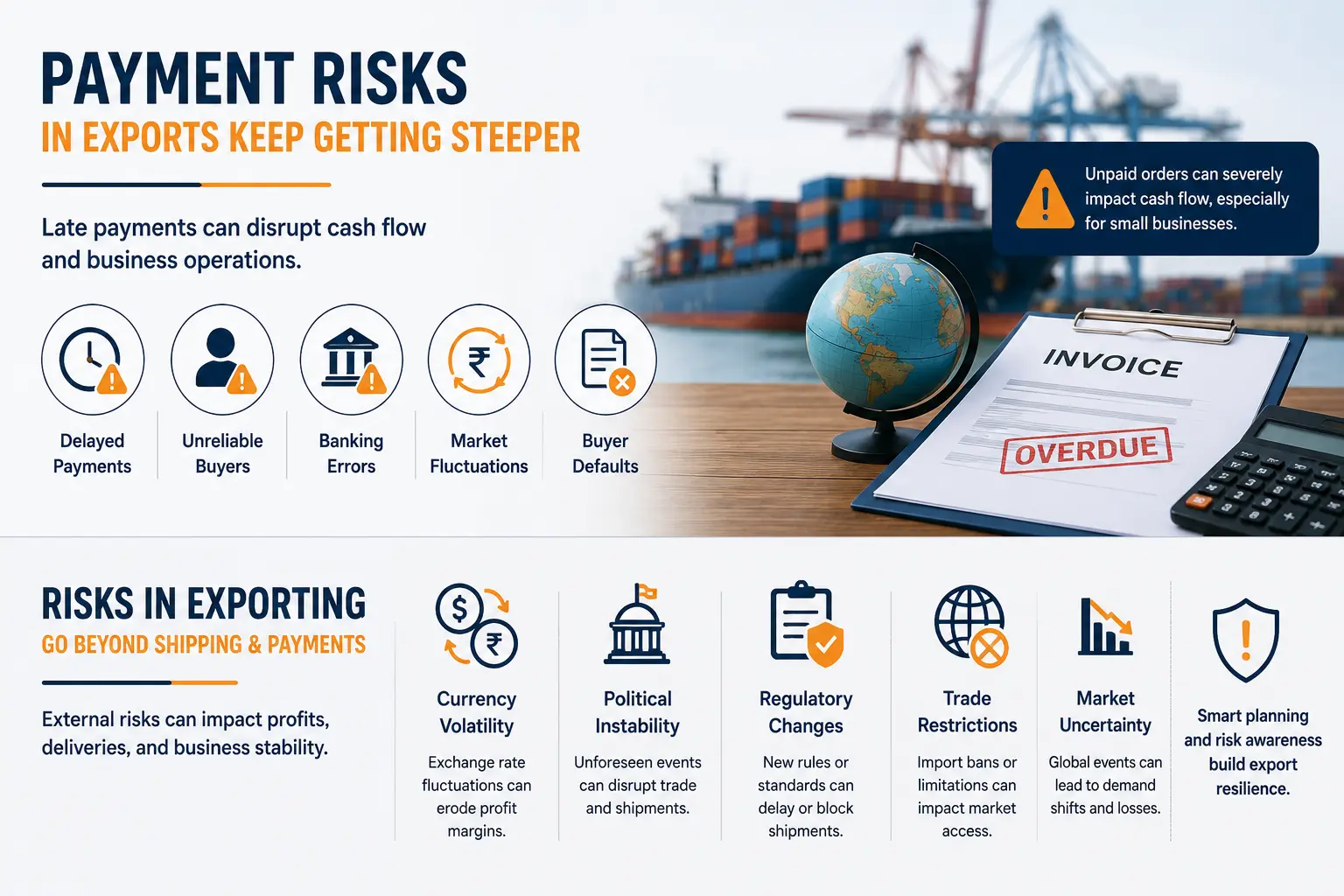
The issue of payment risk in exports just keeps getting worse. We’re talking delayed remittances, buyers who can’t be trusted, banking errors, market fluctuations, and buyers who just don’t pay up. And to add insult to injury, payments often arrive far later than expected leaving exporters scrambling for working capital.
For smaller businesses, a massive unpaid shipping order can really put a dent in their operations.
Risks in Exporting Are Often Way More Than Just Shipping and Payments
When people talk about the risks in direct export business, they’re not just talking about getting the goods to the right place and getting paid. There’s a whole lot more going on. Currency volatility, political instability, rules changing overnight, or trade restrictions can all catch you off guard.
The reality is that the risks in direct export business have got to a point where businesses need to be extremely sharp with their financial planning and operational control. Markets change incredibly quickly thanks to economic or geopolitical developments.
Currency exchange movements alone can really hurt your profit margins. Then there are import restrictions or new product standards in the country you’re shipping to which can easily cause a shipment to go off the rails.
Small businesses that dive into exports without really understanding these outside risks are going to struggle to stay afloat long-term.
Why Small Businesses Fail at Exporting
A big reason why direct exporting fails for small businesses is they just aren’t prepared to handle the operations. A lot of the time they’re so focused on finding buyers – they forget that there’s loads to do behind the scenes to make exports work in the long term.
The reasons why direct exporting fails for small businesses are many and varied – including poor record keeping, lack of compliance knowledge, not enough working capital, rubbish logistics, and too much dependence on just a few buyers.
Small businesses often lack people with the right export experience to keep things running smoothly overseas. As a result, they’re more likely to experience delays, payment problems and regulatory headaches.
Another thing many SMEs do is not properly account for all the hidden export costs such as insurance, customs fees, bank charges and shipping price fluctuations. This can lead to over-pricing and lower profits.
The Day-to-Day Export Challenges SMEs Face
SMEs face loads of day-to-day export operational challenges that can turn into long-term problems if not sorted out properly.
Some of these operational issues include working with freight forwarders, dealing with customs, getting your GST back, keeping track of shipments, and keeping in touch with buyers from all over the world. It’s no easy feat.
The reality is that the export operational challenges SMEs face these days require some pretty robust systems to keep things running smoothly. Businesses that are still doing things the old way with no automation, are going to struggle.
Adopting new technology, automating processes, and using a proper export management system has never been more important for shipping goods abroad.
Reducing the Risks of Export Failure for Indian Businesses
🛡️ Export Risks and Recommended Solutions
Smart strategies exporters can use to reduce operational risks and improve profitability
Exports can be tough to get right, but it’s not impossible if you do your prep work. Indian businesses can still succeed if they really know their stuff.
One thing to do is to start with a few select international markets instead of rushing into loads of countries all at once. Before you even start, get to know the local regulations, customer preferences and import requirements. It’s a lot easier to build momentum from there.
Investing in proper documentation and getting good logistics partners is a must. If you get the paperwork right and keep on top of shipping you can really reduce operational issues.
Buyer verification is another key area. You should always check on the buyer’s payment history and business credibility before taking on a big order.
Finally, getting your internal teams up to speed on export procedures, compliance and financial risk management is also a big plus.
Conclusion
Direct Export presents a great chance for Indian businesses to take their mark overseas, but the reality is that most companies soon find out it’s a whole lot more tricky than they’d bargained for. To successfully export you need to bring some serious discipline to the table, have a good handle on compliance, be able to juggle your finances, and make sure your logistics are spot on.
Loads of businesses fail because they just don’t get how complicated international trade really is. You can have a world-class product but still tank if you get your documentation wrong, encounter customs delays, have payment issues, aren’t in control of your logistics costs or are getting into compliance hot water. It adds up fast and can really cut into your bottom line.
Indian brands that approach exporting with a solid strategy, get their operational house in order and get to know the real risks of global trade stand a whole lot better chance of coming out on top in the international market. Don’t get me wrong, exporting can be a great way to go for the long haul – as long as you’re prepared for the realities of global trade.
Frequently Asked Questions (FAQs)
Direct export is when you sell goods directly to customers abroad without any middlemen on the scene
Well firstly it’s complicated, then there’s the paperwork, trying to manage your shipping and getting all the compliance right is a real headache, and on top of all that there’s the uncertainty over payment
If you mess up your paperwork you’re looking at customs delays, your shipment getting held up, your bank saying no to your payment, having to pay penalties, or maybe even just getting stung for a delayed payment
The biggest risks are payment delays, dodgy buyers, discrepancies with Letters of Credit, currency fluctuations that hurt you, and getting paid only partial amounts
Small businesses often get into trouble because they just don’t have the export experience, they run low on cash at the worst times, their logistics are a shambles, and they struggle to manage the compliance side of things