
Wholesale, drop shipping, and manufacturing each offer different advantages based on investment, scalability, profit margins, and operational control. Choosing the right business model depends on your budget, experience, long-term goals, and ability to manage inventory and supply chains.
India’s entrepreneurial scene is really taking off as more and more people are getting into online commerce, product distribution, and production-based ventures. With digital platforms, logistics networks and e-commerce marketplaces getting steadily more accessible, people can now pick from a whole bunch of different business models. This is based on what they can afford, how much experience they have and where they see their business going in the long run.
There are of course, the wholesale, drop shipping & manufacturing models getting a lot of attention at the moment. Each one of these has its own distinct advantages, sets of operational requirements and profit potential – but choosing the right one can be a real headache for newbies. This is because how profitable it all is depends on how much cash you’ve got to chuck at it, how good you are at managing your inventory, how easily it scales and whether you’ve really got the upper hand when it comes to the supply chain.
Wholesale vs Drop Shipping vs Manufacturing – Getting to the Heart of the Matter
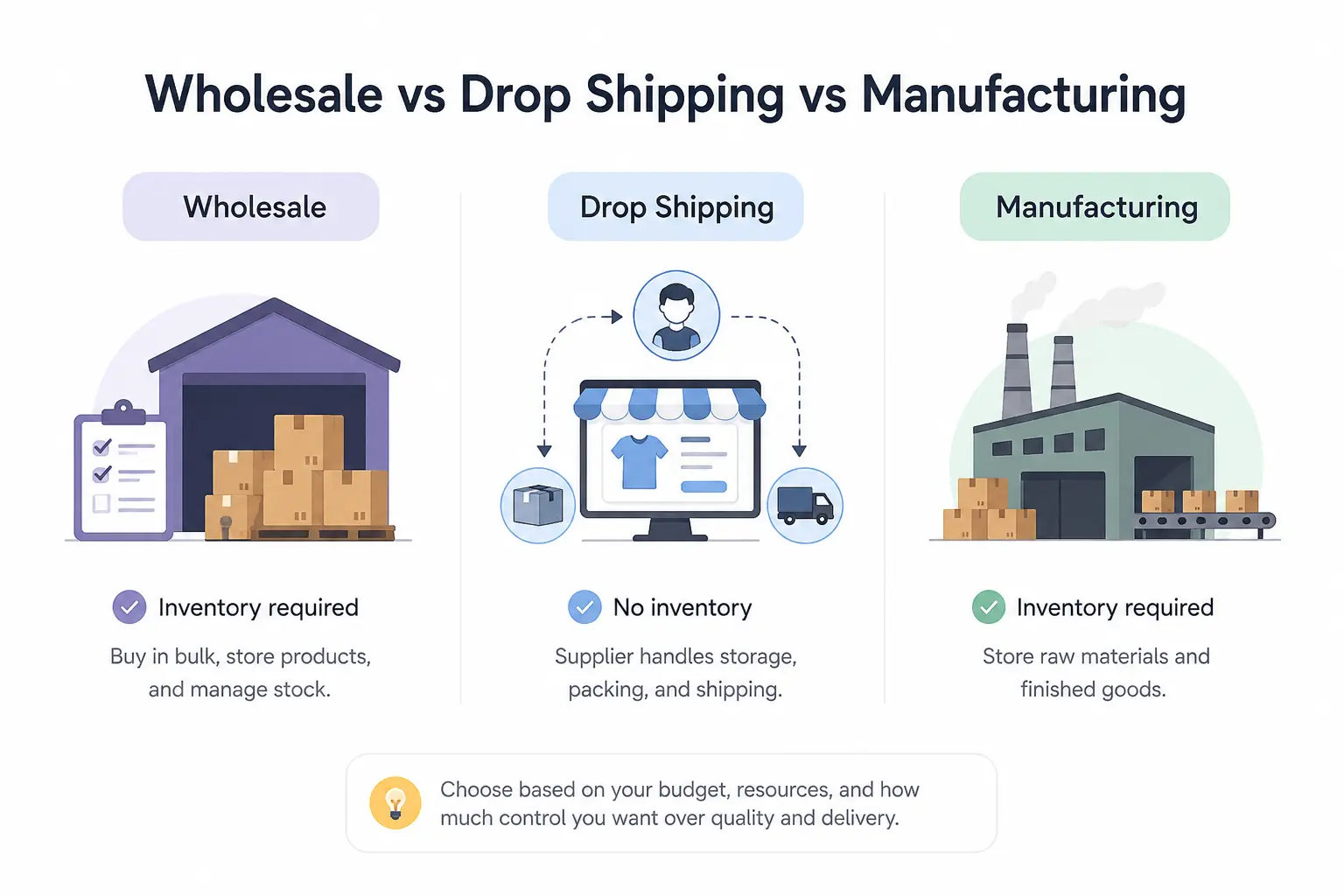
Drop shipping businesses work a bit differently; instead of holding onto the stock, you’re listing products online and then sending the customer details on to a third-party supplier who delivers the goods straight to the customer. This creates a really big difference between that and the other two models because drop shipping means you don’t have to worry about storing any stock at all.
📦 Wholesale vs Drop Shipping vs Manufacturing
Compare investment, scalability, operational complexity, and profit potential across different business models
E-commerce Business Models: India’s Got Options
The Indian digital economy has really opened up some big opportunities for every one of these business structures. An e-commerce business models comparison shows that each model suits different kinds of entrepreneurs.
Wholesale businesses are a good fit for folks who can afford to invest in stock and get the logistics sorted. They can benefit from buying in bulk and getting discounts, as well as pretty reliable supply relationships.
Drop shipping is going to appeal to newbies because it requires less outlay and very little in the way of infrastructure. Entrepreneurs can start online stores without having to worry about storing any stock at all.
🚀 Best Business Model by Entrepreneur Type
Find the most suitable business model based on investment capacity, experience, and growth goals
Inventory or No Inventory Business Models – That is the Question
One of the most important things to consider when deciding between these models is whether you’re going to be dealing with inventory or not.
Wholesale and manufacturing businesses generally require you to keep some stock on hand. Wholesalers buy products in bulk, and manufacturers have to store raw materials and finished goods. That makes inventory management a serious responsibility.
Wholesale vs Drop Shipping vs Manufacturing – Which is Best for India?
Maintaining inventory can bring some real benefits – like getting products out the door fast, having a better selection for customers and a stronger grip on quality. It can also hike up operational costs, the price of warehousing and the risk of being stuck with stock that doesn’t sell.
Drop shipping operates as an inventory-free business model – sellers don’t actually have to touch the products. Suppliers handle packaging and shipping themselves.
This can sharply reduce the risk of starting out and the operational headaches that come with it. However, drop shipping businesses often struggle with the reliability of their suppliers, sticking to delivery deadlines and keeping on top of product quality.
When it comes to starting out, the choice between inventory vs no inventory business models really matters – especially for folks who don’t have a lot of capital or a place to store all their stock.
Capital Investment Drop Shipping vs Wholesale
The amount of cash you need to get started with drop shipping vs wholesale is a massive deciding factor for new businesses.
With drop shipping, you can get started for next to nothing because there’s no need to buy up inventory upfront. You’ll spend more time and money on setting up your website, doing some digital marketing and finding customers.
This makes drop shipping really attractive for students, freelancers and first-time entrepreneurs in India because it’s just so low-cost.
Wholesale businesses, on the other hand, need a fair bit more investment to get going – you need to pay for those products upfront, store them somewhere, pack them up and get them to customers. That all adds a lot to operational expenses.
Drop Shipping Business India Pros and Cons
The way people are shopping online more and more has really got a lot of young entrepreneurs in India interested in the pros and cons of starting a drop shipping business.
One of the main upsides of drop shipping is that it’s dirt cheap to get started – you don’t have to worry about storing inventory or renting a warehouse.
Also, it’s a lot more flexible in terms of running your business – you can try out lots of different products and markets without having to put up all the cash up front.
Of course, there are also a lot of pros and cons of drop shipping that you need to carefully think through. It’s the supplier who does all the packing and shipping, you’ve got less control over how quickly and well it gets to customers.
📦 Drop Shipping Business India: Pros and Cons
Key advantages and challenges entrepreneurs should understand before starting a dropshipping business
Manufacturing vs Drop Shipping Margin Comparison
Looking at the profit margins of manufacturing vs drop shipping really brings home just how different they are.
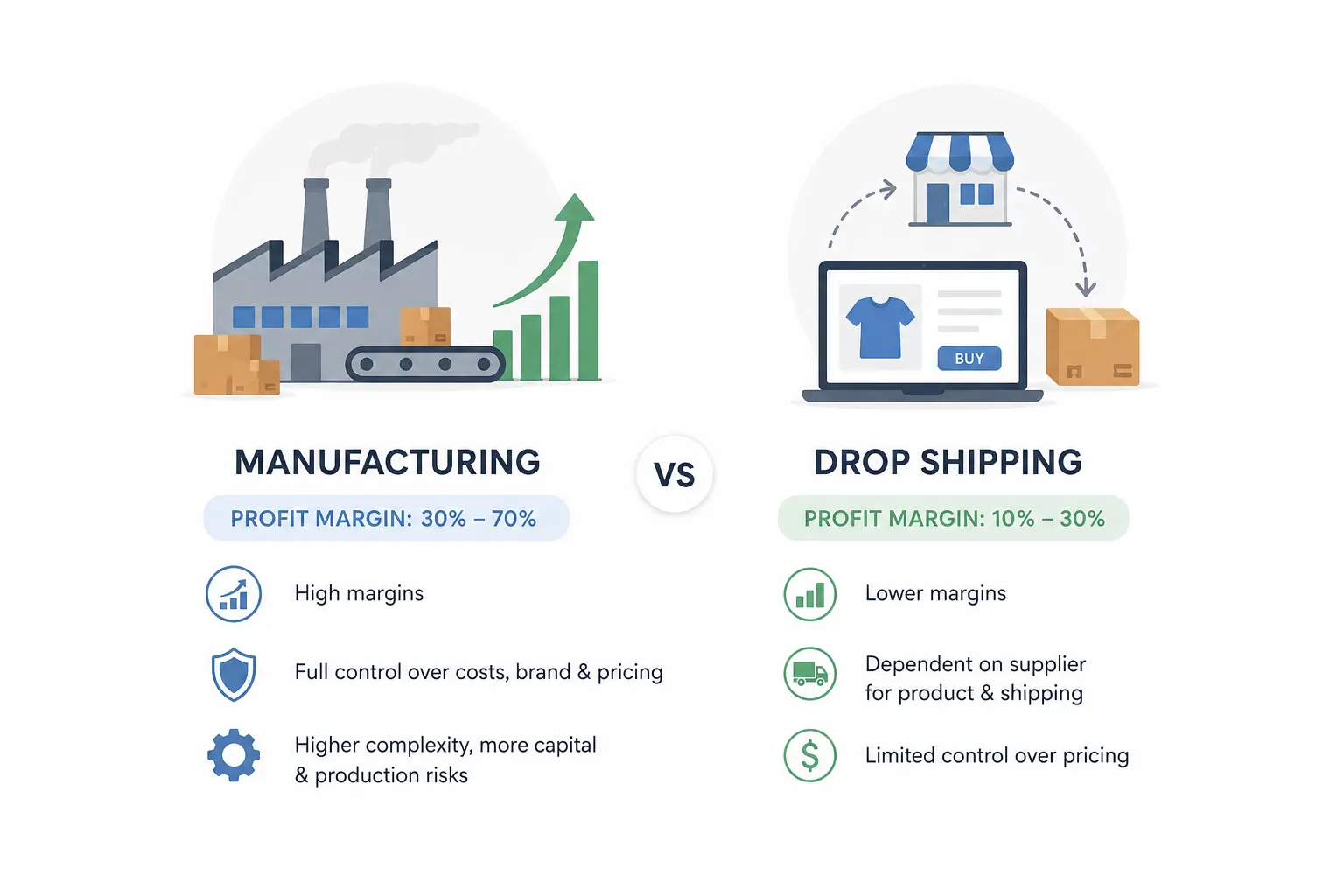
Manufacturing can have really high margins because you’re in control of your costs, your brand and your pricing – depending on the product you can be looking at profit margins of 30 to 70%.
But that comes at a cost – manufacturing is a lot more complex to run, you need a lot more cash to get started and there are risks associated with production.
Drop shipping on the other hand tends to run on lower margins – maybe between 10 and 30%. The reason is that you’re at the mercy of your supplier for product and shipping, which limits your ability to control pricing.
However manufacturing also gives you the chance to build a strong brand and run an efficient production line, which can create a lot of wealth over the long term for entrepreneurs who are good at it.
Scalability Drop Shipping vs Manufacturing
When you compare the scalability of drop shipping vs manufacturing, both models offer potential for growth but through very different approaches.
Drop shipping businesses can scale up fast because entrepreneurs can just add new products without sinking a lot of cash into inventory. Online advertising and online marketplaces make it easy to expand into lots of different categories of products pretty quickly.
But the scalability of drop shipping depends pretty heavily on how reliable your suppliers are and how good you get at advertising. As you start to grow really fast, it can get tough to keep giving customers the same level of service.
Manufacturing businesses scale up by expanding production, building out their distribution network and expanding their brand. Yeah, scaling up manufacturing takes more investment upfront, but it can also create a lot more value in the long run for your business.
The comparison between drop shipping and manufacturing when it comes to scalability really gets at an important difference: drop shipping can scale up fast to start with, but manufacturing tends to build up stronger long-term profits and market share.
Supply Chain Control Business Models
Every business needs to be able to manage its supply chain efficiently. The supply chain control business models comparison shows that wholesale, drop shipping and manufacturing all have very different approaches to this.
Manufacturers have the most control over their supply chain because they handle production, sourcing, quality standards and inventory all themselves.
Wholesalers have some control because they handle procurement, warehousing and distribution, but they still have to rely on manufacturers to get the goods they need.
Drop shipping businesses have the least control because their suppliers handle all of the inventory and fulfilment.
This can make things a lot easier for them, but it also means they are really dependent on the people they are buying from. If these suppliers have problems, then the drop shipping business is going to suffer as well.
So, understanding supply chain control business models is especially important if you are trying to build a brand that will last for the long haul.
Profit Margin Comparison E-commerce Models
When you take a close look at profit margins across different ecommerce models, you see that each model generates profits in a pretty different way.
Manufacturing businesses usually have the highest profit potential because they can cut out the middlemen and keep a tight rein on production costs.
Wholesale businesses usually have moderate margins but they benefit from being able to sell in big volumes and to customers who are coming back again and again.
Drop shipping businesses tend to have lower margins because they are highly dependent on their suppliers and face intense competition for customers online.
But profit margins also depend on what kind of niche you are in, how efficient your operation is, how strong your brand is and how you go about getting new customers. So, you can’t just look at these numbers and conclude that one model is definitely going to be better than another.
Best Business Model for Beginners in India
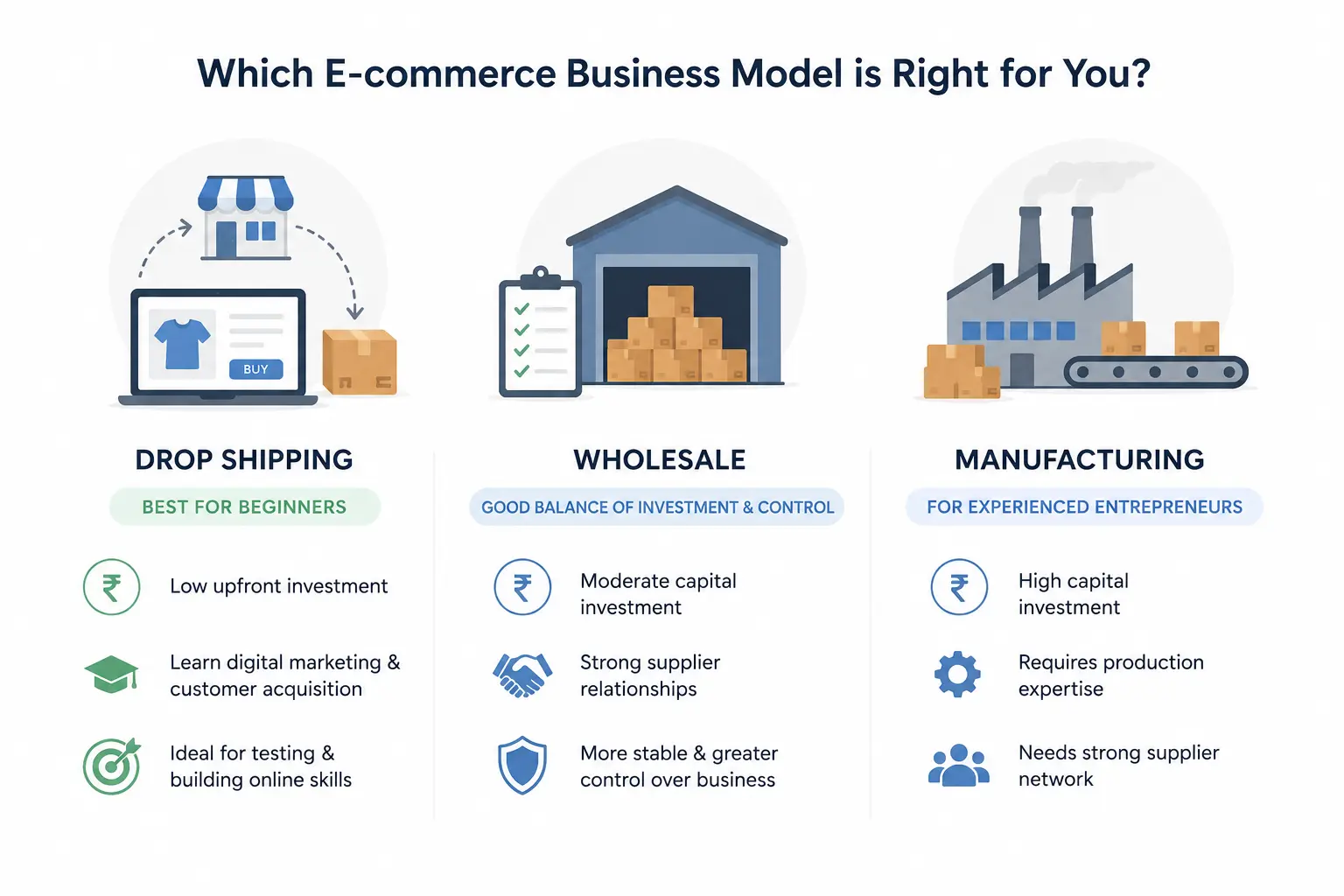
When you are trying to decide on the best ecommerce business model for beginners in India, you have to think about how much money you have to start with, what skills you bring to the table and what you are trying to achieve in the long run.
Drop shipping is often a good choice for beginners because it requires so little upfront investment. Entrepreneurs can learn things like digital marketing and customer acquisition without having to worry about inventory.
Wholesale businesses are a good fit for people who have a bit more money to put in and are good at building relationships with suppliers. They tend to be more stable than drop shipping and give you more control over what you are doing.
Manufacturing is usually better for people who have a lot of experience and have access to capital, production expertise and a supplier network.
🚀 Which Business Model Fits You Best?
Compare investment levels, growth potential, and advantages before choosing your ecommerce business model
Which Business Model Is Better for Long-Term Growth?
When you are trying to decide on an ecommerce business model for long-term success, the wholesale vs drop shipping vs manufacturing debate gets a lot more interesting.
Drop shipping can be a pretty quick way to get into business and pretty flexible, but down the line you’ll likely run into problems with supplier dependency and razor-thin margins.
Wholesale businesses on the other hand offer a more stable demand stream and opportunities to scale your distribution network. Businesses that can build strong relationships with retailers can really make consistent revenue growth happen.
Manufacturing is often the best way to create long term business value because you get to control the branding, innovation, pricing and product quality of your products.
Conclusion
There isn’t a single “winner” in this wholesale vs drop shipping vs manufacturing comparison because each business model is best suited for a different set of entrepreneurial goals. Drop shipping is often attractive to beginners and online entrepreneurs because of its low barrier to entry and simplicity of operation.
Key takeaways
FAQs
Ultimately the best model is going to depend on how much money you have to put in, your level of experience and what you’re trying to achieve with your business. Drop shipping is good for beginners, wholesale offers a steady income stream from bulk transactions and manufacturing will give you the highest long term profitability.
Yes, drop shipping can be profitable in India if you pick the right niche, choose good suppliers and have a solid marketing strategy in place.
Manufacturing gives you higher profit margins, full control over your branding, and lets you decide on product quality and pricing.
Generally speaking drop shipping requires the least amount of upfront investment because you don’t have to buy or store any inventory.
Drop shipping is often considered the best model for beginners in India because it requires pretty low start-up costs and is relatively simple to operate.