
The Export General Manifest (EGM) is a critical customs document that confirms exported goods have physically departed from India and enables the closure of the shipping bill within the customs system. Accurate EGM filing is essential to avoid refund delays, compliance issues, and disruptions in GST refunds, duty drawback claims, and export incentives. Proper EGM matching also helps ensure smoother customs processing and faster export transaction completion.
International trade involves all sorts of hoops for exporters and importers to jump through – and that means a whole lot of paperwork. Nowhere is this truer than when it comes to the Export General Manifest, or EGM for short. This document is absolutely crucial when it comes to proving that goods have actually left the country.
India has put in place a very strict system to make sure exports are properly checked and that cargo records are accurate. And at the centre of all this is the Export General Manifest, which is the official proof that the goods in the shipping documents actually left the port, airport or customs station.
What is an Export General Manifest in Export Trade?
EGM full form in export is Export General Manifest. So, what is an Export General Manifest? Well, it’s a super-important customs document that the carrier or shipping line has to fill out and submit to customs authorities after the export cargo has left India. It’s got all the details on the goods that were loaded onto the boat, plane or transport vehicle for international shipping.
In a nutshell, the EGM is official confirmation that the export consignments have physically left the country. And that document is the final proof that the goods mentioned in the shipping bills have been exported successfully.
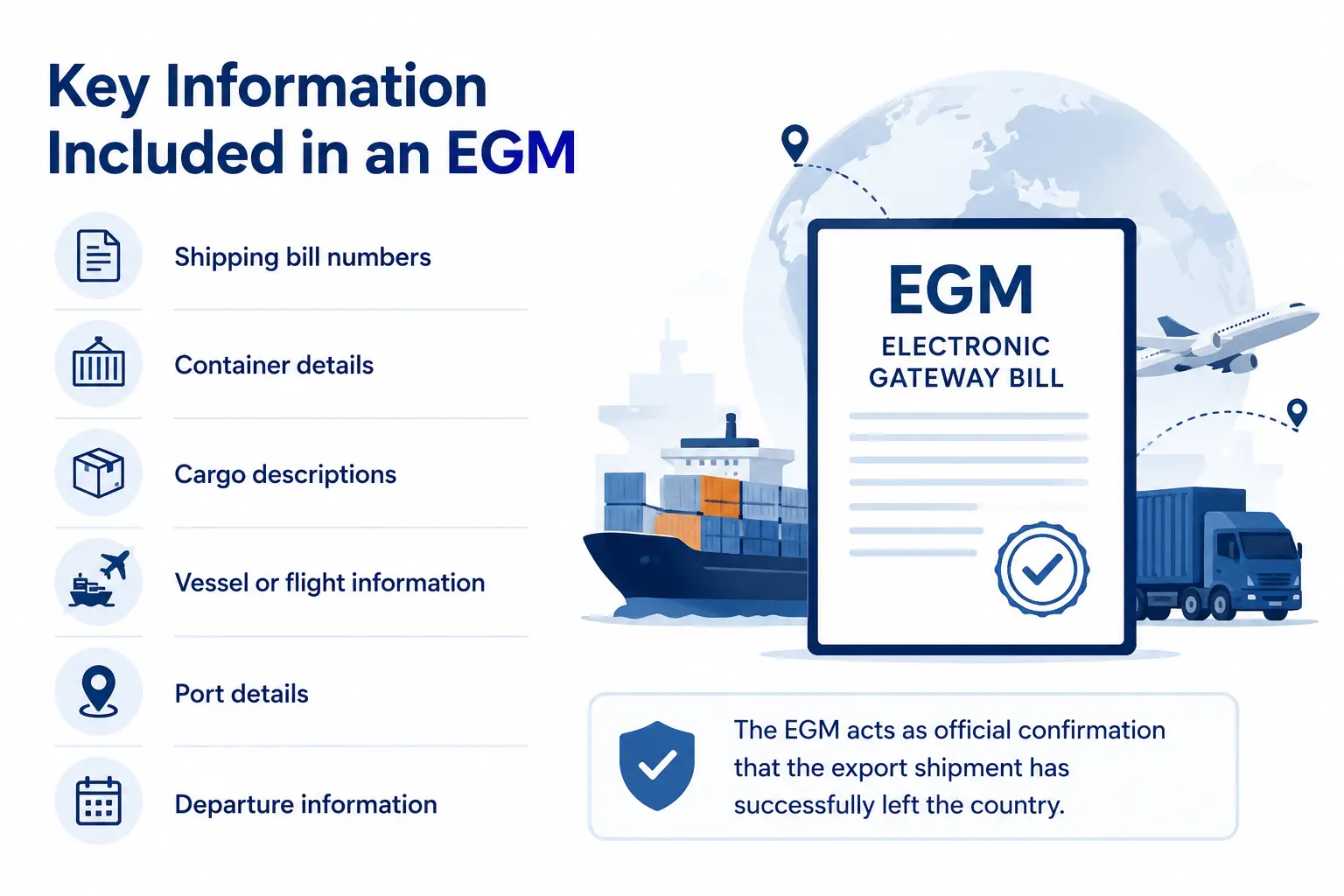
Here in India, the Export General Manifest system is governed by the Customs Act and the rules for electronic customs filing. So what’s in the EGM? Well, you can expect to find shipping bill numbers, the details of the containers, descriptions of the cargo, vessel information, and the port details.
Why is the Export General Manifest So Important for Exporters?
The Export General Manifest is a pretty big deal in export documentation compliance because it links up the physical shipment of goods with customs records.
One of the main reasons why the EGM is so important is that it acts as proof of export that customs India are looking for before processing export incentives. Benefits like duty drawback, GST refunds, RoDTEP benefits and export promotion incentives all rely on proper EGM filing.
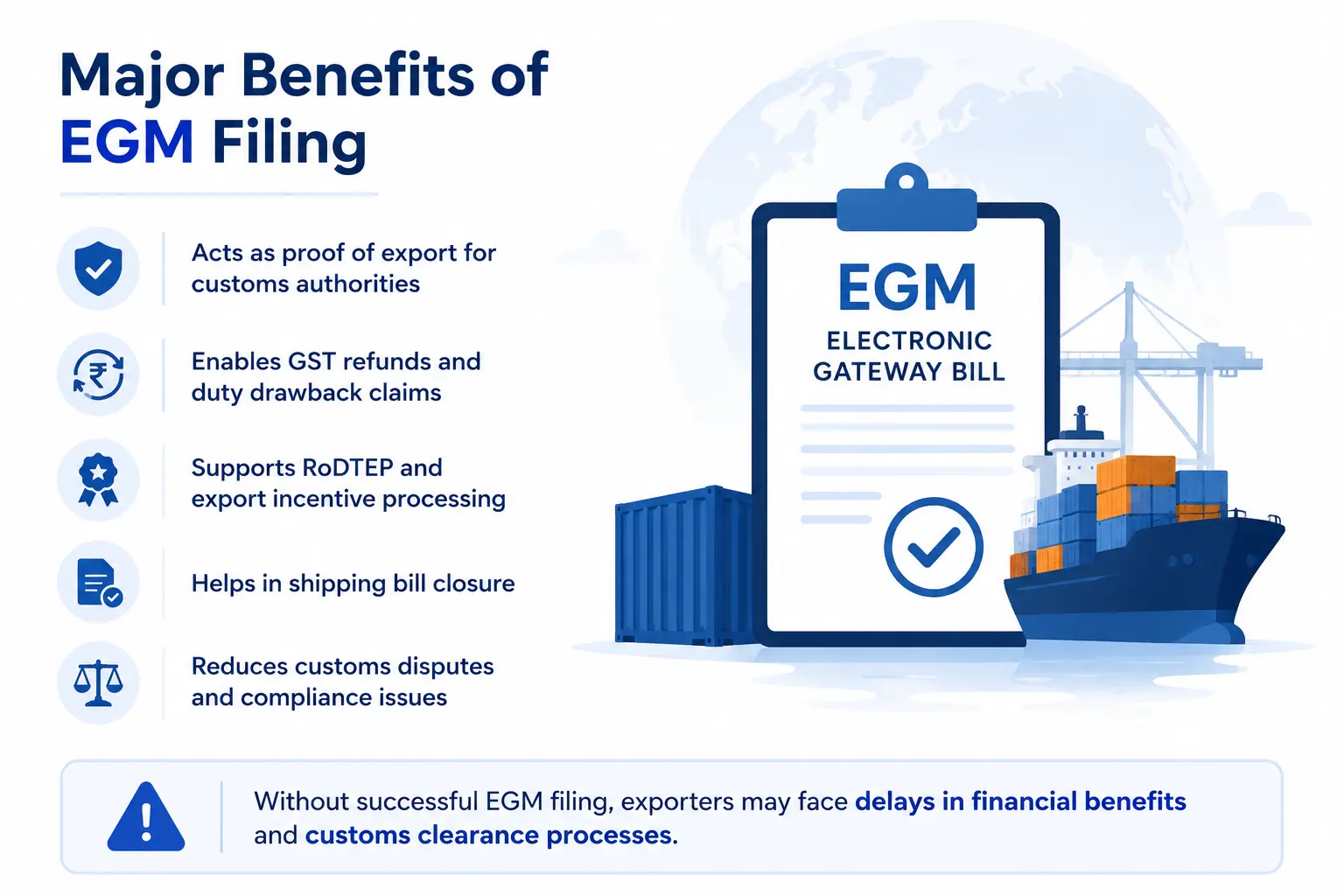
Another important function of the Export General Manifest is enabling shipping bill closure India systems. When the EGM is filed successfully and matched up with the shipping bill, customs systems automatically close the export transaction.
Export General Manifest India System and ICEGATE Integration
India’s customs department has really gone digital with the ICEGATE platform, and the Export General Manifest India filing process is now all hooked up electronically to customs databases.
ICEGATE – that’s Indian Customs Electronic Gateway to the uninitiated – let’s shipping lines, airlines, custodians and customs brokers file export related documents right online.
The ICEGATE EGM status system lets exporters and customs people keep an eye on whether the Export General Manifest has been filed, matched or is still pending.
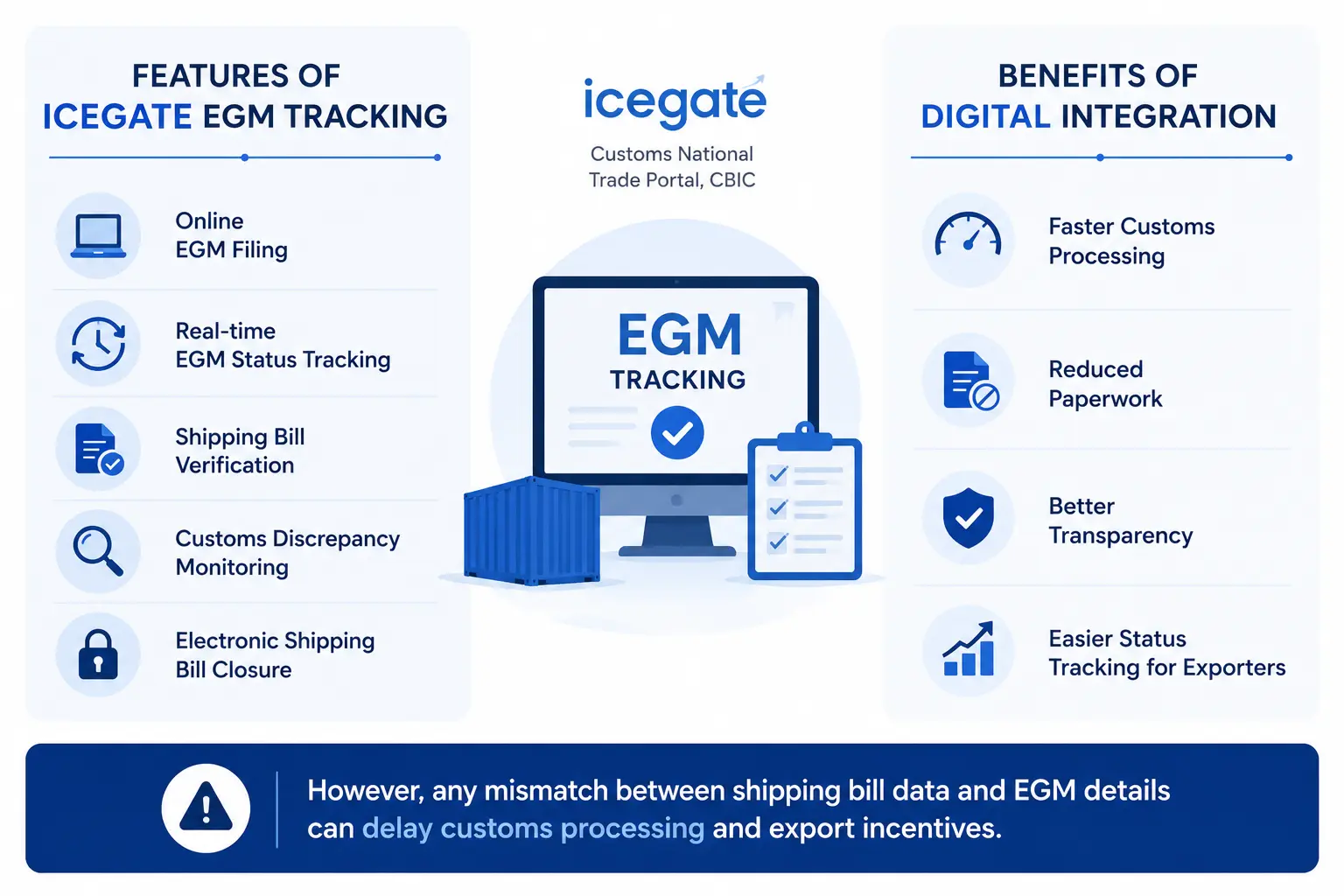
Broadly speaking this digital integration makes things a lot more efficient and reduces all that pesky paperwork. Exporters can now monitor the status of their shipping bills, check out any discrepancies with the EGM and get customs updates, all from the comfort of their own screens.
But if there are errors in the documentation, or if the shipping bill and EGM don’t match, then things can start to get a bit sticky. So exporters need to keep a pretty close eye on the ICEGATE EGM status to make sure customs processing goes as smoothly as possible.
The Export General Manifest India framework has certainly made a big difference to how transparent and automated export customs processes are across all ports and airports.
EGM Filing Process Customs Authorities Follow
The EGM filing process is a bit of a dance with multiple players involved, including exporters, customs brokers, and custodians and shipping lines.
Once the export cargo is loaded onto the ship or plane and is on its way out of India, it’s the carrier’s job to submit the Export General Manifest online.
The EGM filing process usually involves all the details of the cargo, shipping bill references, details of the ship or flight, port location, and container numbers.
After the EGM has been submitted, the customs computers automatically compare the EGM with all the shipping bill records that were filed during the customs clearance process.
If everything checks out, the customs computer closes the shipping bill electronically, and you know the export deal is done and dusted.
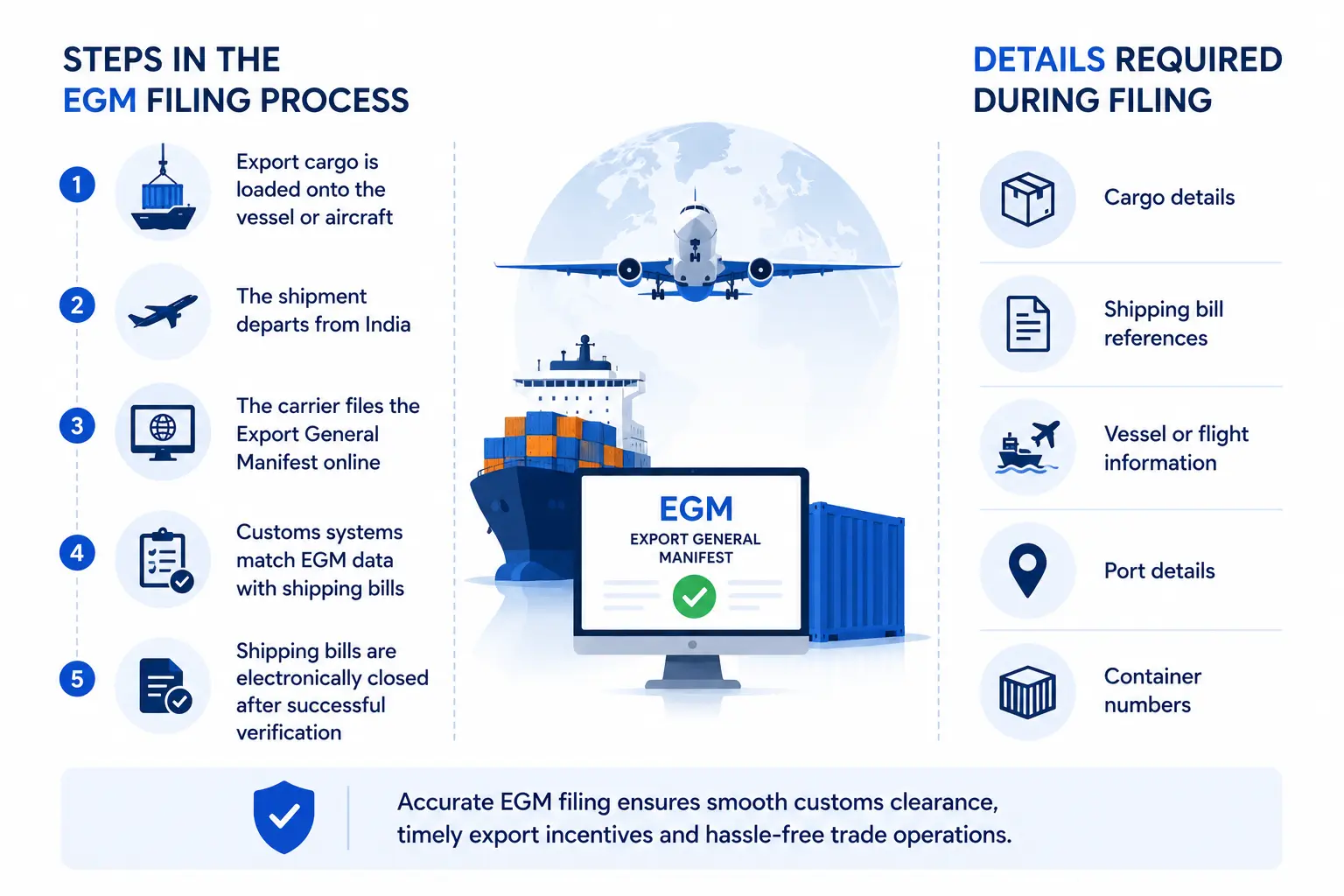
But even tiny little mismatches can cause big problems, like pending shipping bills and delayed refunds, so exporters need to make sure all shipping documents are spot on before the cargo departs.
Role of Shipping Line in EGM Filing
The role of shipping line in EGM filing is super important because they’re the ones on the hook for submitting accurate export manifest information to customs.
Shipping lines or airlines prepare and upload the Export General Manifest as soon as the vessel or plane leaves Indian Territory.
The role of shipping line in EGM ops includes making sure they get the shipping bill numbers, cargo details, container information and departure data all correct.
If errors occur during filing, exporters could face all sorts of consequences, so they need to keep their shipping agents and logistics providers in the loop so they know if the filing was successful.
Because of all this, exporters need to keep tight communication with shipping agents and logistics providers to make sure the filing goes through okay.
The role of shipping line in EGM compliance is more critical than ever now because automated matching relies entirely on the data being accurate.
Shipping Bill Closure India and EGM Connection
The connection between shipping bill closure India procedures and the Export General Manifest is pretty crucial.
A Shipping Bill acts as the primary customs document filed before exporting goods out of India. However, the Customs Authorities won’t consider the export process fully completed until they see that the EGM filing has gone through successfully.
When the EGM data checks out against the shipping bill records, the customs systems automatically update the export status and shut the shipping bill down electronically.
But If the EGM filing gets stuck or ends up with some mismatched details the shipping bill closure process in India gets delayed.
This causes a knock on effect as customs systems will still be treating the shipment as incomplete until the EGM issue is resolved – and that can impact on getting any export benefits.
The Export General Manifest therefore acts as the final tick in the box for export transactions.
Proof of Export Customs India Requirements
One of the key roles the Export General Manifest plays is as proof of export that customs India authorities require for regulatory and financial purposes.
For instance government export incentive schemes need customs verification to make sure the goods have actually left the country.
The proof of export customs India system helps prevent people trying to pull a fast one by falsely claiming exports and getting the refunds that go with those claims.
Banks, the DGFT, GST departments and export promotion agencies are also going to rely on the customs records when they do audits and compliance checks.
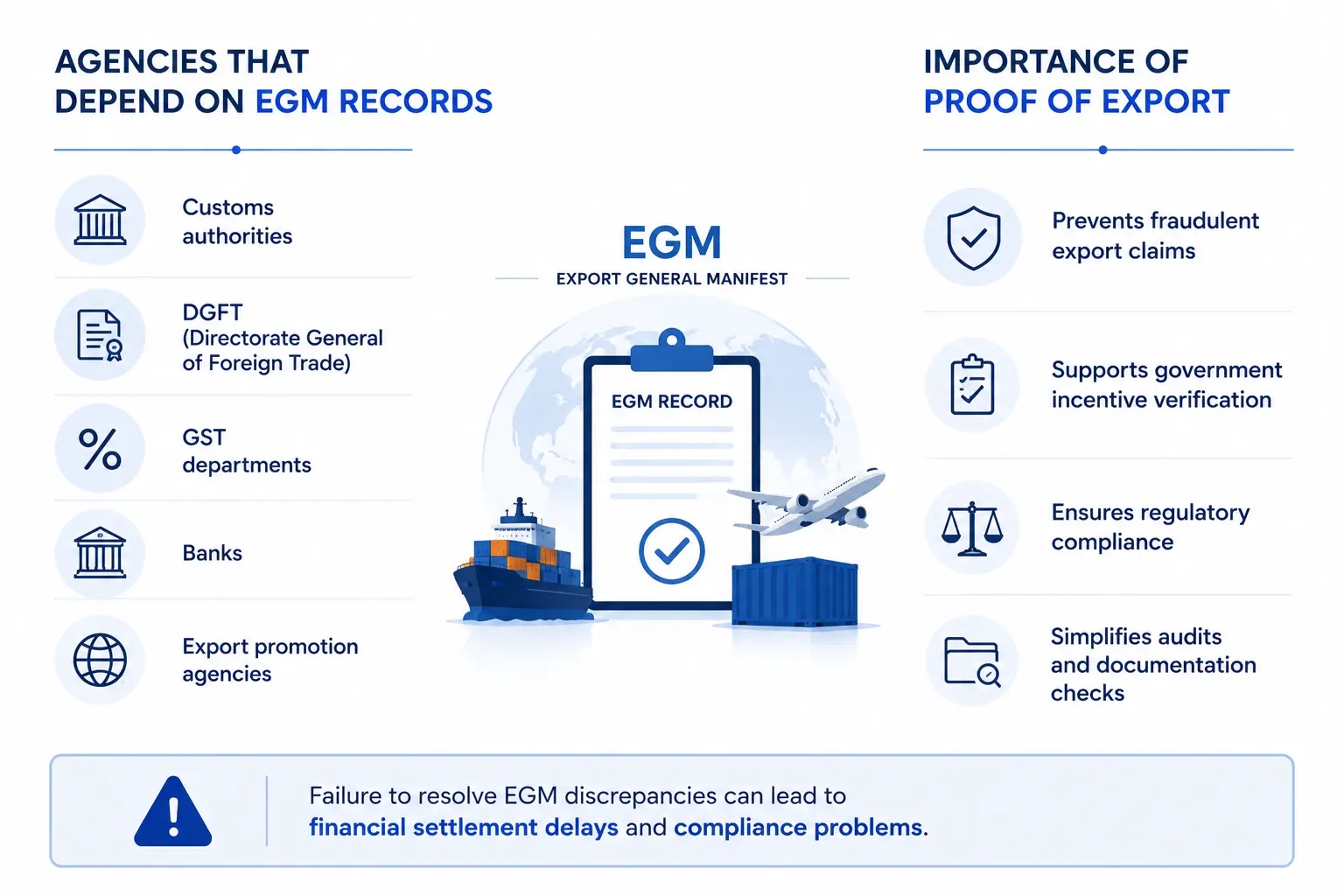
Since the Export General Manifest confirms the cargo has actually left the port, it becomes an essential bit of export documentation to get right.
If exporters can’t sort out any EGM discrepancies they may end up facing delayed financial settlements and a whole heap of compliance headaches.
EGM pending Issue Drawback Delay Problems
One of the most common headaches exporters face is the EGM pending issue drawback delay situation.
The EGM pending issue drawback delay problem can occur because of all sorts of things like incorrect shipping bill numbers, container mismatches, short shipment issues, duplicate entries or just basic errors in the filing process.
All of this can have a significant impact on cash flow because the government refunds and benefits get held up until the issue is resolved.
Many exporters don’t find out about EGM problems until they check the ICEGATE EGM status online.
To avoid all this hassle businesses should be keeping a close eye on customs records and making sure they are coordinating well with shipping agents.
The Export General Manifest system therefore has a direct impact on getting export benefits processed on time.
EGM Error Correction Process in India
The EGM error correction process is what you need to do when there are discrepancies between shipping bill records and manifest details.
The EGM error correction process may involve sending in amendment requests from shipping lines or customs brokers.
Common errors can be things like incorrect container numbers, wrong shipping bill details, and quantity mismatches and data entry mistakes.
Depending on the nature of the error the customs authorities may need some supporting documents before they even think about approving the corrections.
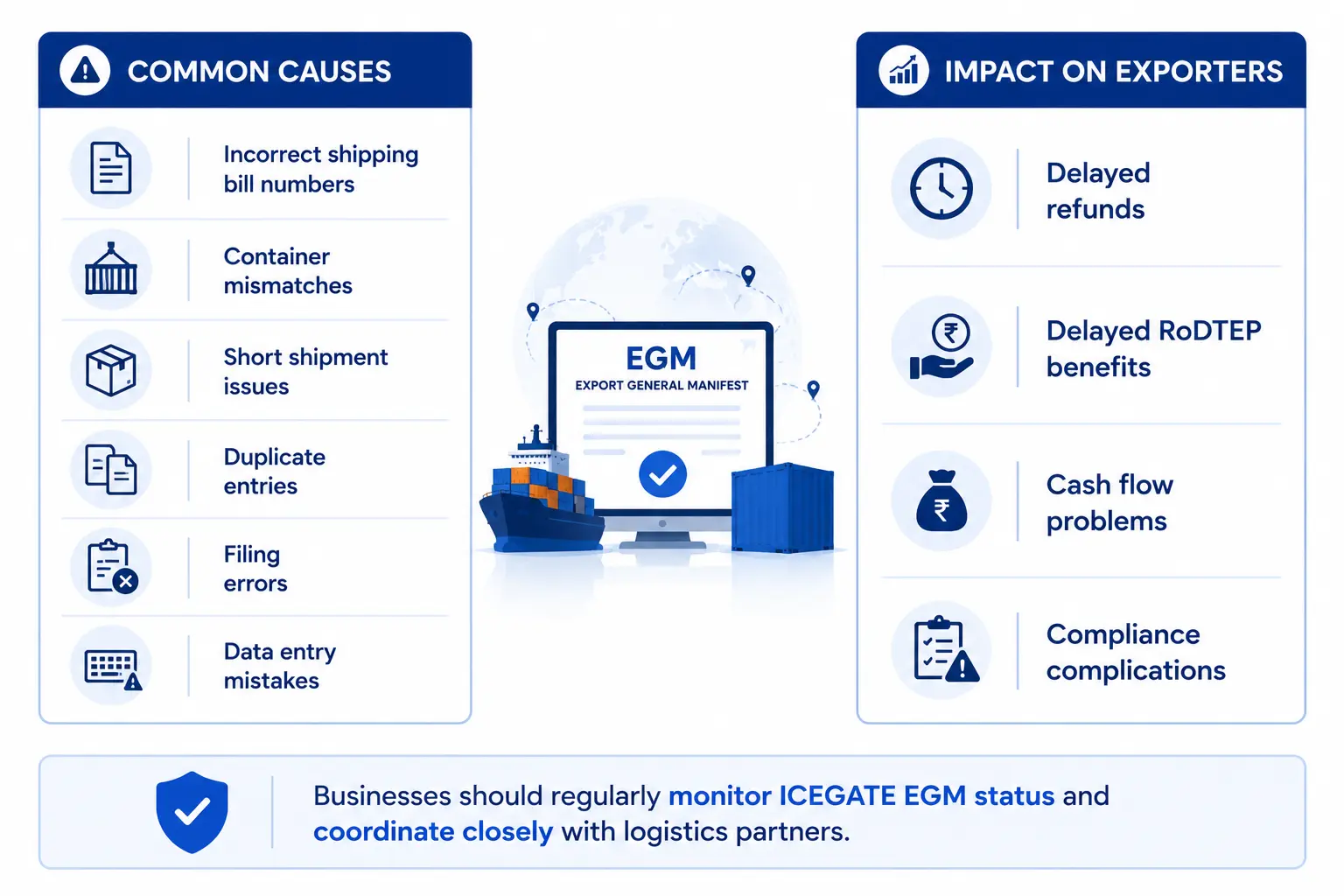
You need to get on top of the EGM error correction process pretty quickly, because if you dont it can lead to some pretty prolonged delays in getting export benefits.
Exporters should also be keeping good communication with customs brokers and logistics providers to make sure the documentation is accurate during customs clearance processes.
Digital customs systems have certainly made it easier to put in correction requests, but getting it all right in the first place is still super important.
Customs Export Documentation India Compliance Requirements
Exporters have to keep all documents consistent, that includes invoices, packing lists, shipping bills, bills of lading, and cargo manifests.
If you get export documentation right, you avoid all the hassle of customs disputes, shipment delays, and that financial hit you can end up taking.
Indian customs is now using automated systems more and more, which makes having accurate data in all your documents more important than it used to be.
Its good to know that the customs export documentation India process also helps make international trade more open and transparent, and lets regulatory bodies keep an eye on how things are going.
📑 Importance of Accurate Export Documentation
Accurate documentation is critical because Indian customs systems are highly automated and rely on data consistency across export records.
Exporters who keep their records in order and follow proper documentation procedures usually find customs processing a lot less stressful and get their incentives quicker.
The Export General Manifest works as a kind of tool to make sure you comply with the regulations, it also has to be processed financially.
Customs Clearance Export India and EGM – Coordinating Everything
Customs clearance export India involves several stages: you’ve got shipping bill filing, cargo examination, customs approval and getting the cargo loaded.
After the cargo leaves the country, the EGM is filed to officially confirm that it has departed.
It all works because of the coordination between customs clearance export India systems and EGM filing: this keeps trade tracking accurate and makes sure you comply with the regulations.
Thanks to digital customs integration, things have got a lot more streamlined and a lot less paperwork, but you still need to make sure all the stakeholders are talking to each other.
Shipping lines, freight forwarders, customs brokers, and exporters all work together to make sure the EGM gets filed properly.
Good communication and checking documents carefully really helps reduce errors and delays that you could have avoided.
Conclusion
Right from shipping bill closure and customs compliance to getting your export incentives and GST refunds, a lot of different things in the export process depend on the EGM being filed correctly. Businesses that understand the ins and outs of customs export documentation India and keep on top of their compliance are the ones that get their goods moved quickly and efficiently.
Frequently Asked Questions (FAQ’s)
It’s a customs document which is filed by the carrier after the export cargo has actually left the country: it shows that the goods mentioned on the shipping bills have been exported successfully.
It’s important because it lets the shipping bill get closed, gets the customs verified, and gets the export incentives and GST refunds processed: plus it proves you are in compliance with the export requirements.
Shipping lines, airlines or carriers are responsible for filing the Export General Manifest with customs through the ICEGATE systems.
Typically it’s a combination of things like wrong shipping bill details, containers not matching up, data entry mistakes and filing errors that cause EGM pending issue drawback delay problems.
You can log into the ICEGATE portal and track the shipping bill and EGM status electronically through customs systems.
EGM in export stands for Export General Manifest.
It is a document for exporter filed by the carrier (shipping line, airline, or their authorized agent) with Indian Customs after the goods are exported from India. The EGM confirms that the goods listed in the Shipping Bills have actually been exported.