
Overview
It is simple to purchase from suppliers on paper. You order, order in stock, sell it, and move on. In reality, the selection of between MOQ and bulk pricing is not always as straightforward as that of the unit price. Suddenly, you’re faced with two different pressures at the cash register: one supplier wants a minimum order quantity, and one supplier offers better rates when you order in higher volume.
That is where MOQ vs Bulk Pricing becomes worth understanding properly. Not as a catchy phrase. As a money decision.
A lot of business owners assume bigger orders always mean better savings. Sometimes that is true. Sometimes it is not. A low unit price can still trap cash in dead stock, while a higher unit price with a smaller order may leave you freer to respond to demand. So the real question is not just what is cheaper on the invoice. The real question is what is cheaper after storage, risk, cash flow, wastage, and sales speed all get involved.
MOQ vs Bulk Pricing Difference and Economies of Scale Pricing
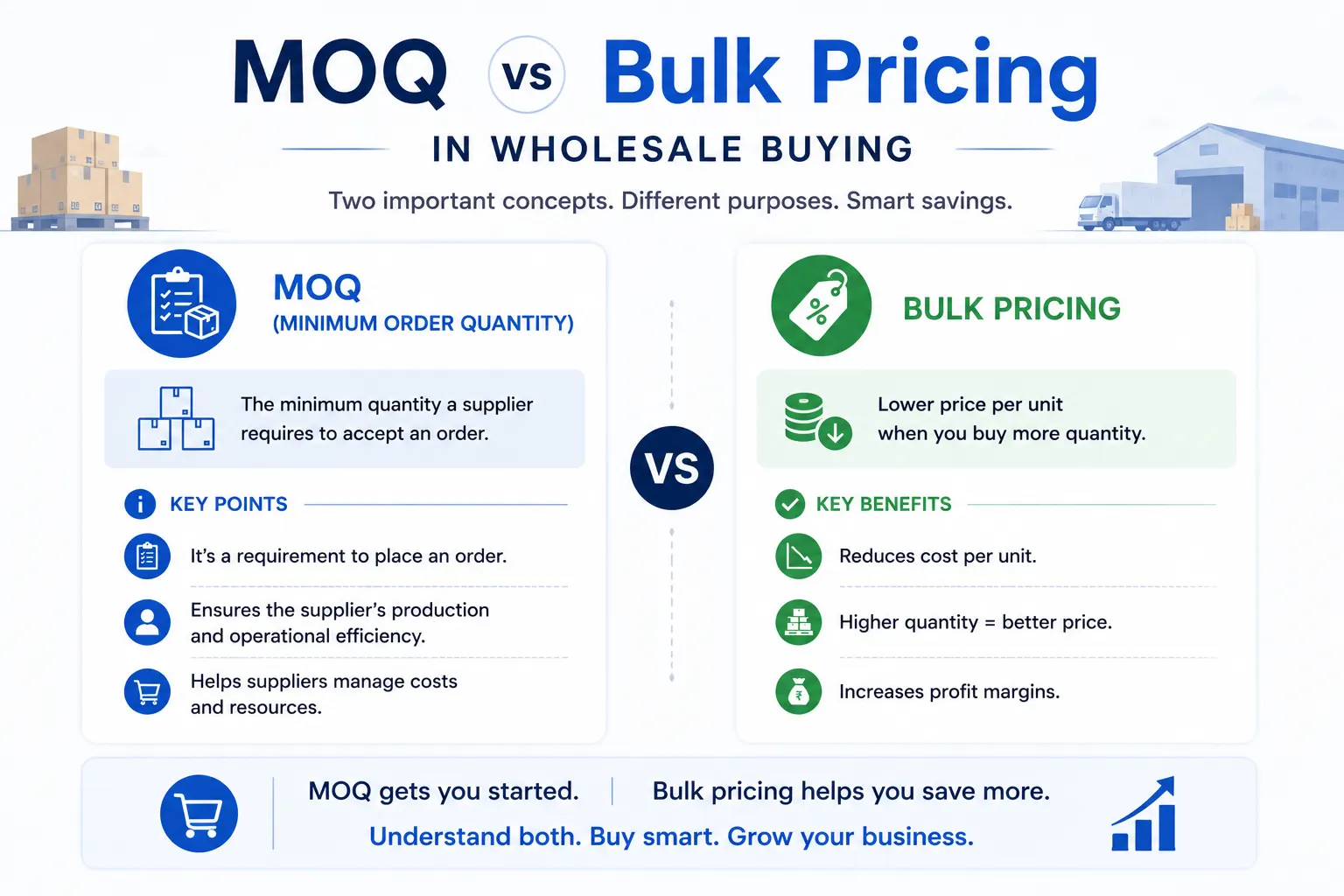
The MOQ vs bulk pricing difference is simple once you strip away the jargon.
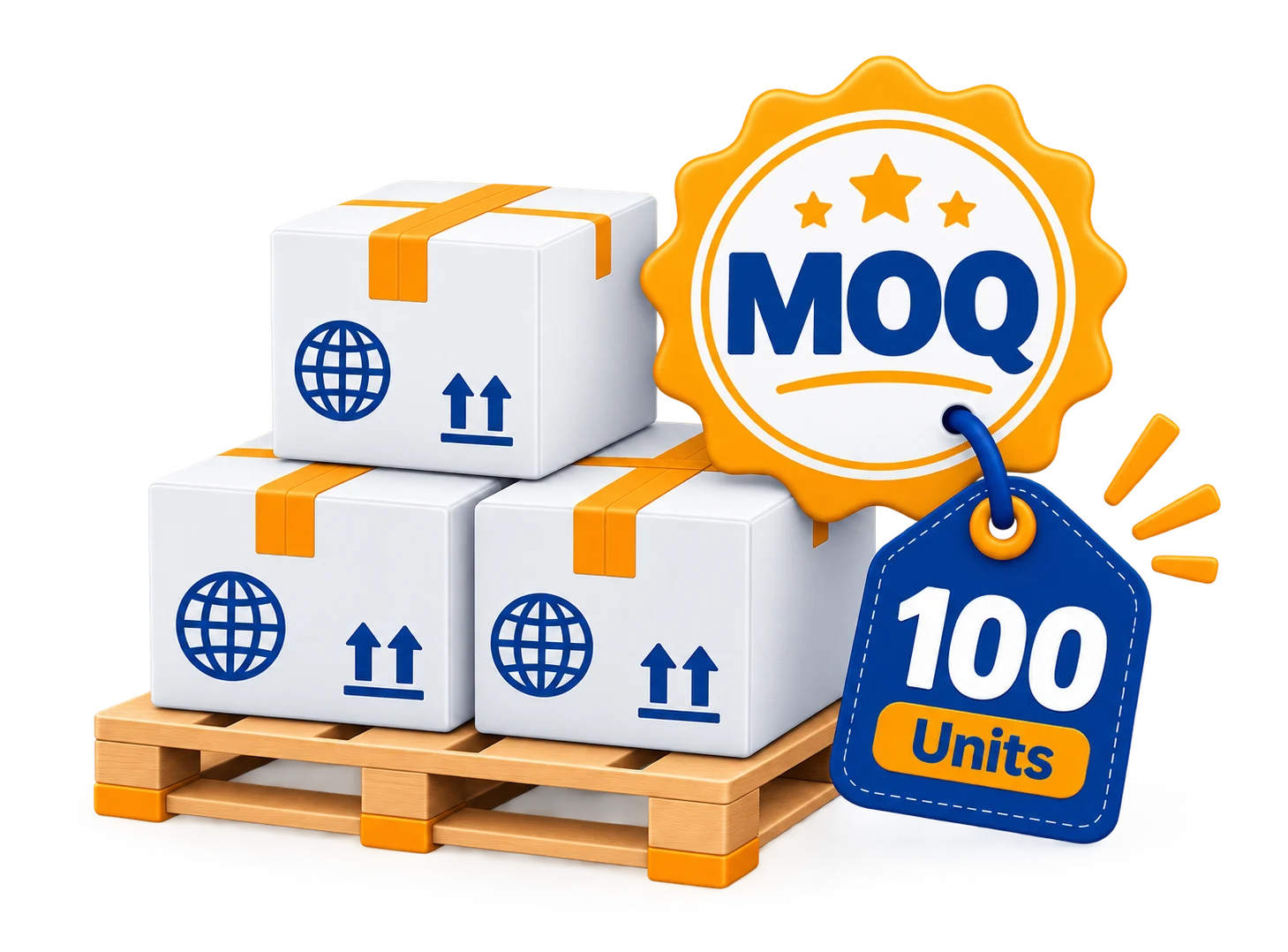
MOQ means “Minimum Order Quantity”, which is the minimum quantity the supplier will sell to you. For instance, if a factory claims that you have to place an order for 500 items or more, they will process your order. That is the minimum order quantity. It is a gatekeeping rule. No minimum, no deal.
The bulk pricing is different, however. In this case, the supplier might allow you to purchase any amount of quantity; however, the price of the unit goes down when you increase the quantity you buy. This is Bulk Pricing Meaning in plain English. The higher the quantity purchased, the lower the price per unit. This is where economies of scale pricing come in. It’s easier to manufacture or ship in large quantities, so suppliers pass some of the savings on to the buyer. Theoretically, the bigger order should have a reduced cost per unit. But in reality, the lowest unit price does not necessarily equate to the lowest business price.
A small retailer might buy 200 units at a slightly higher price and sell through them in a month. Another might buy 2,000 units at a lower price and sit on them for six months. The second order looks smarter on paper, but the business may actually pay more once storage, spoilage, and slow cash recovery are counted.
That is the heart of the matter. MOQ vs Bulk Pricing is not just about price tags. It is about how money moves through your business.
Cost per Unit vs Order Quantity: What the Numbers Really Say
When you compare suppliers, start with cost per unit vs order quantity. That sounds basic, but it is where many people slip. They see a lower unit rate and stop there. Actually, the better habit is to ask three questions at once.
How much will each unit cost?
How many units must I buy?
How long will it take to sell them?
A supplier might have a quotation of 100 items at 50 Rs and 500 items at 42 Rs. From the surface, it looks better, since the unit cost is lower for 500 pieces. But if only 180 pieces are likely to sell quickly, the remaining stock may sit idle, tying up money that could have been used elsewhere.
That is why inventory cost optimization matters. Inventory is not free just because it is sitting in your warehouse. There is rent, handling, damage risk, insurance, shrinkage, and the quiet but painful cost of money locked up too early. For some businesses, the bigger danger is not paying more per unit. It is buying too much too soon.
Here is a simple comparison.

📦 MOQ vs Bulk Pricing
Understand the key differences between MOQ (Minimum Order Quantity) and bulk pricing before sourcing products
The table makes one thing obvious. MOQ and bulk pricing are not the same lever. They solve different supplier problems. One controls access, the other rewards volume.
When MOQ Helps and When It Quietly Hurts
A MOQ can be useful when you are launching a product, testing a market, or buying something with stable demand. If you know the item will sell steadily, meeting the minimum may be sensible. In some cases, MOQ protects you from fragmented small orders that would otherwise bring high shipping costs.
But MOQ can also hurt when it pushes you into buying more than your business can comfortably absorb. That is especially common for newer businesses, seasonal sellers, and importers with limited cash flow. You may meet the minimum just to keep the supplier happy, then spend the next few months trying to recover your money through sales.
This is where supplier pricing models become important. Some suppliers are strict on MOQ, some offer tiered pricing, and some blend the two. A supplier may say you need 300 units minimum, but also offer a better rate at 1,000 units. That creates a decision inside a decision. Do you buy only when you need to pay the minimum price, or do you purchase more as the price per unit decreases rapidly?
It depends on the situation. It’s all about the right action according to the sales rate, margin, and storage space. If the product is not easily returned and has speedy delivery, it might be worth ordering more. A fragile or trendy product might not.
MOQ vs Bulk Pricing in Wholesale Buying
In real-life pricing strategies wholesale, the strongest deal is not always the largest order. It is the order that gives you the best total profit after all costs. That is why MOQ vs Bulk Pricing deserves a proper wholesale comparison.
Imagine one of the garment retailers in India placing an order for plain T-shirts. The supplier can quote a MOQ of 200 pieces at Rs. 95 per piece. Another supplier may be able to give you 500 pieces for Rs 86 per piece. The second deal looks cheaper. Yet if the seller only has demand for 250 shirts in the next two months, the “cheap” deal may create clutter and slow movement. The extra 250 shirts become a burden, not a win.
This is one reason wholesale pricing strategies in India often vary so much by industry. Textiles, packaging, electronics, kitchenware, and FMCG items all behave differently. Some products move fast and can support bulk buying. Others move slowly and punish overstocking. Local market demand, seasonality, and delivery lead time all matter.
A good buyer looks beyond the invoice. They compare landed cost, holding cost, and selling speed. They also ask whether the discount is real or cosmetic. Sometimes a supplier gives a volume discount, but the shipping cost rises so much that the final saving disappears.
That is why the phrase saving costs through bulk buying needs a careful reading. Yes, bulk buying can save money. But only when the stock turns into sales quickly enough. Otherwise, the savings are delayed, diluted, or erased altogether.
A Practical Way to Decide Between the Two
If you are deciding between MOQ and bulk pricing, use a simple filter.
First, estimate your monthly demand. Be conservative. It is easy to imagine stronger sales than you actually have.
Second, compare total cost, not just unit cost. Include shipping, storage, breakage, payment terms, and any discount loss from unsold stock.
Third, check your cash position. A lower unit price does not help if it drains working capital and leaves you short on marketing, payroll, or reordering.
Fourth, test the supplier relationship. Sometimes a smaller first order opens the door to better terms later. That can be more useful than forcing a large buy on day one.
This is the part many businesses skip. They chase the lowest quote and forget the whole system around it. But business buying is never only about products. It is about timing, control, and the cost of being wrong.
In that sense, MOQ vs Bulk Pricing is really a test of discipline. The best buyers do not chase the biggest discount first. They chase the healthiest margin over time.
The Hidden Cost of Buying Too Much
There is a quiet trap in wholesale buying. It feels safe to stock up. It feels efficient. Yet extra stock can age badly.
Fashion changes. Pack sizes shift. Customer tastes move. Some goods expire. Some get damaged. Some simply lose attention. Once that happens, the lower unit price you celebrated at purchase time stops looking so impressive.
That is why inventory should be treated like a living expense, not a trophy. The smartest businesses are usually not the ones with the largest warehouses. They are the ones with the cleanest turnover.
A lean order can be the better choice when demand is uncertain. A larger order can be the better choice when the product is proven and repeat sales are strong. The answer changes with the business, which is exactly why blanket advice is so often wrong.
Final Thought
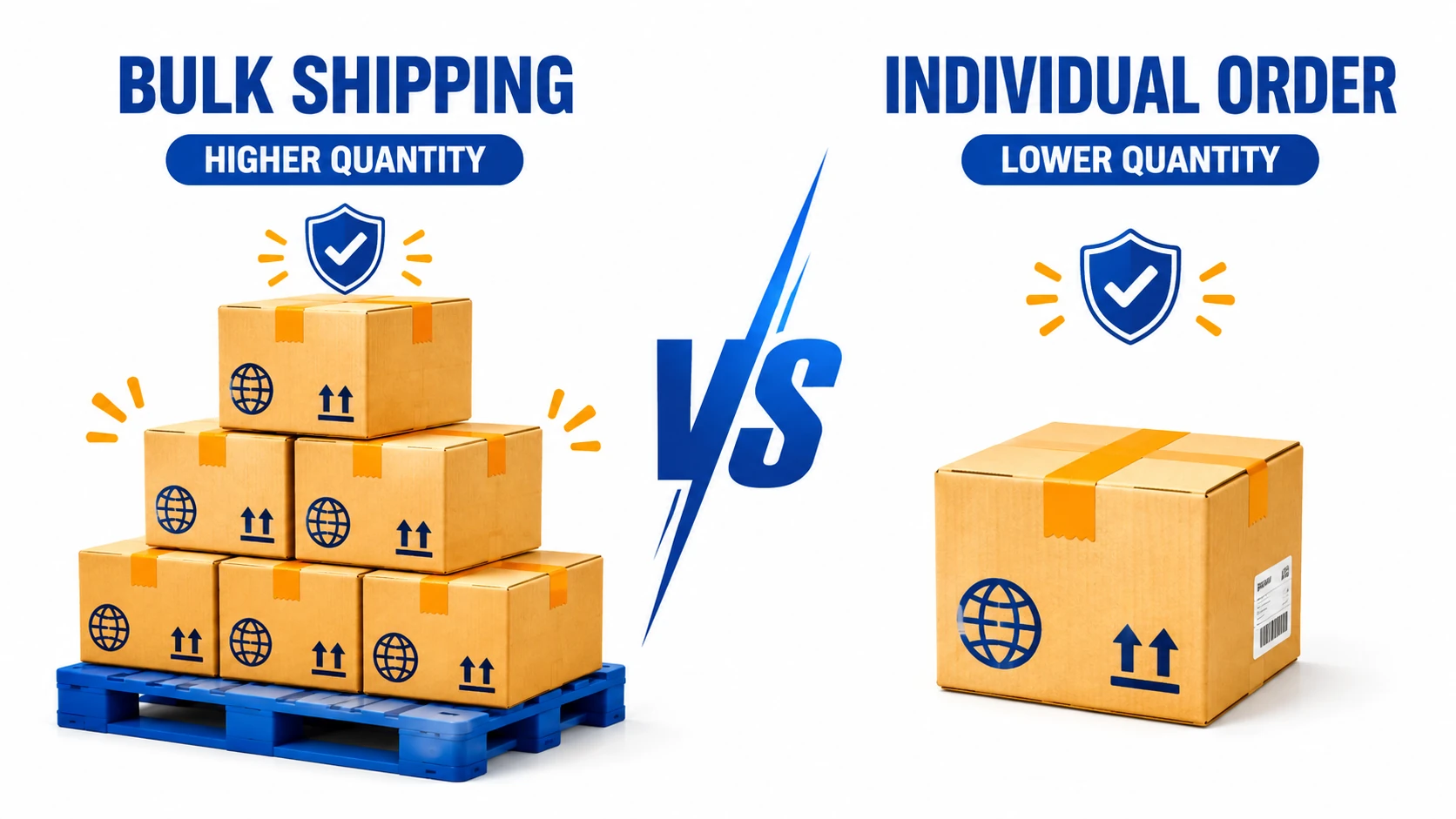
So, which saves more money? Sometimes MOQ does, because it gives access to a supplier and keeps the order manageable. Sometimes bulk pricing wins, because the unit cost falls enough to improve margins in a meaningful way.
However, the best choice is often the one that incorporates the unit price, cash flow, demand and inventory cost optimization.
That’s what’s important to remember. The lowest bid may not be the most cost-effective. Good buying isn’t about finding the lowest price and it’s not about finding the best deal; it’s about how much stock your business can afford without overloading. But after you understand this concept, MOQ vs Bulk Pricing becomes a tool for your business survival.
Key Takeaways
- MOQ is the lowest amount of order that a supplier demands, while bulk pricing discounts you per unit when you make a bigger order.
- The lowest price per unit may not be the lowest total price available.
- Always compute your landed cost, including product, freight, tariffs, warehousing, and handling fees.
- Bulk ordering works best when there is certainty about demand and inventory turns quickly.
- Small companies should negotiate MOQs or order in smaller quantities more regularly.
- The right choice depends on the balance between price, quantity, inventory, and shipping expenses.

FAQs
MOQ stands for ‘Minimum Order Quantity’, which is the minimum amount of product a customer must purchase to place an order. Bulk pricing is a pricing strategy that’s designed to offer a discount on the price per unit as a bigger quantity is purchased.
No. Bulk pricing can lower the unit rate, but it may also increase storage costs and lock up cash. The better option depends on demand and turnover.
Using the total landed cost, and not just the unit price. Take into consideration shipping, storing, waste, and the sales velocity of the inventory.
Suppliers rely on MOQ to ensure their production efficiency, minimize tiny orders and ensure that every sales transaction is worthwhile, otherwise they might not be worth their time and effort.
.