
Letter of Credit (LC): Overview
- Use of Letter of Credit (LC) in international trade provides businesses the confidence to expand into new markets overseas.
- With Letter of Credit, it becomes easier for you and your business to establish new connections globally (with new companies).
- A Letter of Credit is highly customizable, offering improved flexibility to trading partners with respect to various terms, conditions, and requirements of the transaction.
Let’s say you’ve just landed a dream export order. It’s big, international, and from a client you’ve never worked with before.
The deal seems great, but one issue remains: What if the client fails to pay for the products shipped?
Payment risk is one of the main difficulties in international business operations, particularly with a foreign client.
In this case, a Letter of Credit (LC) can be used as an instrument to payment assurance. Essentially, it is a written assurance provided by a bank that confirms: “Sure, you will be paid if conditions are met.”
Now, let us define a Letter of Credit, understand how it works, what types of LCs exist, and in which situations it may be used.
Let’s explore.
What Is a Letter of Credit
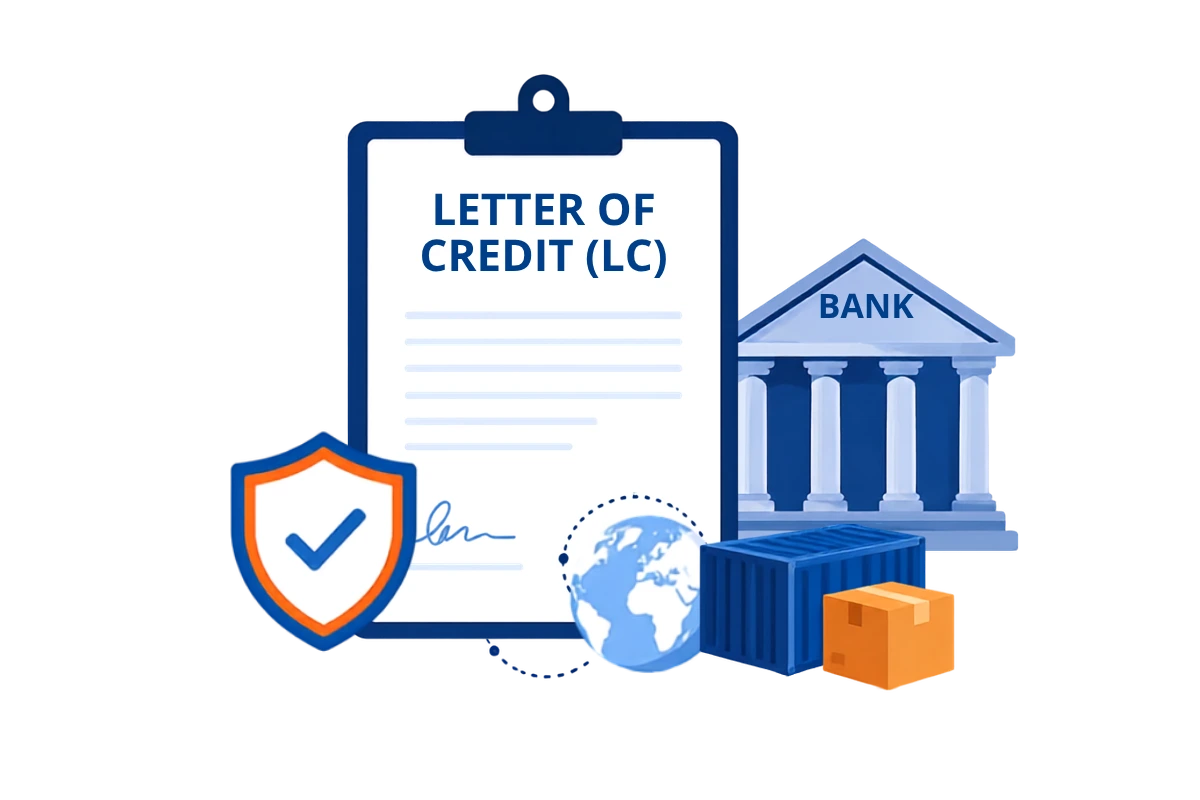
A Letter of Credit (LC), also known as a Documentary Credit, is a written undertaking by a bank that provides payment assurance to an exporter (beneficiary) on behalf of a buyer (applicant), provided the exporter presents the required documents and complies with the terms and conditions of the Letter of Credit.
In simple terms, the buyer’s bank undertakes to make payment to the exporter when the required documents are presented and found to comply with the terms and conditions of the Letter of Credit.
It’s one of the most widely used payment instruments in global trade.
How Does It Actually Work
Why Should You Care About It
Here’s the truth: trust takes time, especially in business. When you’re working with buyers across oceans and time zones, things like delays, defaults, and disputes can happen. An LC can reduce payment uncertainty by involving a bank and setting clear payment and documentation requirements.
With a Letter of Credit, you get:
- Payment assurance even if you’ve never met the buyer; this gives you the confidence to step into the unknown territory/ start international trade.
- A legal framework governed by international rules.
- Documentation driven security, not just empty promises.
The issuance of an LC may indicate that the buyer has arranged a banking facility or payment arrangement with the issuing bank, subject to the bank’s terms and conditions.
Parties to a Letter of Credit (LC)
Key Parties:
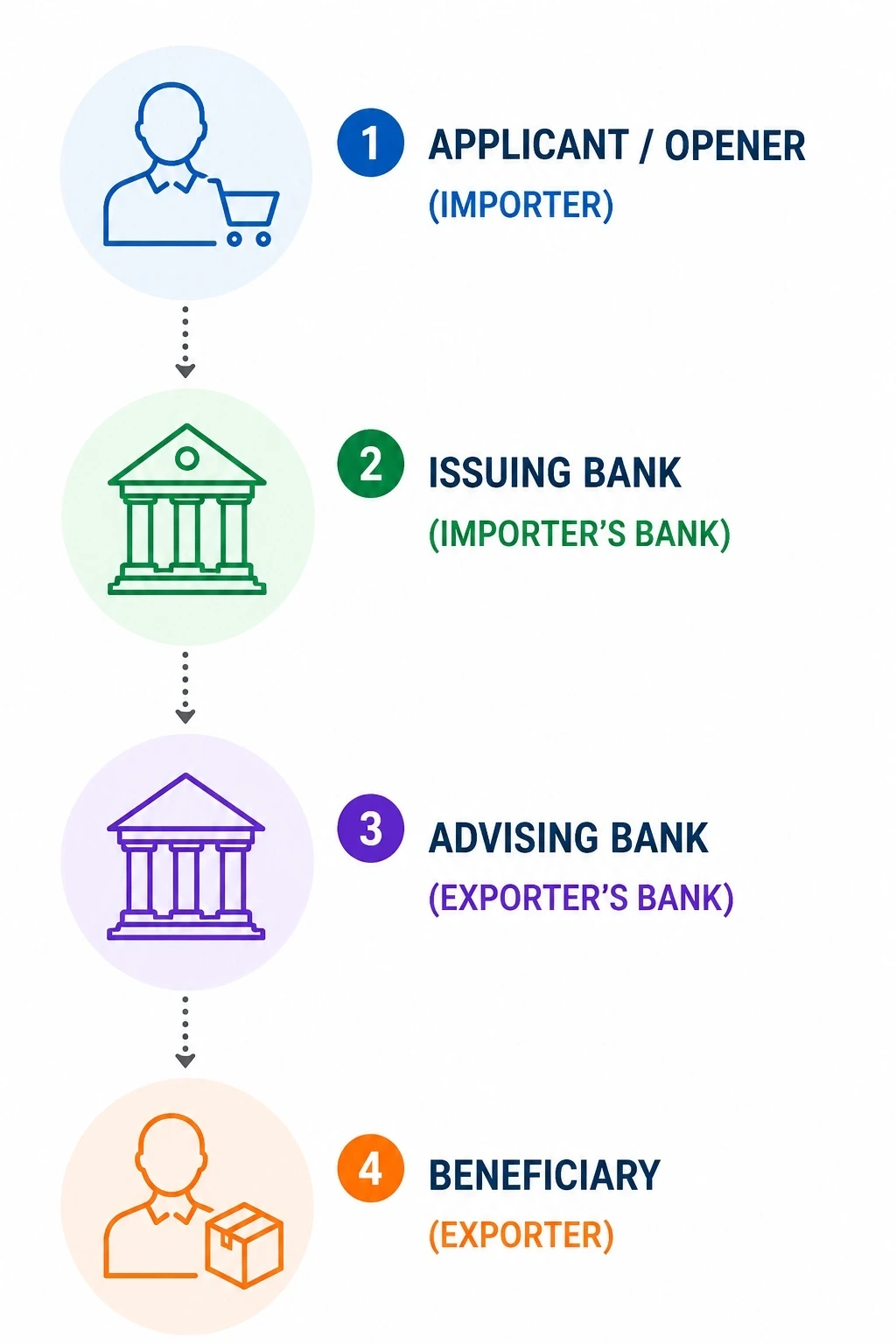
i) Applicant / Opener – Importer
The buyer who requests the Letter of Credit from their bank. The Letter of Credit is opened on their behalf.
ii) Issuing Bank – Importer’s Bank
The bank that issues the Letter of Credit at the buyer’s request and undertakes to honour a complying presentation.
iii) Advising Bank – Exporter’s Bank
The bank that receives, checks the apparent authenticity of, and advises the Letter of Credit to the exporter. It communicates the Letter of Credit issued by the issuing bank to the beneficiary.
iv) Beneficiary – Exporter
The seller in whose favor the Letter of Credit is issued. The exporter receives payment when the required documents comply with the Letter of Credit terms.
Other Parties:
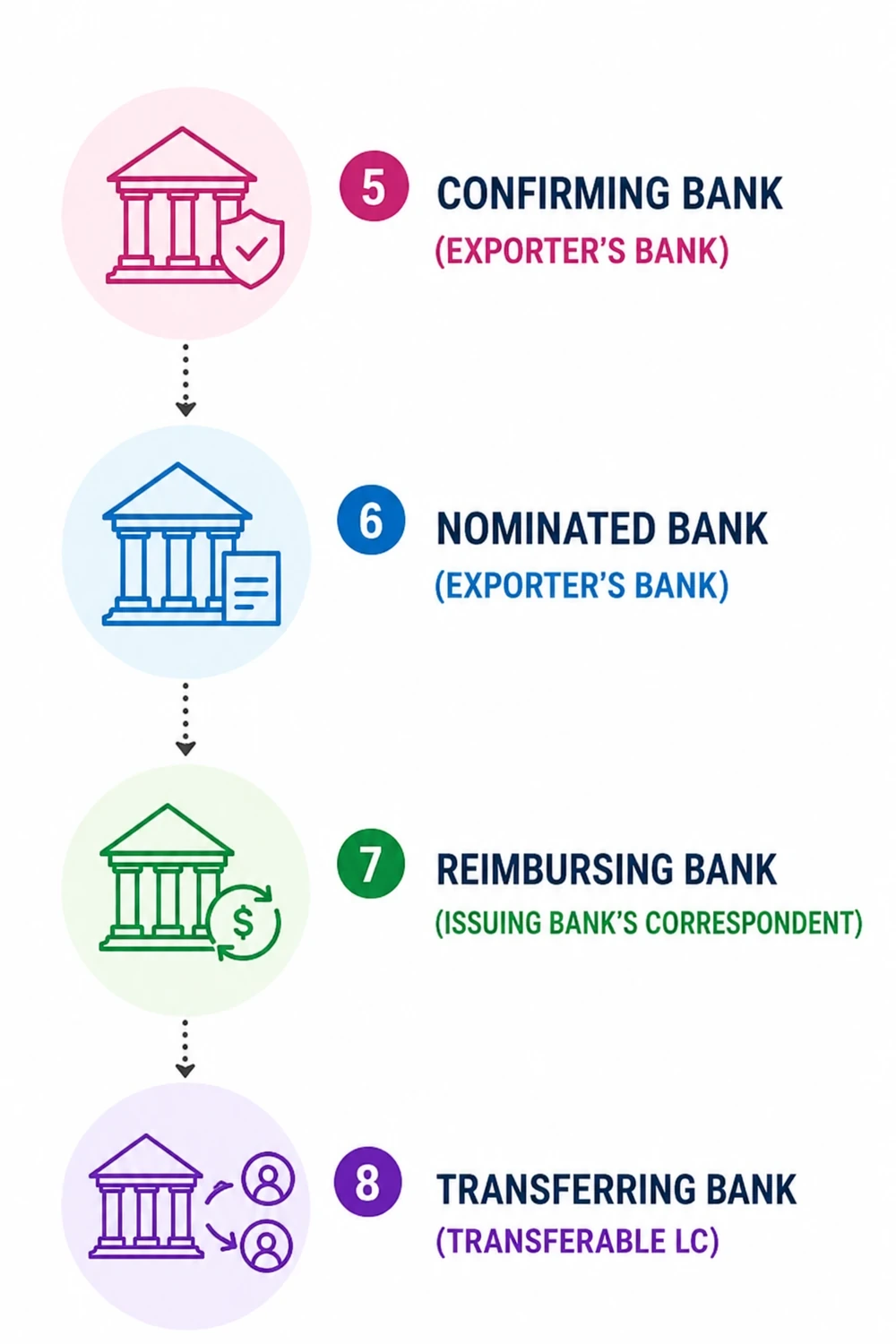
5. Confirming Bank — Additional Payment Security
Adds its own payment undertaking to the Letter of Credit, giving the exporter additional payment security.
6. Nominated Bank — Handles Documents & Payment
A bank nominated under the Letter of Credit to examine documents and, where applicable, honour or negotiate a complying presentation.
7. Reimbursing Bank — Settles Bank-to-Bank Payment
Reimburses the bank that makes the payment under the Letter of Credit.
8. Transferring Bank — Transfers the Letter of Credit
Transfers a transferable Letter of Credit from the first beneficiary to another beneficiary when permitted.
Types of a Letter of Credit
What Are the Costs Involved in a Letter of Credit
Before proceeding with a Letter of Credit (LC), it’s important to be aware of the various fees and charges that may apply. These can include:
The actual charges vary depending on the bank, transaction structure, and terms of the Letter of Credit. Always confirm the applicable charges with the bank before proceeding.
1. Processing Fees: A one-time fee charged by the bank for evaluating and processing your loan application.
2. Documentation Charges: Fees for preparing, verifying, and processing the required legal and financial documents.
3. Collateral Charges: Costs related to evaluating, maintaining, or securing assets pledged as collateral for a loan.
4. Subsidy Related Charges: Administrative fees for processing loans linked to government subsidy schemes.
5. Commitment Fees: Charges applied when a sanctioned loan amount is not fully utilized within the agreed period.
6. TOD (Temporary Overdraft) Charges: Fees applied when you withdraw more than your available account balance for a short period.
7. Penal / Overdue / Default Charges: Additional charges imposed when loan repayments are delayed or missed beyond the due date.
8. Collateral Swap Charges: Fees applicable when you replace or change the collateral provided against your loan.
9. Charges for Issuance of Certificates: Fees for providing official documents such as interest certificates, NOCs, or loan statements.
10. Foreclosure Charges: Charges that may apply when you repay your loan before the agreed tenure ends.
Understanding LC with an Example
To better understand how a Letter of Credit functions, let’s consider a practical scenario. Suppose an importer based in the United States intends to purchase Ayurvedic products from a manufacturer located in India. To secure the payment for this international transaction, the Indian manufacturer asks the importer to provide a Letter of Credit from a reputable bank.
In response, the U.S.-based bank issues a Letter of Credit in favor of the Indian manufacturer. This document serves as a payment assurance, stating that the bank will make the payment once the manufacturer submits the required shipping documents, such as the bill of lading and the commercial invoice, as per the terms outlined in the LC.
After the manufacturer dispatches the goods and presents the necessary documents to the bank, the bank verifies them for compliance. Upon successful verification, the bank proceeds to release the payment to the manufacturer.
This arrangement provides greater payment security for both parties. The importer makes payment against documents that comply with the terms and conditions of the LC, while the exporter receives payment when the required documents are presented and found to be compliant.
What to Watch Out For
Yes, Letters of Credit are protective, but only if handled correctly. Mistakes in documentation are one of the top reasons exporters miss payments.
Avoid these pitfalls:
- Sending incorrect or incomplete documents
- Misunderstanding LC terms and timelines
- Ignoring bank fees or hidden charges
- Not clarifying the payment conditions (sight vs. usance)
When in doubt, ask your bank for help. It’s always better to clarify than to assume.
Conclusion: Is a Letter of Credit Worth It
Here’s the big question: Do you need a Letter of Credit for every export?
Not necessarily. But for large-value orders, new buyers, or countries with currency/payment restrictions, an LC can be a game-changer.
Think of it like insurance. You hope you never need it, but when things go wrong, you’ll be so glad it’s there.
If you’re just entering the world of global trade, take this as your sign to explore the LC route—one of the safest and smartest tools in your exporter toolkit.
Key Takeaways
An LC provides payment assurance when the exporter meets the agreed conditions.
Different types of LCs serve different needs, from immediate payment to deferred payment and added security.
Documents matter: even small discrepancies can affect payment.
Know the costs and terms before accepting an LC from a buyer.
For large or new-buyer transactions, an LC can reduce payment risk and make international trade more secure.
FAQ’s
Letter of Credit is mainly used for payment purposes in an international trade business whereas Bank Guarantee is used for providing assurance that the bank will cover the beneficiary in case of any failure by the applicant.
An application for an LC is made by the buyer at their issuing bank, giving all the necessary information about the transaction. The issuing bank then issues the letter of credit to the exporter according to the terms agreed upon.
It depends on what is mentioned in the LC. Some of the common documents are commercial invoices, transport documents, packing lists, insurance documents, and certification by the buyer or issuing bank.
The LC would be beneficial in a case where the exporter is seeking more security in payment terms, especially in case of a new customer or high-value deal abroad.
If the documents do not comply with the LC terms, the bank may raise discrepancies and payment can be delayed or refused unless the discrepancies are accepted or resolved according to the applicable process.