
The manufacturing of food and cosmetics in India entails more than just establishing a manufacturing unit and getting a business license. The manufacturer will have to obtain product-specific licenses, a safety record, a testing report, labeling details, a manufacturing license, and, if applicable, export documentation. The requirements will vary depending on the product, manufacturing process, operation scale, ingredients, destination country, and mode of transportation.
When working with businesses that prepare documentation for food and cosmetic manufacturers, it will be crucial to differentiate between the documents required for manufacturing in India and those that could be asked for when exporting the goods. What is mandatory for one product or destination could be irrelevant for another.
What are the documents required for food and cosmetics manufacturers?
The types of documents required by the manufacturers of food and cosmetics generally consist of the following five categories: business and manufacturing documents, product-specific licenses, testing and safety documents, labeling documents, and export/supply documents. In the case of food, the license/registration certificate of FSSAI is normally required, whereas, in the case of cosmetics, it comes under the Cosmetics Rules, 2020.
For food, according to FSSAI, every Food Business Operator shall have either a license or a registration. Registration is required for petty food manufacturers and those businesses that fall within the scope of the registration threshold.
| Document / License | Food Manufacturer | Cosmetics Manufacturer | Export Relevance |
|---|---|---|---|
| Business registration documents | Yes | Yes | Yes |
| PAN and GST documents | Generally required | Generally required | Yes |
| FSSAI registration/license | Yes | No | Often |
| Cosmetics manufacturing license | No | Yes | Often |
| Product testing report | Yes | Yes | Frequently |
| Certificate of Analysis (COA) | Often | Often | Frequently |
| Product specification sheet | Yes | Yes | Frequently |
| Ingredient declaration | Yes | Yes | Frequently |
| Safety Data Sheet (SDS/MSDS) | Product-dependent | Product-dependent | Frequently for chemicals/fragrances |
| Health/sanitary certificate | Product/destination dependent | Product/destination dependent | Where required |
| Phytosanitary certificate | Certain plant products | Generally product-dependent | Where required |
| Certificate of Origin | Export-dependent | Export-dependent | Common |
| Commercial invoice and packing list | Export | Export | Yes |
| Shipping Bill | Export | Export | Yes |
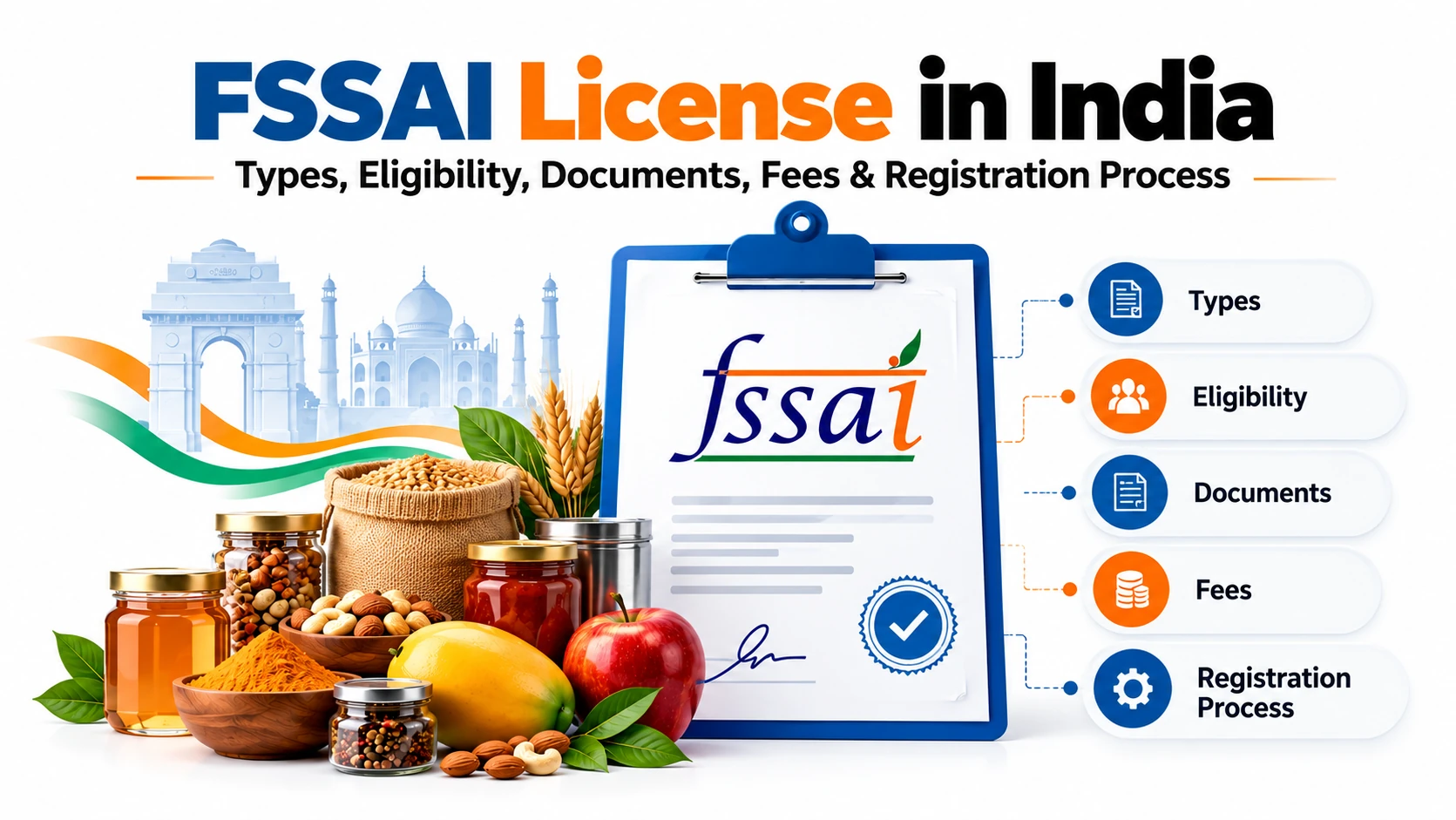
FSSAI Registration or FSSAI License: the first requirement for food manufacturers
Food manufacturers cannot take FSSAI registration lightly. According to the provisions made under Section 31 of the Food Safety and Standards Act, all food businesses must get the proper registration or license. Presently, FSSAI states that registration is necessary for petty food manufacturers and food businesses operating at small and cottage scale within the threshold, while other businesses need a license.
Depending on the nature of the business, the manufacturer will have to either apply for an FSSAI State License or FSSAI Central License. There are some export oriented businesses and some other food business categories who need central licensing.
Common FSSAI application documentations may include:
FoSCoS documentation of FSSAI explicitly mentions Form-B, processing unit plan, information of directors/partners/proprietor, machinery and equipment information, and the list of food categories as some of the documents that would be required in case of a central license application.
Food product labelling and ingredient declaration documents
Food product labelling is another very important aspect of food safety compliance. Approved label artwork and relevant information should be available for each SKU of the product.
As per the product type, documentation should include:
It is also very important to make sure that the information printed on the label matches the formulation, manufacturing records, and test results of the product. A mismatch in the declaration of ingredients, nutrition, and other aspects can result in a compliance issue even if the manufacturing license for the product is proper.
FSSAI maintains regulations for food products, additives, licensing, and other food regulations, which are amended periodically through its official regulatory system.
Cosmetics manufacturing license and product documentation
There is a difference in regulation between cosmetics manufacturing and food manufacturing in India. Cosmetics Rules, 2020 provide regulations regarding manufacturing, quality, labelling, and other regulatory matters. The latest Cosmetics Rules and guidance from CDSCO can be accessed through its website.
For the domestic manufacture of cosmetics, an application for a manufacturing license must be submitted to the concerned State Licensing Authority. According to CDSCO’s FAQs, the form used for a manufacturing license is COS-5, while the loan license is obtained by filling out Form COS-6. The manufacturing license and loan license are granted in Forms COS-8 and COS-9, respectively.
The following documentation should be kept by manufacturers:
The process of obtaining product registration may not necessarily apply to every Indian-manufactured cosmetic product available domestically. The choice of regulatory path will depend on whether the cosmetic is manufactured, imported, or a new cosmetic.
As per CDSCO, the manufacture of a New Cosmetic in India requires prior permission, and the application is filed through Form COS-12. The permission is granted through Form COS-3.
Cosmetic safety assessment and product testing
The manufacture of cosmetics should keep documentation indicating that their products satisfy safety and quality standards. Cosmetic safety assessment becomes necessary, especially when testing the ingredients, exposure, use, and any possible risks.
Documentation will involve:
The cosmetic product testing report may demonstrate compliance with relevant specifications and the buyer’s requirements. Testing needs to be carried out in competent laboratories in accordance with the nature of the product and the test.
Manufacturers need to be careful with their marketing statements. The cosmetic should not have any false or misleading claim as mentioned by CDSCO guidelines. There are restrictions for misleading claims in Cosmetics Rules, 2020.
Non-DG certificate and dangerous goods classification
Perfume, essential oil, aerosol, alcohol-based product and chemical products are other areas of consideration while exporting.
On the other hand, the shipper, transporter, or freight forwarder can inquire about whether the product is classified as dangerous goods. If the product does not fall under the classification of dangerous goods as per the relevant transport regulation, a Non-DG certificate, non-dangerous goods declaration or Non-DG declaration can be required.
If the product falls under the classification of dangerous goods, then a dangerous goods declaration, together with any other relevant documentation, can be required.
Health certificate, sanitary certificate and phytosanitary certificate
Export certificates will vary with the products and the destination.
A health certificate may be required for certain types of food products or certain animal products, or even for certain destinations. For example, APEDA’s Meat.Net system provides for the requirement of health certificates for export consignments of meat products with relevant testing, along with supporting invoices and packing list documents as part of the process.
A phytosanitary certificate is basically related to plants and plant produce, and proves that the produce satisfies the appropriate phytosanitary standards. The HortiNet of APEDA, for example, takes into account residue analysis, health certification, and phytosanitary certification for selected export chains of horticultural produce.
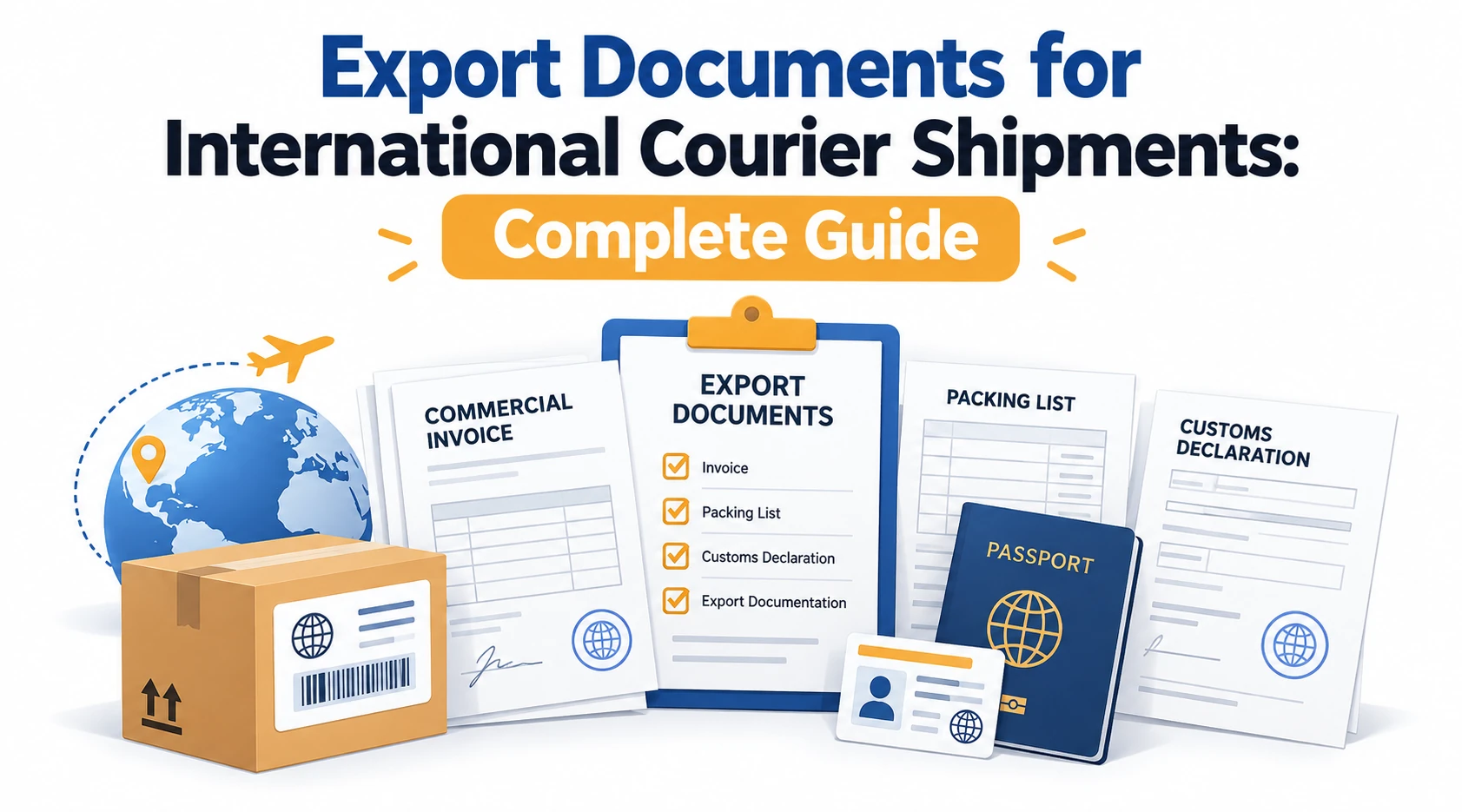
Export documents required for international shipments
After satisfying oneself about the product itself, the exporter must get the export documents for the shipment.
Basic documents needed for exports are:
| Export Document | Main Purpose |
|---|---|
| Import Export Code (IEC) | Identifies the exporter for international trade |
| Commercial Invoice | Records seller, buyer, product and transaction value |
| Packing List | Provides package, quantity and shipment details |
| Shipping Bill / Bill of Export | Customs export clearance |
| Bill of Lading / Airway Bill | Evidence of carriage |
| Certificate of Origin | Establishes country of origin |
| Insurance Certificate | Provides shipment insurance evidence where applicable |
| Inspection / Quality Certificate | Demonstrates quality where required |
| Product COA | Demonstrates tested product characteristics |
| Health / Sanitary Certificate | Required for specified products or destinations |
| Phytosanitary Certificate | Required for specified plant products |
| SDS / MSDS | Relevant for certain chemical or potentially hazardous products |
| Non-DG Declaration | Used where the carrier or buyer requires confirmation of non-dangerous-goods status |
According to DGFT, some of the mandatory documents for exports include Transport Document such as Bill of Lading/Airway Bill, Commercial Invoice-cum-Packing List, and Shipping Bill/Bill of Export/Postal Bill of Export. It is also stated that some goods may require additional documents to be submitted in addition to those covered by other Acts.
What changes when exporting food or cosmetics to another country?
Apart from being compliant with Indian regulations, the export procedure also requires to follow rules of the destination country.
In particular, the buyer or regulator from a foreign country may ask for:
Documents manufacturers should maintain before export
It will be better to compile a compliance file before receiving an international order.
For each SKU, keep:
How to determine exactly which documents your product needs
There are no one-size-fits-all document lists for all food or cosmetics manufacturers. Your appropriate checklist should be generated based on four variables: the product, manufacturing process, destination country and mode of transportation.
Start by determining the precise product and its HS code. Determine the relevant Indian authority and the licensing, manufacturing, testing, and labeling requirements. For export, understand the product regulations in the destination country and import conditions. Finally, ask the freight company whether you need an SDS, Dnon-DG,-DG or any other transport document.
This way, you will avoid two typical mistakes: getting unnecessary certificates increasing compliance expenses and finding out during production that you do not have the relevant certificate or test report.
Final checklist before manufacturing or export
Manufacturers should ensure compliance as a continuous documentation effort rather than a one-time process of getting registered. For food businesses, they need to have a proper FSSAI license and relevant food safety records. In case of cosmetics businesses, they need to abide by the rules as per the Cosmetics Rules, 2020 and the respective manufacturing license route. Testing, labeling, ingredients, and safety records need to stay consistent with the product.
In case of exports, include all the necessary customs and product-specific documents along with the compliance checklist. DGFT has confirmed that there can be additional documentation required in certain cases where other authorities lay down specific product requirements.
FAQs
Yes, every food business is expected to get FSSAI registration/license, depending on the applicable regulatory framework. The kind of registration/license differs based on the nature and size of the business. FSSAI categorizes petty food businesses for registration and licensing.
No. Cosmetic products fall under the scope of the Cosmetics Rules, 2020, not the FSSAI food licensing system. Indian cosmetic manufacturers must undergo appropriate licensing via the respective State Licensing Authority, and novel cosmetics might be needed to obtain prior clearance from the Central Licensing Authority.
Not always. The requirement for an MSDS/SDS will depend on the nature of the product, its hazards, shipping requirements, as well as the purchasing country’s requirements. Some items such as perfumes, essential oils, and other formulations with chemical substances may need SDS to be provided.
No. These two types of certificates are product-specific as well as destination-specific. While a health certificate may be required for certain food items or animal products, a phytosanitary certificate is mostly related to plants and plant products.