
Supplier invoices are documents from suppliers to their buyers that contain requests for payments for the supplies made. The document contains information regarding the supplies, the quantity or scope of supplies, taxes, amounts payable, and payment terms.
For businesses, invoices are more than just requests for payment. Invoices can be used for bookkeeping purposes and, when required, GST documentation purposes, recording expenses, reconciliation, and input tax credits.
What Is a Supplier Invoice?
Supplier invoices are documents sent by a supplier to a business following the supply of goods or services. Supplier invoices inform the business of the amount to pay and supply information.
A standard invoice includes the following details:
- Supplier
- Buyer
- Supplied products/services
- Quantity
- Rate
- Value that is taxable
- The tax levied on it
- The total amount
- Terms of payment
- The due date of the payment
- Invoice number
- The date of invoice
In case the manufacture provides the raw material worth ₹2 lakh to the company, the manufacture will make an invoice reflecting the products supplied along with GST and the invoice amount.
Importance of Supplier Invoice:
The invoice of suppliers is the document that makes the formal entry of the purchases made by the business.
Some of the uses of the supplier invoice are:
- Recoding the expenses of the business
- Keeping track of the accounts payable
- Confirming the purchases made
- The calculation of GST liability
- Eligibility of the input tax credit
- Supplier reconciliations
The proper maintenance of the invoice also makes it easy to detect the outstanding invoices and resolve disputes related to quantity, rate, or taxation.
What Information Does a Supplier Invoice Contain?
The exact format can vary, but a business invoice generally contains important transaction and tax information.
These facts must be confirmed before a company processes the invoice for payment.
Supplier Invoice versus Purchase Invoice
The phrases supplier invoice and purchase invoice are sometimes interchangeably used to refer to the same process viewed from two different angles.
A supplier raises an invoice against a buyer, who views the invoice as a purchase invoice. But from the supplier’s point of view, it is a sales invoice.
| Aspect | Supplier Invoice | Purchase Invoice |
|---|---|---|
| Issued by | Supplier | Usually refers to invoice received by buyer |
| Purpose | Requests payment | Records business purchase |
| Perspective | Seller/supplier | Buyer |
| Accounting treatment | Sales/receivable | Purchase/expense/payable |
| GST relevance | Tax collected, where applicable | Potential eligible ITC, subject to conditions |
Thus, a single document can serve both as a supplier invoice and purchase invoice, depending on who issues it.
Types of invoices businesses need to know
Depending on the type of business transaction, there will be different types of invoices.
Tax Invoice
This is the type of invoice that applies to all taxable transactions requiring GST invoices.
It usually includes pertinent tax information such as GSTIN, taxable value, GST rate, and tax components.
Commercial Invoice
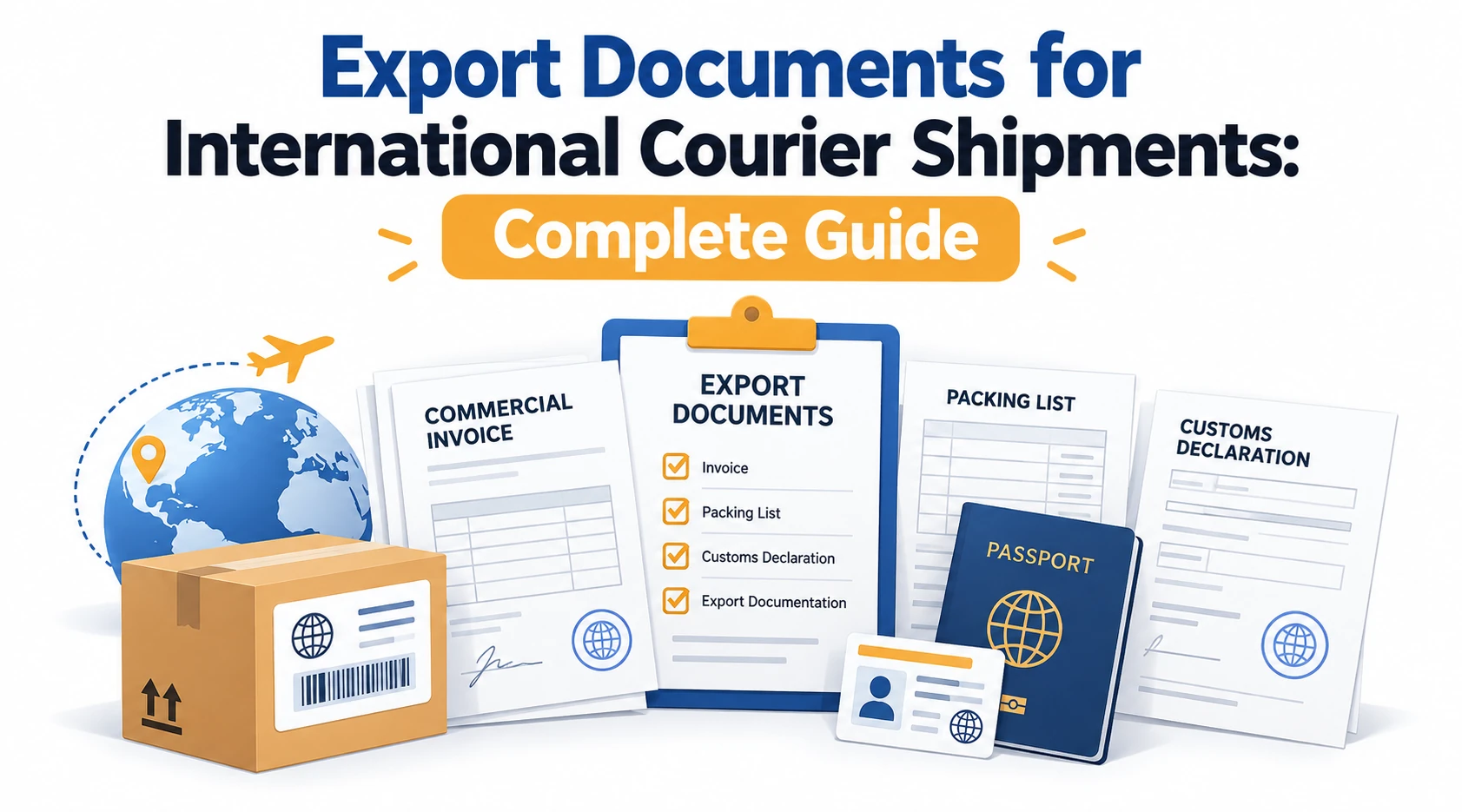
A commercial invoice is normally used in international business transactions in order to detail the sale of goods and necessary information for both customs and commercial purposes.
The following information can be included:
- Exporter
- Importer
- Product description
- Quantity
- Unit price
- Total value
- Currency
- Country of Origin
- Shipping information
However, a commercial invoice is not necessarily a GST tax invoice.
Proforma Invoice
Proforma invoice is generally a pre-sale document that details an anticipated transaction.
It can be used to outline the following:
- Expected price
- Product details
- Quantity
- Payment terms
- Estimated transaction value
It should not be confused with tax invoices.
GST Invoice Requirements in India
In case a business is registered under GST, then the invoices must conform to the GST invoice rules.
There could be some of the following items included in a GST invoice:
- Name of the supplier
- Address
- GSTIN
- Invoice number
- Date
- Buyer’s details
- Buyer GSTIN
- HSN/SAC
- Description
- Quantity
- Value
- Taxable value
- GST rate
- CGST
- SGST/UTGST
- IGST
- Total value of the invoice
The taxes applicable would depend on the type and location of supply.
The businesses should make sure that their invoicing system conforms to the applicable GST rules.
GSTIN and GST Registration
A business registered under GST gets a GSTIN (Goods and Services Tax Identification Number).
The GSTIN helps identify the business under GST regulations.
Prior to the recording of an invoice, the buyer needs to verify certain details about the supplier, especially if he is eligible for input tax credit.
General:
- CGST stands for Central Goods and Services Tax.
- SGST stands for State Goods and Services Tax.
- IGST stands for Integrated Goods and Services Tax.
For a relevant intra-state supply, CGST along with SGST/UTGST may apply.
For a relevant inter-state supply, IGST may apply.
| Nature of Supply | Relevant GST Elements |
|---|---|
| Intra-State | CGST + SGST/UTGST |
| Inter-State | IGST |
It should be noted that enterprises need to consider applicable GST regulations, not just the form of invoices provided by the supplier.
HSN and SAC Codes in Invoices
The HSN code is used to classify goods, whereas the SAC code is used to classify services.
These codes make it possible to understand what kind of supply we are dealing with.
For instance:
- Goods → HSN
- Services → SAC
The relevant requirements regarding HSN/SAC coding may vary depending on the taxpayer and the relevant transaction.
Wrong classification may lead to numerous issues connected to proper tax reporting, invoice filling and reconciliation.
Differences Between Taxable Value and Invoice Total
The taxable value is the value on which GST is calculated in accordance with the relevant requirements.
The invoice total is the total value payable after applying relevant taxes.
For example:
| Particular | Amount |
|---|---|
| Product value | ₹100,000 |
| Taxable value | ₹100,000 |
| GST | ₹18,000 |
| Invoice total | ₹118,000 |
Organizations need to be clear about the distinction between taxable amount and final invoice value.
Payment Terms and Payment Due Date
Payment terms indicate how and when payment is expected from the buyer.
Some examples include:
- Payment on delivery
- Advance payment
- Net 15 days
- Net 30 days
- Net 60 days
- Partial payment
- Milestone payment
The payment due date indicates when the payment is expected according to the payment terms set.
Organizations need to record due dates appropriately as late supplier invoices have an impact on business relationship, cash flow and credit arrangement.
How Do Supplier Invoices Get Processed?
Supplier invoices can be processed through the following steps:
-
1
Purchase Order
The buyer may send a purchase order describing the products or services to be purchased.
-
2
Goods or Services Delivery
The supplier delivers the goods or services ordered by the organization.
-
3
Supplier Sends the Invoice
The supplier sends the invoice to the buyer for payment.
-
4
Invoice Verification
The buyer checks the invoice details:
- Supplier name
- Invoice number
- Invoice date
- Products or services
- Quantity
- Price
- Taxable value
- GST
- Total value
- Purchase order
-
5
Three-Way Matching
Where necessary, the organization compares:
Purchase Order + Goods Receipt + Supplier’s InvoiceThis is known as three-way matching.
-
6
Approval
The relevant person or department approves the invoice.
-
7
Accounting Entry
The approved invoice is entered into the accounting system.
-
8
Payment
The accounts payable department makes payment according to the agreed terms.
-
9
Reconciliation
The organization matches the payment against the invoice and accounting entry.
Input Tax Credit and Supplier Invoices
The supplier invoice may be required where the GST registered organization seeks to claim its eligible input tax credit.
However, mere possession of the invoice does not guarantee the ITC.
It needs to comply with the relevant statutory conditions and documentation requirements.
Organizations should check the following information:
- Supplier Name
- GSTIN
- Invoice Number
- Invoice Date
- Tax Amount
- Nature of Supply
- Receipt of Goods or Services
- Relevant GST Documents
- Other Relevant ITC Conditions
What Is an E-Invoice?
An e-invoice is an electronically authorized GST invoice issued using the prescribed e-invoicing system for those taxpayers and transactions that are eligible according to the relevant rules.
In the context of India’s GST regime, the applicability of e-invoices depends on criteria notified, such as turnover and type of transaction.
Where the applicability of e-invoicing exists, it becomes necessary to adhere to the prescribed process and not consider a generic PDF invoice sufficient.
It is advised to review the relevant threshold and rules, as the GST requirements change from time to time.
E-Invoice vs Supplier Invoice
The e-invoice is not a totally separate commercial transaction. It is a prescribed system of electronic invoicing.
| Feature | Regular Invoice | E-Invoice |
|---|---|---|
| Commercial transaction | Yes | Yes |
| GST invoice | May be | Yes, where applicable |
| Electronic authentication | Not necessarily | Through prescribed system |
| IRN | Not necessarily | Generated where e-invoicing applies |
| QR code | Depends | Prescribed requirements may apply |
| Applicability | Depends | Based on notified rules |
Organizations that fall under e-invoicing must ensure that their invoice generation system is correctly set up.
Supplier Invoice and E-Way Bill
The e-way bill refers to the movement of goods, and is different from the actual invoice.
As applicable, organizations may require:
- Invoice
- E-way bill
While the invoice determines the information regarding the supply and taxation process, the e-way bill enables compliance regarding the movement of goods according to GST laws.
Common Supplier Invoice Errors
Invoice errors can delay payments and accounting, and may create GST issues. Check for these common mistakes:
-
Incorrect GSTIN
An incorrect GSTIN may cause reconciliation and input tax credit issues for the buyer.
-
Duplicate Invoice Number
Check that the invoice number follows the supplier’s numbering system and applicable requirements.
-
Incorrect GST Rate
Confirm that the GST rate applied is correct for the transaction.
-
Incorrect HSN/SAC
An incorrect goods or services classification may cause GST filing issues.
-
Incorrect Invoice Amount
Verify the quantity, unit price, discounts, and final amount.
Guidelines For Supplier Invoice Management
Organizations managing large volumes of invoices benefit from a consistent process. These practices can help keep records accurate and payments on schedule:
-
Keep Electronic Copies
Store accessible digital copies of invoices.
-
Set Invoice Verification Standards
Use a checklist to verify supplier details, invoice number, amount, taxes, and purchase order.
-
Automate Invoice Entry
Accounting or invoice management software can reduce manual data entry errors.
-
Track Payment Schedules
Monitor due dates to avoid missing payment deadlines.
-
Reconcile Regularly
Compare your accounting records with supplier statements.
-
Maintain GST Invoices
Keep GST invoices and supporting documents for the applicable retention period.
-
Protect Invoice Data
Limit access to financial documents and apply appropriate data security measures.
FAQs
It is a document prepared by the supplier and sent to the buyer to ask for payment for delivered goods and services. It usually has the following particulars: invoice number, date, description of the product or service, amount, taxes and payment terms.
According to the relevant GST laws, depending on the situation, a GST invoice should include data on the suppliers and recipients, GSTIN if required, invoice number, invoice date, HSN/SAC, taxable amount, GST rate, etc.
Yes, it can be the part of documents needed to make a claim for input tax credit, provided that it is a tax invoice. At the same time, it doesn’t ensure ITC automatically.
An invoice is a document recording the supply, while an e-invoice is an invoice created and certified under the relevant GST rules of e-invoicing.
Conclusion
A supplier invoice is a crucial part of business purchases and accounting transactions. Invoices indicate what supplies have been made by suppliers, how much money is due and include necessary data for payment processing, accounting and taxation.
In the case of India, invoices can be crucial to the compliance with GST rules and input tax credit availability. It is important that you verify such elements as your supplier’s GSTIN, invoice number and date, HSN/SAC code, taxable value, applicable GST and total invoice amount.