Starting a business in India goes beyond having an idea, sourcing capital, and clients. We need to prepare the documentation for business registration, tax compliance, banking, licensing, and other governmental registrations, depending on the business structure (sole proprietorship, partnership, LLP, or Private Limited Company) and the nature of the business.
Being in possession of all necessary documents will make the registration process easier and will help avoid any delays due to errors of omission and incorrect data. This article covers the documents needed to start a business, including those for online businesses, export businesses, and business bank accounts.
Basic Documents Every Business Needs
Every business needs basic personal and address documents to begin registration or open a current account. These documents differ from business to business and by type of business registration. However, entrepreneurs should generally have the following documents.
|
Document
|
Common Purpose
|
|
PAN
|
Income tax, business registration and banking
|
|
Aadhaar / Identity Proof
|
Identity verification and KYC
|
|
Address Proof
|
Verification of residential or registered address
|
|
Passport-size Photographs
|
KYC and registration applications
|
|
Business Address Proof
|
Establishing the registered/principal place of business
|
|
Bank Account Details
|
Business banking and financial transactions
|
|
Mobile Number and Email ID
|
OTP, communication and registration updates
|
|
Digital Signature Certificate
|
Required for several company/LLP filings
|
|
Proof of Business Constitution
|
Partnership deed, incorporation certificate or similar document
|
RECOMMENDED FOR NEW EXPORTERS
How to Export from India for a New Business
Learn the key steps, documents, and requirements
to start exporting from India and grow your business globally.
Start Exporting from India →
PAN
▼
The PAN document holds significant importance for any entrepreneur.
Generally, people tend to use their personal PAN for proprietary
activities; however, registered firms like companies and LLPs can
have their own PANs.
PAN document is generally needed for income tax compliance,
financial transactions, opening bank accounts, and various
business registrations.
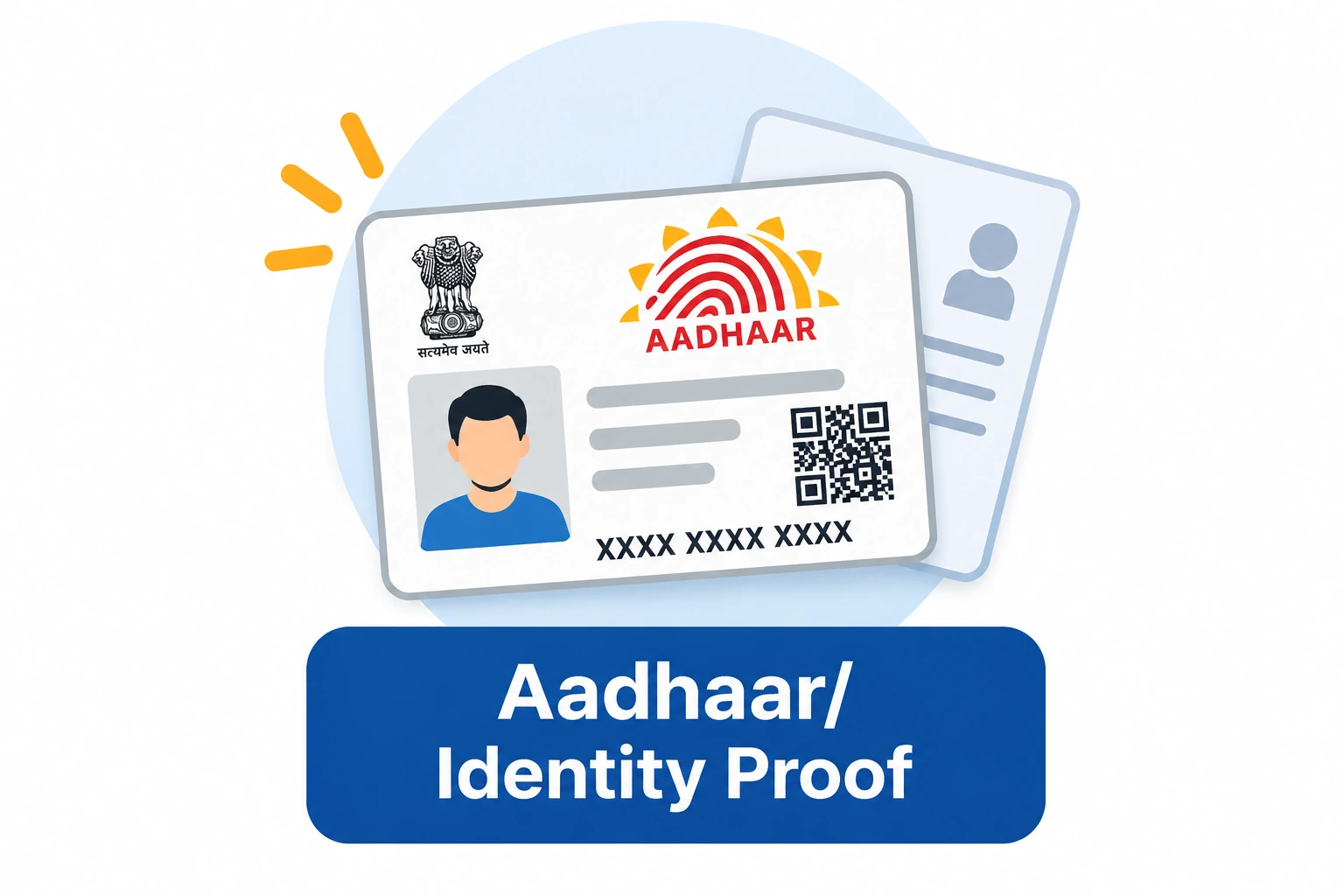
Proof of Identity
▼
Proof of Aadhaar/Identity is generally needed for KYC and
verification of the individual’s identity. Apart from it,
any other officially recognized identity proof documents
may be allowed depending on the case.
Entrepreneurs must make sure that the name and all other
details present on their identity proofs are consistent
with those provided in the application process.
Address Proof
▼
Proof of address could be needed to verify the residential
address of the proprietor, partners, directors, or
designated partners.
It depends on the relevant authority or organization whether
they require a utility bill, bank statement, or any other
address proof document.
Passport Size Photographs
▼
Passport-size photographs could be asked by some authorities
for KYC and registration purposes.
Business Address Proof
▼
In addition to this, there is a need for proof of the
business address in case of a registered/principal place
of business.
Some of the common documents include the following:
a recent utility bill, ownership document, rent/lease
agreement, and, if required, a No Objection Certificate
(NOC) from the property owner.
The precise requirement will depend upon whether the business premises are owned, rented or leased, etc.
Documents Required to Start a Business Based on Business Structure
The documents needed for starting a business vary according to the structure of the business. The sole proprietor needs to go through fewer procedures compared to an LLP and a private limited company.
|
Business Structure
|
Important Documents
|
|
Sole Proprietorship
|
Proprietor PAN, Aadhaar/identity proof, address proof,
business address proof, and applicable registration documents
|
|
Partnership
|
Partners’ KYC documents, partnership deed, address proof
and business address documents
|
|
LLP
|
Partners/designated partners’ KYC, DSC, registered office
proof and incorporation-related documents
|
|
Private Limited Company
|
Directors’ KYC, DSC, registered office proof, incorporation
documents and company PAN
|
Business Registration Documents
A simple overview of common documents generally required for different business structures and GST registration.
01
Sole Proprietorship
Overview
Sole proprietorship is ideal for a person interested in carrying out the business without forming a new legal entity through incorporation.
There is no standard incorporation certificate applicable to all proprietorships. Rather, the proprietor can register himself for the purposes of the business, which may include registration under GST, Udyam, Shops and Establishments, or any local trade licence, depending on the business.
Common Documents
✓ PAN of Proprietor
✓ Aadhaar / Identification Document
✓ Address Document
✓ Passport-sized Photograph, where required
✓ Document related to Business Address
✓ Tax / Local Registration Documents, wherever applicable
✓ Bank Account / KYC Documents
02
Partnership
Overview
Traditional partnerships usually require a deed of partnership specifying the nature of the partnership.
The deed generally covers the name of the firm, its activities, capital contribution, distribution of profits, duties, and other terms mutually agreed upon.
Common Documents
✓ Partnership Deed
✓ PAN of Partners
✓ Aadhaar / Identification Documents
✓ Address Documents
✓ Photographs
✓ Business Address Documents
03
LLP
Overview
LLP enjoys the benefits of limited liability as well as the partnership structure. Its incorporation process requires designated partners and statutory documentation.
Common Documents
✓ PAN and ID Proof of Partners
✓ Address Proof
✓ Photographs
✓ Digital Signature Certificates
✓ Registered Office Proof
✓ Consent / Partnership-related Documents, where applicable
✓ Incorporation Documents
✓ LLP Agreement Documents
04
Private Limited Company
Overview
For a Private Limited Company, more formal incorporation documents are needed.
The directors and subscribers usually need to provide KYC and address-related documents, whereas the company needs to provide registered office documents.
Common Documents
✓ PAN of Proposed Directors / Subscribers
✓ Aadhaar / ID Proof
✓ Address Proof
✓ Photographs
✓ Digital Signature Certificates
✓ Registered Office Address Proof
✓ Incorporation-related Declarations and Forms
✓ Certificate of Incorporation after Registration
05
GST Registration Documents
Overview
Depending on the nature, turnover, location, and provisions applicable to the particular type of business, GST registration may be needed.
An entrepreneur should get personal as well as business address documents ready prior to filing an application.
Note:
GST requirements may change depending on the constitution and circumstances of the applicant.
Common Documents
✓ PAN of Business / Proprietor
✓ ID Proof of Relevant People
✓ Photo of Proprietor / Partners / Directors, where applicable
✓ Principal Place of Business Proof
✓ Lease or Rent Agreement for Rented Premises
✓ Ownership Document, if applicable
✓ Electricity Bill / Utility Bill
✓ NOC from the Owner, if applicable
✓ Bank Account Details, if required
✓ Authorization Document for Certain Enterprise Structures
EXPORT GUIDE
Documents Required to Export Goods
Know the key documents needed to export goods from India.
View Export Documents
Udyam/MSME Registration Documents
Enterprises which are classified under micro, small or medium enterprises can consider Udyam/MSME Registration Documents.
Udyam registration would be able to give an official MSME status to the business enterprise and might also help the business enterprise to avail some government scheme/benefit/opportunities.
The information that is normally asked for is as follows:
Aadhaar Information of the particular individual
PAN
Business/Enterprise Information
Entity Information for companies and LLPs and other similar enterprise structure
Bank Account Information
Business Activity Information
Other information which is required for the particular process
The specific information which is needed is usually dependent on the enterprise’s constitution.
Documents Required to Start an Online Business
While starting an online business seems easier than opening a physical store since you won’t be required to have a physical storefront, you will still require some form of identity and legal business documents.
For instance, for your e-commerce store, digital agency, SaaS firm, online consulting service or any other type of internet business, basic documents will include:
Proof of Business Address
Depending on how the business will operate, more registrations could be necessary. Some examples include GST registration, Udyam Registration, Local registrations, Professional Tax, and Industry Licenses.
While starting an online business, you should ensure that you have the following documents ready at hand:
✓
Domain and Website Details
✓
Business Name and Constitution
✓
Bank Account Details
✓
Payment Gateway KYC Documents
✓
GST Certificate, where applicable
✓
Proof of Business Address
✓
Applicable Licenses / Registrations
✓
Terms, Invoices & Business Related Documents
Documents required by the Payment Gateway/Marketplace may differ from the documents that are needed for government registrations. Thus, check each of these separately.
Documents Required to Start an Export Business
IEC Registration Documents will be particularly important for those who require an Import Export Code. The specific requirements would depend upon the constitution of the business entity and the prevailing DGFT norms.
While registering/exporting, one needs to have ready the following documents:
✓
PAN
✓
Aadhaar / Identity Proof of the Relevant Applicant
✓
Business Constitution
✓
Address Proof
✓
Business Address
✓
Bank Account Details
✓
Cancelled Cheque or Other Bank-related Document, where Necessary
✓
Digital Signature / Other Document Required for Digital Authentication of the Application
✓
Other Documents as Required by DGFT
After securing the necessary registrations, exporters may also need commercial invoices, packing list, shipping documents and other shipment-specific documents.
Thus an export business requires the following types of documentation:
Export Business Documentation
1
Business Registration Documents
2
Shipment / Commercial Documents
Having these documents organized will help avoid problems during the process of international ordering.
Documents Required to Open a Business Bank Account
A business bank account is a dedicated account that enables clean record-keeping of business transactions separately from personal ones.
The documents needed for opening a business and business bank account depend upon the constitution of the business.
|
Business Type
|
Common Bank Account Documents
|
|
Proprietorship
|
Proprietor KYC, PAN and acceptable business registration/proof
|
|
Partnership
|
Partnership deed, firm PAN, partners’ KYC and business address proof
|
|
LLP
|
LLP incorporation documents, LLP PAN, partner KYC and address proof
|
|
Private Limited Company
|
Certificate of incorporation, company PAN, MOA/AOA or applicable
constitutional documents, director KYC and board authorization
|
The banks may also require photographs, beneficial ownership information, GST certificate, Udyam certificate, or any other relevant document as per account type and business profile.
How to Organize Your Business Documents?
Organizing your documents even before the process of registration begins will save you lots of time. The entrepreneur should maintain a folder in his digital storage with scanned copies of his PAN, Aadhaar / identity proof, address proof, photograph and business address proof.
It is also wise to organize separate folders for:
1
Personal KYC Documents
2
Business Registration Documents
3
Tax Registrations
4
MSME / Udyam Documents
5
Banking Documents
6
Import Export Documents
7
Licenses and Permits
8
Invoices and Accounting Documents
One should ensure uniformity of names, addresses and other details while filling out various forms. Discrepancies in spellings, addresses, and entity name can sometimes raise verification issues.
Business Registration Document Checklist
An entrepreneur can refer to the below checklist of documents before he submits his registration application:
✓
PAN of proprietor, partners or directors
✓
Aadhaar / Identity Proof
✓
Address Proof
✓
Passport-sized Photographs, if required
✓
Business Address Proof
✓
Rent / Lease Agreement, if applicable
✓
Property Ownership Document, if applicable
✓
NOC from Property Owner, if applicable
✓
Partnership Deed, if applicable
✓
Digital Signature Certificate, if applicable
✓
Incorporation Certificate, if applicable
✓
GST Registration Document, if applicable
✓
Udyam / MSME Registration Information, if applicable
✓
IEC Registration Document, if applicable to exporter business
✓
Bank Account Details
✓
Licenses / Local Registrations, if applicable
Final Thoughts
Awareness about documents required for starting a business before registration makes new entrepreneurs choose the appropriate business form and save themselves from delay. The documentation process for Sole Proprietorship would be simple and for an LLP/Private Limited Company, documentation would be formal and elaborate.
The required documents would vary based on the nature of business too. An online business would need documentation of payment gateway and GST-related while an exporter would need IEC along with trade documentation. Entrepreneurs should ensure that they verify the requirement of documents from the concerned government agency/bank/authority as requirements keep changing.
BUSINESS GUIDE
LLP Registration in India
Learn the LLP registration process, documents, requirements and key steps.
View LLP Registration Guide
FAQ’s
1. What are the basic documents required for registering a business in India?
The basic documents generally required include PAN card, Aadhar/Identity Proof, Address Proof, Passport size photograph, if applicable and Business address proof. Other documents depend upon the type of business form, business activity and registrations.
2. Is it necessary to have a business registration certificate for each business?
Every business is not registered in the same manner. For a Private Limited Company and LLP, there are incorporation certificates; however, a proprietorship could form its business with appropriate registrations and licenses and not have any one universal incorporation certificate.
3. What documents are required for GST registration?
For GST Registration, documents required include PAN, identity, photographs wherever necessary, and proof of principal place of business. Other documents might be required depending upon the constitution of the applicant.
4. What documents are required for starting an export business?
For an exporter, documents required include PAN, identity and address, constitution of the business, banking details, and the required IEC Registration Documents. Specific shipment documents, including invoice and packing list, would be required at the time of exporting goods.
5. Can I start my business bank account without registering the company?
Yes, it depends on the type of business and KYC norms of the bank. For instance, a sole proprietor is able to operate a business account by using proprietor’s acceptable KYC and relevant business documents.