
AI Summary
Expanding to the US is less about owning a warehouse and more about delivering fast, reliable shipping without hurting your margins. From choosing the right fulfillment partner to optimizing shipping costs, execution makes all the difference. For most Indian D2C brands, a 3PL offers a flexible, low-risk way to scale, while warehouse rental only makes sense once order volume is stable and predictable.
US kisko nahi pasand? Har exporter ka sapna hota hai US market maii bechna, and I know aapka bhi hoga. Just like others, you must also think that they don’t blink at premium pricing.
But the moment your US orders start increasing, fulfilment becomes… stressful.
- Delivery takes 8–10 days.
- Shipping costs eat your margins.
- Customers expect Amazon-like speed.
- Returns feel like a black hole.
And then someone casually says, “Why don’t you just get a warehouse in the US?”
Simple, right? That’s when the real debate begins
Warehouse Rental vs Third-Party Logistics

Should you rent your own warehouse?
Is it better to rent a warehouse or use 3PL?
Do Indian brands even need a US warehouse?
Let’s break this down properly, not like a logistics textbook, but like two founders sitting over coffee figuring out how not to burn cash in the US.
First, Why Does US Fulfillment Become Such a Headache
In the early days, shipping from India works. You get 10–20 US orders a month. DHL or FedEx picks them up. Everyone’s happy.
But then something shifts.
Orders increase. Customers want 3–5 day delivery. Your website conversion rate drops because delivery timelines look long. Someone emails, “Why is shipping $28?”
Now you’re Googling:
- How to fulfill US orders from India
- US fulfillment without warehouse
- Expand to US without renting warehouse
Because here’s the truth shipping internationally per order is expensive. And slow delivery hurts trust. US customers are used to fast. Very fast.
That’s where the warehouse conversation starts.
Option 1: Renting Your Own Warehouse in the US
On the surface, this feels powerful.
Your inventory in America.
Your warehouse.
Your team.
Control sounds great. But let’s slow down and see what that actually means.
If you choose warehouse rental, you’re signing up for:
- Monthly warehouse rent
- Security deposits
- Warehouse staffing cost
- Hiring and training employees
- Equipment (racks, barcode scanners, packing tables)
- Insurance
- Utilities
- Installing an Inventory Management System (IMS)
- Managing SKU management
- Handling returns management USA
You’re not just renting space. You’re building operations.
Now let’s talk numbers.
How Much Does Warehouse Rental Cost in the US
Costs vary by state. Texas isn’t California. New Jersey isn’t Ohio.
But broadly, you’re paying:
- Rent per square foot
- At least 1–3 warehouse staff salaries
- Payroll taxes
- Software for Inventory Management System (IMS)
- Packaging supplies
- Shipping carrier accounts
- Equipment
And here’s the part founders underestimate, most of these are fixed costs. Whether you ship 500 orders or 5,000, your rent doesn’t change. For a brand still testing US demand, that can get uncomfortable fast.
The Part Nobody Talks About: Running a Warehouse Is a Full-Time Job
Let’s say you rent a warehouse.
Now ask yourself:
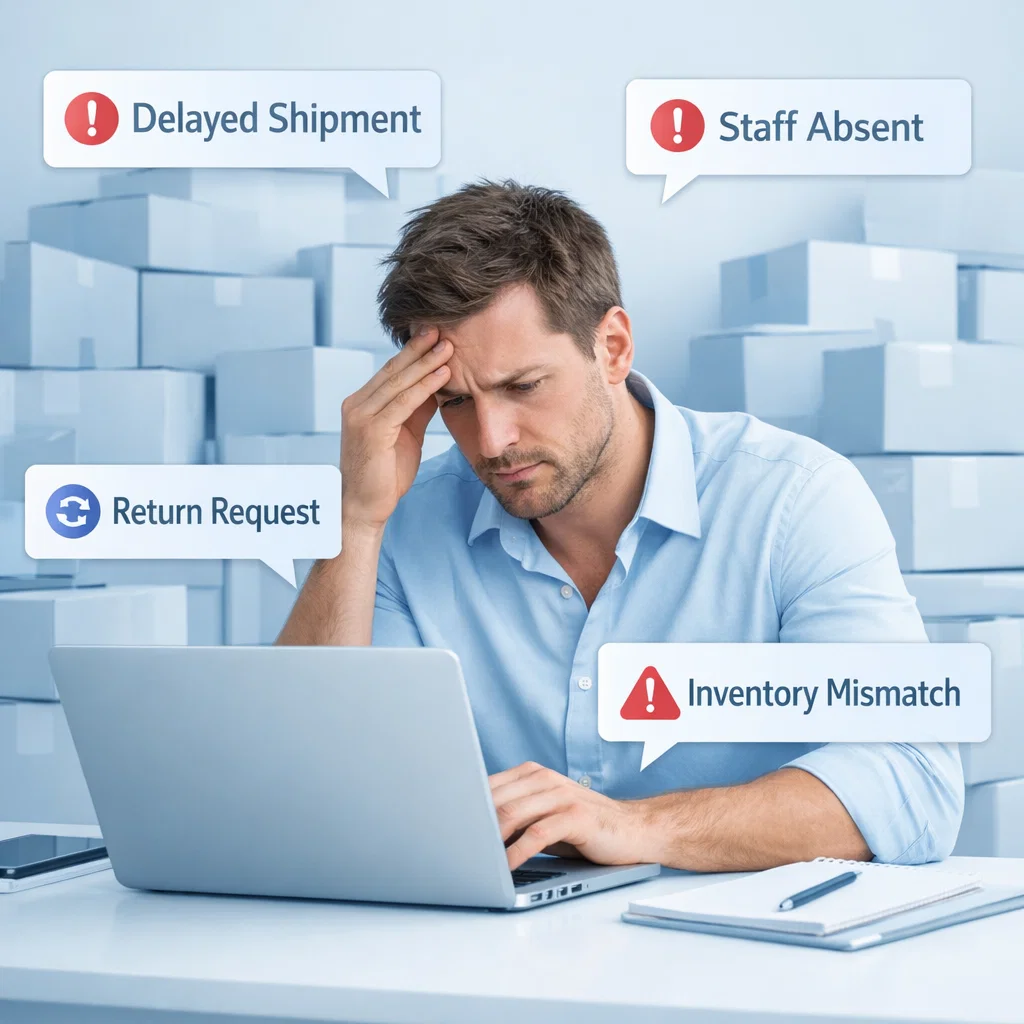
- What happens if staff doesn’t show up during Black Friday week?
- What if order processing time increases because volume spikes?
- What if SKU management becomes messy as your catalog grows?
Managing 30 SKUs is manageable, but managing 300 across Shopify, Amazon, and your website? That’s different.
Then there’s returns management USA. Returned items need inspection. Restocking. Refund processing.
It’s operations-heavy. And unless logistics is your core strength, it pulls attention away from marketing, product development, and growth.
This is where the Warehouse Rental vs Third Party Logistics debate gets real.
Option 2: Third Party Logistics (3PL)
A Third Party Logistics (3PL) provider already has:
- Warehouses
- Staff
- Integrated Inventory Management System (IMS)
- Carrier partnerships for last-mile delivery USA
- Returns management USA workflows
You send the inventory. They handle pick, pack, and ship. Instead of building infrastructure, you plug into existing infrastructure.
3PL vs Warehouse Rental – Operational Comparison
Operational impact across cost, setup time, scalability, returns, and last-mile execution (USA).
Simple idea. Big difference.
What is the Difference Between 3PL and Warehouse Rental
Let’s keep this practical.
Warehouse Rental
- You pay fixed rent
- You hire staff
- You manage systems
- You handle operations
- High control, high responsibility
Third Party Logistics
- You pay for storage used
- You pay per order fulfilled
- Shared infrastructure
- Lower fixed cost
- Faster setup
In short:
Warehouse rental is ownership mode.
3PL is asset-light mode.
Neither is “better” universally. It depends on where your brand is.
So, Is It Better to Rent a Warehouse or Use 3PL
Here’s the founder-friendly answer.
If You’re Testing the US Market
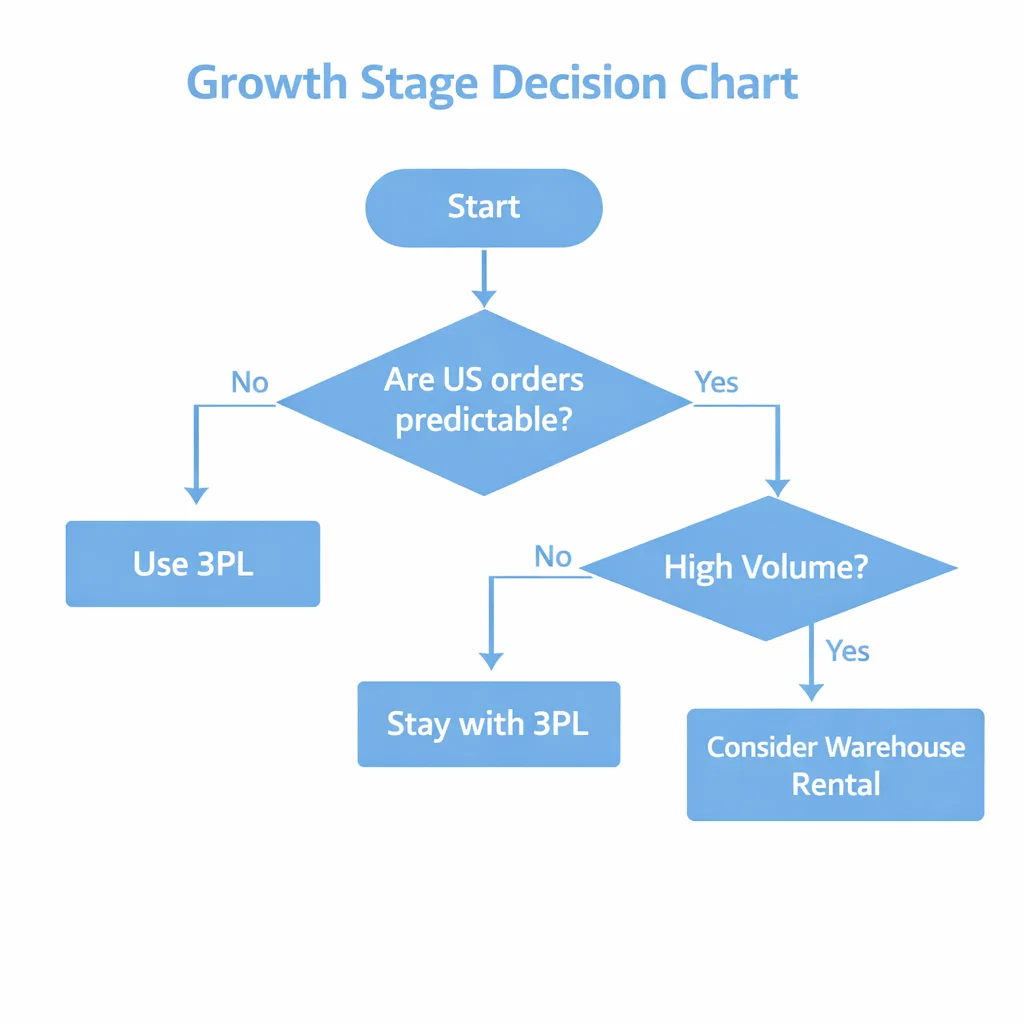
If your US orders are growing but still unpredictable, locking yourself into long-term rent is risky.
3PL supports:
- Low-risk US expansion for D2C brands
- Faster delivery
- Lower upfront investment
- Flexible scaling
You can expand to US without renting warehouse space immediately.
If demand grows, you scale. If demand slows, you’re not stuck paying empty warehouse rent.
If You’re Scaling Aggressively
Now let’s say you’re shipping thousands of US orders monthly. Volume is stable. Forecasting is predictable.
In that case, warehouse rental might start making financial sense.
But even here, many brands stick with 3PL because:
- They avoid warehouse staffing cost
- They don’t manage daily operations
- They can distribute inventory across multiple states
- They improve last-mile delivery USA performance
That’s why many founders ask: When should a D2C brand switch to 3PL? Interestingly, many don’t “switch” to 3PL. They start with it.
Do Indian Brands Need a US Warehouse?
This question comes up constantly.
Short answer: Not necessarily.
You need US fulfillment.
You don’t always need to own or rent the warehouse.
Modern 3PL networks allow:
- US fulfillment without warehouse ownership
- Faster regional shipping
- Professional returns management USA
- Integrated Inventory Management System (IMS)
- Better order processing time
For most Indian D2C brands entering the US for the first time, flexibility is more valuable than ownership. Ownership sounds impressive. Profitability sounds better.
Let’s Talk Real Costs: Warehouse Rental vs Third Party Logistics
Here’s a simplified comparison.
Fixed vs Variable Cost Model
With Warehouse Rental, You’re Paying For:
- Rent
- Warehouse staffing cost
- Equipment
- Insurance
- Utilities
- Inventory Management System (IMS)
- Returns setup
Mostly fixed costs.
With Third Party Logistics, You’re Paying For:
- Storage used
- Pick and pack fees
- Shipping per order
- Returns handling fee
Mostly variable costs.
If your volume fluctuates, your expenses fluctuate.
That flexibility is why 3PL often supports low-risk US expansion for D2C brands.
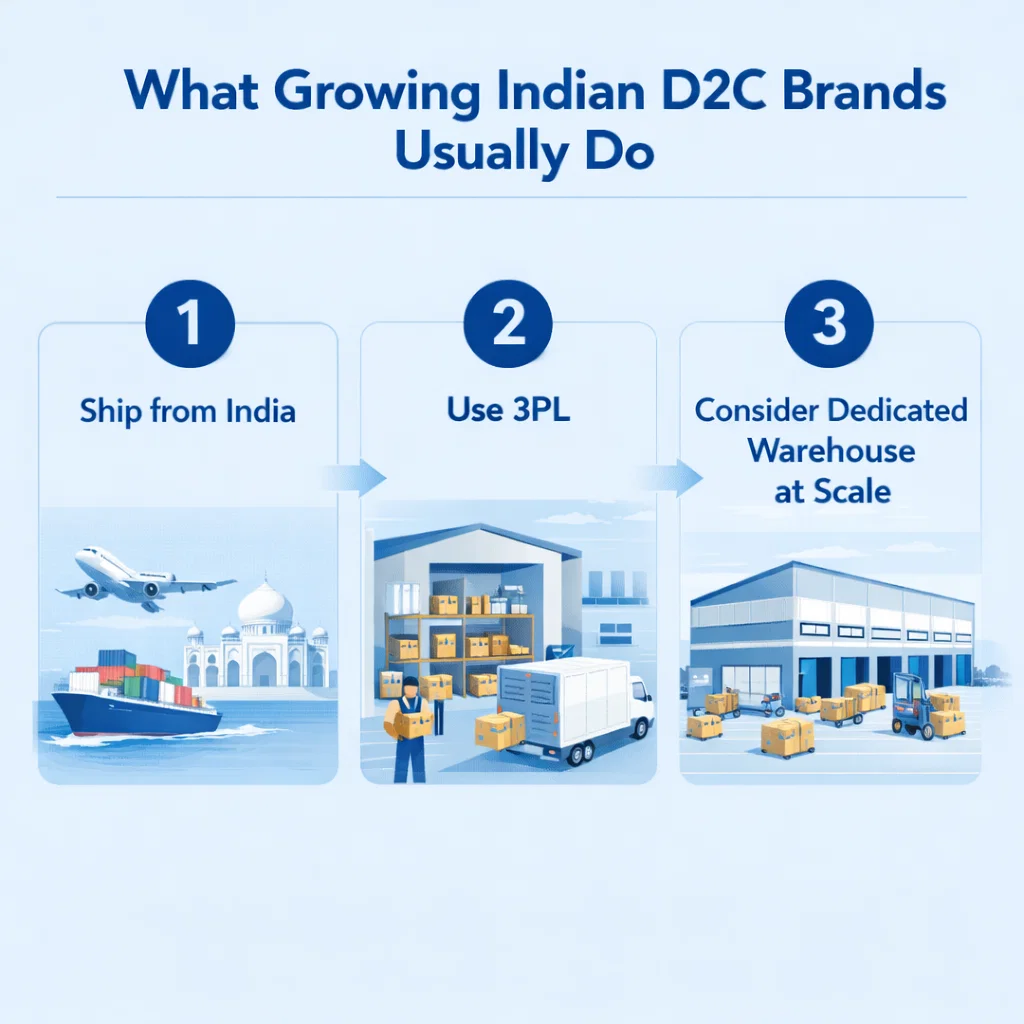
What About Shipping Directly From India?
Some founders try to avoid both options.
They continue cross-border shipping.
This works if:
- US orders are low
- Customers accept longer delivery
- Margins are strong
But once growth kicks in, delivery speed affects conversion rates.
US customers don’t compare you to other Indian brands. They compare you to Amazon.
That’s why many brands eventually explore US fulfillment without warehouse ownership through 3PL solutions.
Best 3PL for Indian Brands in USA: What Should You Actually Look For?
Instead of chasing random names, evaluate based on:
- Experience handling cross-border brands
- Fast order processing time
- Strong last-mile delivery USA network
- Clean SKU management systems
- Transparent pricing
- Efficient returns management USA
- Integrated Inventory Management System (IMS)
The best 3PL for Indian brands in USA isn’t the biggest one. It’s the one that aligns with your growth stage.
The Founder’s Reality Check
Here’s something nobody says loudly:
Logistics is not your competitive advantage.
Your product is. Your branding is. Your marketing is.
If managing a warehouse distracts you from growth, that’s a cost too.
In the Warehouse Rental vs Third Party Logistics decision, the smartest move is usually the one that protects cash flow and keeps you flexible.
Final Decision Cheat Sheet
Choose 3PL if:
- You’re testing US demand
- You want low-risk US expansion for D2C brands
- You prefer flexibility
- You want to expand to US without renting warehouse
- You don’t want to manage warehouse staffing cost
Consider Warehouse Rental if:
- Your US volume is high and stable
- You have a reliable operations team in the US
- You want full control
- You’re ready for fixed overheads
One Last Thought
Expanding to the US is a growth decision.
Fulfilment should support that growth, not hinder it.
Whether you choose warehouse rental or 3PL, the goal is the same:
- Faster delivery
- Better customer experience
- Smooth returns management USA
- Reliable last-mile delivery USA
- Controlled order processing time
The smart brands don’t rush into infrastructure.
They test.
They validate.
They scale when numbers make sense.
Because at the end of the day, it’s not about owning a warehouse in America.
It’s about building a profitable US business that doesn’t give you sleepless nights.
Frequently Asked Questions (FAQ’s)
If you’re still figuring out whether the US market will take off for you, don’t rush into signing a warehouse lease. A 3PL keeps things flexible. You pay for what you use. No long-term commitments. Once your US orders are steady and predictable month after month, then you can start thinking about warehouse rental. Until then, keep it light.
More than just the rent. That’s the honest answer.
You’re paying for space, yes. But also staff salaries, insurance, equipment, software like an Inventory Management System (IMS), utilities, and surprise expenses that always show up. Many founders look at rent per square foot and think, “That’s manageable.” Then the real bills start coming in.
No. You need fast fulfillment. You don’t need to own the building.
Many Indian D2C brands use Third Party Logistics (3PL) partners to store and ship inventory inside the US without renting their own warehouse. It’s a practical way to offer 3–5 day delivery without building an operations team from scratch.
Usually when logistics starts slowing growth.
If delivery timelines are hurting conversions, returns are becoming messy, or managing order processing time is taking too much mental energy, it’s probably time. A good 3PL lets you focus on marketing and product while they handle the pick, pack, and ship chaos behind the scenes.