
The e commerce industry has undergone some significant shifts over the last decade and the rise of D2C brands has been a major driver of change. More and more companies are deciding to sell their products directly to customers through their own websites and digital platforms rather than just relying on wholesalers, distributors or retailers.
The whole way brands think about everything from how they market their product to how they handle logistics and customer service is being turned upside down by the D2C model – and it means companies have to adapt to the way the digital economy works.
What You Need to Know About D2C Brands and What D2C Means in Business
So what does D2C even stand for – it’s “direct to consumer”! This model basically means that a business manufactures or sources stuff and then sells it straight to customers without needing to rely on traditional retail channels or middlemen as much.
The D2C meaning in business is all about giving brands control over all those interactions with their customers, the pricing, the branding and the sales channels. The growth of ecommerce tools and digital marketing has also made it a lot easier for brands to set up their own online stores and reach people all over the world.
Why D2C Brands Are Blowing Up in 2026
The rapid rise of D2C businesses is really all about how consumer behaviour has changed. Consumers are all about getting things quickly and easily and making real connections with the brands they buy from.
Traditional retail often creates a barrier between a customer and the product because it goes through distributors and physical stores before it reaches the buyer. D2C companies get to interact with their Customers right through their website, email campaigns, social media and online communities.
The growing popularity of social commerce is another key factor driving this growth – platforms like Instagram, Facebook and YouTube now let brands market and sell their products to customers directly through content-driven engagement.
There’s an increasing interest in niche products, sustainable goods and personalized shopping experiences – and this has opened up opportunities for profitable D2C niches that businesses in India are just starting to explore.
D2C Brand Examples from India and Global Markets
There are plenty of companies around the world that have shown just how powerful a direct-to-consumer business model can be
Nykaa is probably the strongest example of a directly to customer D2C brand in India. The company has built up a successful beauty and lifestyle business by selling its wares straight to customers through its website and mobile app. Its growth has been driven in no small measure by some clever partnerships with social media influencers, interesting content that educates customers, and a solid digital marketing push.
Mamaearth became successful by selling toxin-free skincare and other eco-friendly products and really focusing on telling a compelling story to its customers – one that was all about openness and transparency.
boAt absolutely transformed the consumer electronics industry in India by going after a very specific demographic with some really affordable and stylish products.
These businesses show just how you can create a very recognisable and profitable brand in a super competitive market by using the right ecommerce branding strategies.
D2C Brands and the Shift Away from Traditional Retail
There’s loads of discussion these days about how D2C Ecommerce brand stacks up against traditional retail in the ecommerce era.
Now traditional retail relies on wholesalers, distributors, and physical stores to shift stock, which does allow for a pretty good selection of products but it limits customer interaction and also eats into profit margins because of all the extra costs involved.
D2C businesses get around this by cutting out the middlemen and selling direct to customers through ecommerce platforms. This gives them a lot more flexibility over pricing and also means they can build a lot stronger connection with their customers.
When you compare D2C with traditional retail you also get a sense of how much customers have changed their shopping habits. A lot of people now prefer buying online because it’s so much more convenient, gives access to a much wider range of products, and offers a more personal experience.
Lots of brands that get customer satisfaction, communication and retention just right do a lot better in ecommerce because they focus so much on making customers happy.
As ecommerce keeps growing in India, more and more businesses are shifting over from traditional retail systems to direct to customer operations.
How to Build a D2C Brand Successfully in the Near Future
Working out how to build a D2C brand takes a lot of careful planning and you need to have a pretty good understanding of digital commerce.
First things first, you need to pick a product category with a lot of demand and clear differentiation. Successful D2C businesses usually satisfy some pretty specific customer need or target a pretty niche audience.
After you’ve picked a niche, you need to work on branding. These days people don’t just buy products, they get emotionally involved in the brand values, stories and experiences.
Having a customer first brand strategy is key for building trust and long term loyalty. Brands that really listen to customer feedback and improve customer experiences consistently do tend to grow a lot faster.
Next up in building a D2C brand is creating a proper ecommerce website. Loads of businesses in India are using Shopify these days because it makes website management, payment integration and logistics so much easier.
Shopify has become such a big hit with D2C store India business owners because the platform gives you loads of flexible tools for selling online and digital marketing.
Ecommerce Branding Strategies That Drive D2C Success
Branding probably plays the most important role in driving D2C growth
Strong ecommerce branding strategies help businesses stand out in the online noise. Successful brands create a consistent visual identity, messaging style, and customer experience across all the digital channels they use.
And content marketing has suddenly become a really powerful tool for D2C companies.
Storytelling is a big player in customer engagement. People are more likely to support brands that seem real, sustainable, or speak to their emotions.
Many successful D2C brands also put a ton of money into designing their packaging and what comes after you buy something from them – because when it comes to customer satisfaction and sharing what they bought with others on social media, these things really make a difference.
Brand loyalty in a D2C business tends to get a lot stronger when customers genuinely feel connected to the company’s mission and identity.
D2C Marketing Strategies 2026 Businesses Should Be Focusing On
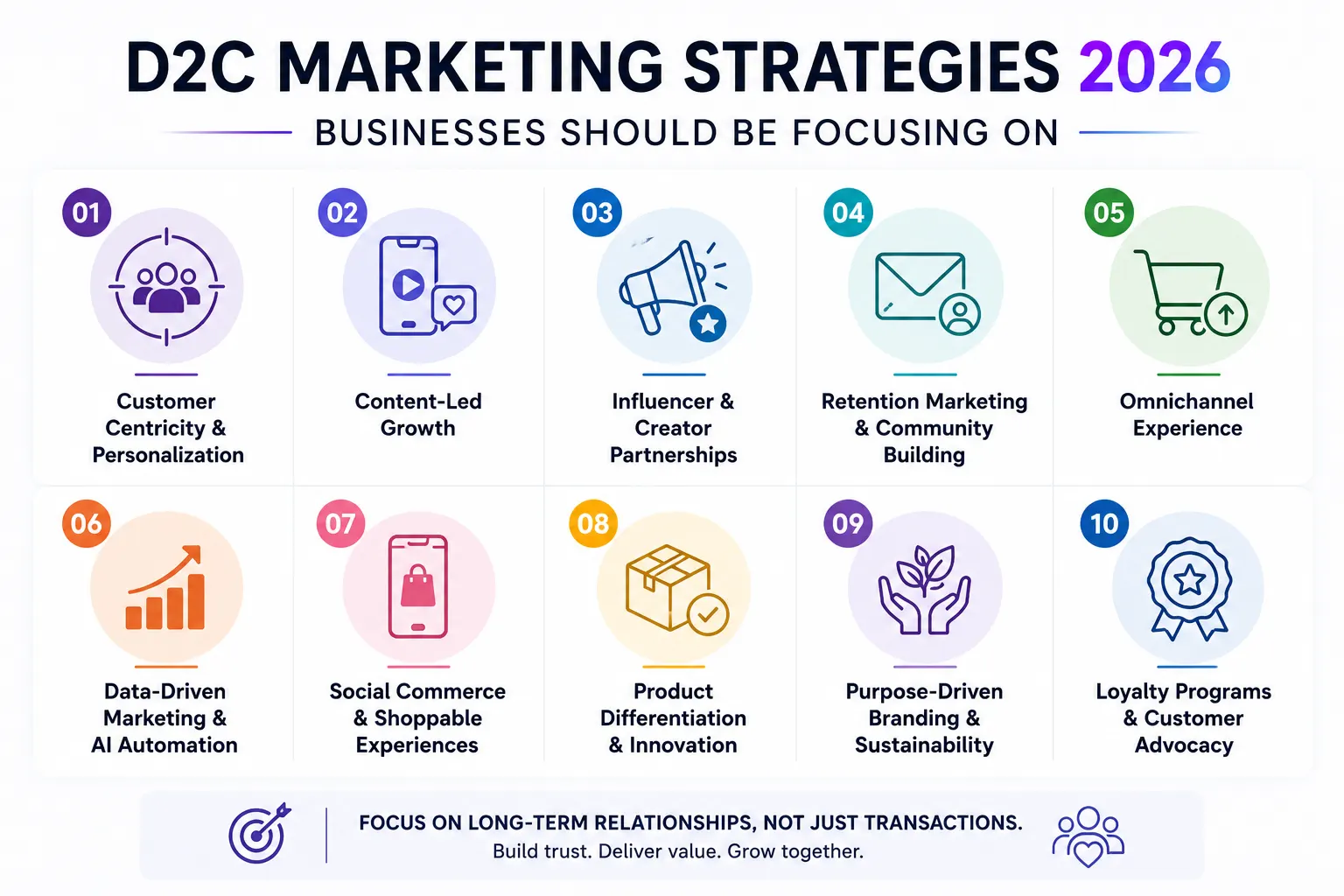
As digital competition just keeps getting tougher, brands need to step up and adopt some of the more modern D2C marketing strategies that are shaping the 2026 landscape.
Performance marketing through social media ads is still one of the most effective ways to get new customers in the door – especially with platforms like Instagram and TikTok basically dictating more and more of our purchasing decisions.
Influencer marketing is still going strong too, because consumers tend to trust the opinions of creators way more than they trust traditional ads.
Email and SMS campaigns are getting more and more important for customer retention and getting people to buy from you again.
And on top of all that, AI and personalization technology is taking centre stage in D2C marketing strategies for 2026. Brands that use it right are able to make some serious gains in conversion rates.
Social commerce is expected to take off too, as more and more people start shopping right from their social media feeds.
Profitable D2C Niches India Entrepreneurs Can Dive into
The India market is a goldmine for niche-focused D2C businesses.
The niches that entrepreneurs are currently having success with include skincare, health supplements, fitness products, organic foods, fashion accessories, sustainable products, electronics, and pet care – anything that really gets at a consumers specific needs and wants.
People are increasingly searching out niche brands because they can offer a level of expertise and individualized experience that the bigger brands can’t match.
Companies that cater to the premium or emotionally driven product categories tend to get higher margins and a lot stronger brand loyalty.
The growth of digital payments and ecommerce infrastructure in India has also made it a lot easier for niche D2C companies to scale up and start selling everywhere.
Now more than ever, we’re seeing entrepreneurs mix D2C with influencer marketing and community building, just to give themselves a bit of an edge.
Brand Loyalty in D2C and Customer Retention Strategies
In a lot of ways, customer retention is where the D2C model really shines.
Because when a brand has that direct relationship with the customer, they can do a lot to keep them on board. Loyal customers just keep on buying from you, save you money on acquiring new ones, and essentially boost your profit margins.
To keep their customers coming back, successful D2C companies use all sorts of tactics – loyalty programs, subscription models, personalized offers, and community engagement, to name a few. And then there’s the value of customer reviews and user generated content in just building that trust.
As the ecommerce space gets more and more crowded, customer retention is going to get even more important – for any company that wants to stay profitable, of course.
Future of D2C Brands in India
The future of direct-to-consumer commerce in India is starting off pretty strong. With more and more people getting online and using smartphones, and with digital payments on the rise, we’re expecting to see ecommerce grow and grow.
Artificial intelligence, voice commerce, augmented reality, and social commerce are just a few of the things that are going to be shaping the next gen of D2C businesses in India. The brands that stay ahead of the curve, innovate, go the extra mile for the customer, and just make a point to engage with them on a digital level are going to be the ones that succeed in 2026.
The D2C Brand Boom is increasingly showing that building a direct relationship with customers is becoming the single most valuable thing a business can have in the ecommerce world today.
The Bottom Line
The D2C revolution has turned the way businesses work in the digital age on its head. Now that companies can sell directly to consumers, they can see bigger profits, a stronger brand, and more enduring customer relationships.
Getting to grips with what D2C actually means is a must for anyone planning to get into ecommerce in 2026. From picking out profitable niches to developing a pretty modern branding strategy, every single bit of the D2C model is all about the customer and engaging with them directly.
As tech and online shopping just keeps on evolving, D2C businesses in India are going to be expanding at a lightning pace into international markets and all over the domestic market.
The businesses that put their money into getting their brand out there, making things personal and making sure customers are the main focus are going to be the ones that come out on top in D2C over the next few years.
Frequently Asked Questions
D2C brands are businesses that sell their products directly to customers through their own websites or online channels and they don’t rely too heavily on middlemen.
D2C stands for Direct to Consumer, where companies take control of sales, marketing, customer relationships, and branding in house.
Building a super successful D2C brand needs a strong brand identity, a good product that fits nicely into a niche, solid digital marketing and getting customers engaged through the whole online shopping experience and on top of that, a reliable ecommerce platform
Having strong customer loyalty is like having a magic formula because it means people will keep coming back to buy more off you, you don’t have to spend as much on marketing and you end up making more money in the long run.