
Selling products overseas sounds exciting when you first hear about it. Bigger markets. Better margins. International clients. But ask an exporter who has actually dealt with delayed payments from another country and the tone changes very quickly.
A shipment leaves Mumbai. The goods reach Europe or Africa or the Middle East. Everything looks fine on paper. Then silence. Payment gets delayed. The buyer disappears for weeks. Sometimes a political crisis interrupts banking channels altogether. And suddenly the exporter is stuck carrying the loss.
This is exactly where the Export Credit Guarantee Corporation becomes important.
For many Indian exporters, especially SMEs, ECGC acts like a financial safety layer. Not perfect protection against every problem perhaps, but a very practical shield against risks that genuinely exist in international trade. If you look closely, export businesses are not just selling products. They are constantly managing uncertainty.

What Is the Export Credit Guarantee Corporation?
The Export Credit Guarantee Corporation (ECGC) is a Government-owned organization in India that provides export credit insurance and risk cover to businesses exporting goods and banks to the exporting companies.
Now, this risk can arise for many reasons. Sometimes the overseas buyer becomes insolvent. Sometimes they simply refuse to pay. In other situations, political instability, war, import restrictions, or currency transfer problems prevent payment from reaching India.
That is where ECGC steps in. Hence, one might find on searching the ECGC meaning in India on the internet, that it’s a specialized entity that protects exporters from commercial and political risks while trading overseas.
ECGC was founded in 1957 under the Ministry of Commerce and Industry. It has been one of the cornerstones that has been helping Indian exports over the decades and particularly small and medium enterprises that want to go on to other markets overseas.
You might notice something interesting here. Many exporters are not afraid of manufacturing goods. They are afraid of uncertainty after shipment. That distinction matters.
Why Exporters Need Export Payment Protection in India
Domestic trade itself carries payment risks. International trade multiplies them.
Now add these possibilities:
Why Exporters Need Export Payment Protection in India
Domestic trade itself carries payment risks. International trade multiplies them.
When businesses export goods overseas, they face multiple uncertainties that can disrupt payments and impact cash flow. Export payment protection helps exporters safeguard themselves against these risks.
| Export Risk | What It Means |
|---|---|
| Buyer Default | An overseas customer fails to pay for the goods received. |
| Political Instability | War, civil unrest, or government actions interrupt trade and payments. |
| Currency Restrictions | Foreign exchange controls prevent payment transfers. |
| Insolvency Risk | The buyer company collapses financially or enters bankruptcy. |
| Shipment Rejection | Payment disputes arise due to quality, quantity, or delivery-related issues. |
| Delayed Payments | Late settlements create working capital and cash flow problems for exporters. |
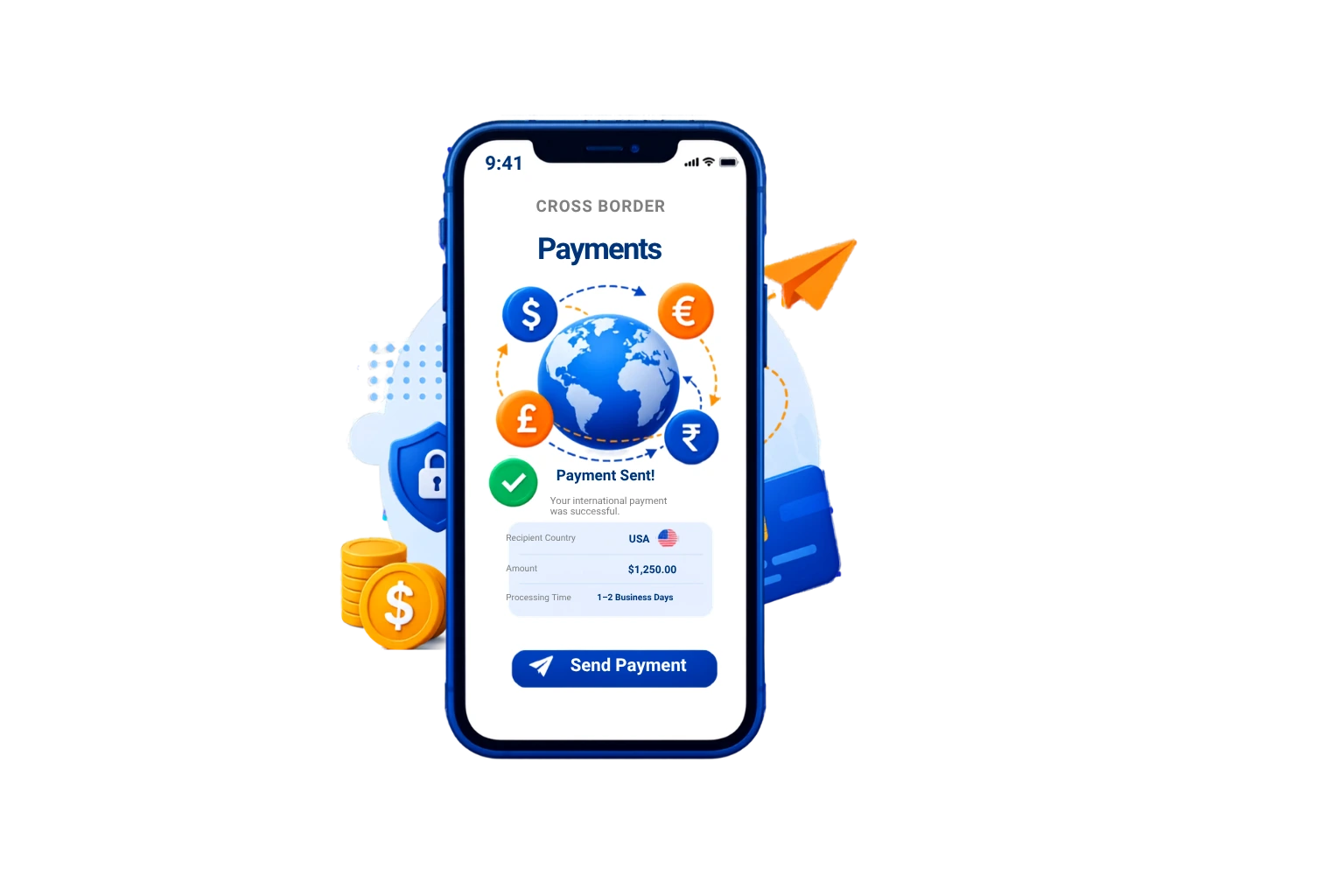
This is why export payment protection in India has become so important, especially for businesses expanding into newer international markets.
Without protection, one failed shipment can create severe working capital pressure. Smaller exporters often suffer the most because they operate on thinner cash reserves.
Actually, many SMEs avoid exports entirely because they fear losing money overseas. ECGC exists partly to reduce that hesitation.
Export Credit Guarantee Corporation Schemes for Indian Exporters
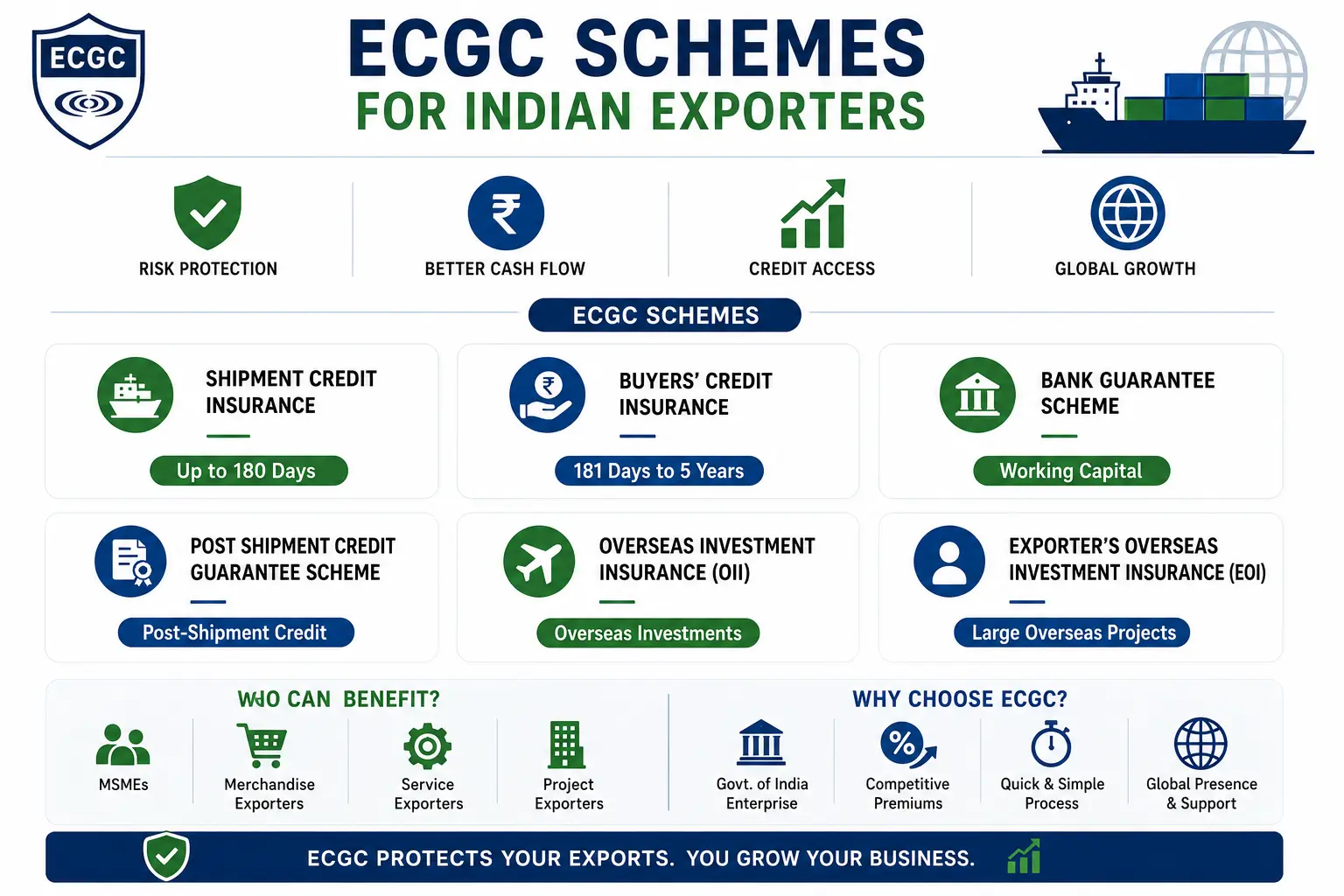
The various Export Credit Guarantee Corporation schemes are designed for different types of exporters, banks, and export situations. Some protect shipments. Others protect export finance given by banks.
Not every policy works the same way, which is where many first-time exporters get confused.
Here are the major schemes.
Standard Policy Under Export Credit Guarantee Corporation
This is one of the most commonly used policies.
It covers short-term export transactions where payment is expected within a defined credit period. The policy protects against both commercial and political risks.
Commercial risks may include:
- Buyer insolvency
- Prolonged payment default
- Refusal to accept goods
Political risks may include:
- War
- Government restrictions
- Import bans
- Foreign exchange transfer delays
For businesses seeking buyer default protection exporters, this policy often becomes the starting point.
Export Credit Insurance India for SMEs
Small exporters face unique problems. They usually cannot absorb large overseas losses the way multinational companies can.
That is why export insurance for SMEs India plays such a critical role.
ECGC offers schemes specifically designed to support smaller businesses by:
- Improving credibility with banks
- Helping secure export finance
- Reducing fear of buyer non-payment
- Supporting expansion into riskier markets
How ECGC Supports Banks Through Export Finance Risk Coverage
This part often gets overlooked. ECGC not only protects exporters. It also protects banks that provide export credit.
Banks naturally worry about lending money for export operations because repayment depends on successful international payments. ECGC reduces this fear through export finance risk coverage schemes.
When banks feel protected, exporters may find it easier to obtain:
- Packing credit
- Pre-shipment finance
- Post-shipment finance
- Working capital support
This creates a broader financial ecosystem supporting Indian exports.
In a way, ECGC indirectly improves exporter liquidity by encouraging banks to participate more actively in export financing.
ECGC Policy Benefits for Export Businesses
The practical ECGC policy benefits extend beyond simple insurance coverage.
Some advantages are financial. Others are strategic.
Benefits of ECGC for Exporters
Some advantages are financial. Others are strategic.
| ECGC Benefit | Impact on Exporters |
|---|---|
| Risk Reduction | Lowers exposure to overseas payment failures. |
| Better Bank Financing | Improves loan accessibility and lender confidence. |
| Market Expansion | Encourages exports to new regions and buyers. |
| Improved Cash Flow Confidence | Helps businesses plan operations with greater certainty. |
| Stronger Credibility | Creates trust with lenders, buyers, and stakeholders. |
There is also a psychological aspect here that people rarely discuss.
Exporters make better business decisions when fear is reduced. Constant uncertainty affects pricing, production, and negotiation strategies. Insurance support does not remove risk entirely, but it changes how businesses approach global trade.
That shift matters more than many realise.
Political and Commercial Risk Export Protection Explained
International trade risks are broadly divided into two categories: commercial and political.
Understanding this distinction is important because many exporters assume every loss automatically gets covered. That is not always true.
Commercial Risks
These arise directly from the buyer.
Examples include:
- Buyer insolvency
- Failure to pay
- Refusal to accept shipment
Political Risks
These arise from events beyond the buyer’s control.
Examples include:
- Civil unrest
- Government action
- Currency transfer restrictions
- Sudden import policy changes
The concept of political and commercial risk export protection is central to ECGC’s functioning. Without this dual coverage approach, exporters would remain exposed to multiple uncontrollable external events.
And honestly, global trade today feels more unpredictable than it did a decade ago. Geopolitical tensions, sanctions, and logistics disruptions all these things affect payment security.
Export Payment Security India and Overseas Buyer Risk Management
One of the hardest parts of exporting is evaluating overseas buyers.
A company may appear financially stable on paper, yet still delay payments repeatedly. Some buyers exploit exporters who are inexperienced in international recovery procedures.
This is where overseas buyer risk management becomes essential.
ECGC assists exporters by:
- Offering buyer credit information
- Monitoring country risk
- Supporting payment security systems
- Reducing uncertainty in credit sales
For businesses focused on export payment security in India, ECGC creates a more structured framework for international transactions.
You could compare it to wearing a seatbelt while driving. The seatbelt does not prevent accidents from happening. It reduces damage when something goes wrong.
Shipment Insurance for Exporters and Why It Matters
Many exporters mistakenly assume marine insurance alone is enough. It is not.
Marine insurance protects goods during transit. ECGC policies, however, focus on payment-related risks after shipment.
That difference is extremely important. Proper shipment insurance for exporters should ideally involve both logistics protection and payment protection. One covers physical goods. The other covers financial exposure.
Without ECGC support, an exporter might successfully deliver goods yet still suffer losses because payment never arrives.
And that scenario is more common than newcomers expect.
How Indian Exporters Actually Use ECGC in Real Business Situations
Let’s take a realistic example.
A pharmaceutical exporter from Hyderabad receives an order from a new African distributor with 90-day credit terms. The order value is substantial. The buyer seems legitimate, but the exporter still feels uncertain about payment recovery in case of default.
Instead of rejecting the opportunity outright, the exporter purchases ECGC coverage.
Now, if the buyer defaults due to insolvency or if political complications interrupt payment, ECGC may compensate a significant portion of the loss according to policy terms.
That changes the business equation completely.
Without protection, the exporter might avoid the deal entirely.
With protection, international growth becomes more achievable.
This is why ECGC matters not only as an insurance institution but also as a confidence-building mechanism for Indian exporters.
Challenges and Limitations Exporters Should Understand
There is no perfect insurance plan. Exporters need to be aware of the policy exclusions, the documentation requirements, claim timelines and compliance obligations.
There are several common issues, such as:
- Delays in claim processing
- Complex paperwork
- Strict reporting timelines
- Coverage limitations under specific scenarios
Yes, ECGC is a good support but exporters must be disciplined in documentation and have proper risk handling practices. Insurance works best when combined with smart export management.
The Growing Importance of ECGC in India’s Export Economy
India’s export presence in various industries such as engineering goods, pharmaceuticals, textiles, chemicals, electronics, and processed food is growing rapidly. Given the rise in exports, the risks in payments also rise.
That is why the role of the Export Credit Guarantee Corporation may become even more important in the coming years.
Particularly for SMEs. Large corporations often have internal legal teams and international recovery networks. Smaller exporters usually do not. They need institutional backing to compete confidently in global markets.
FAQs
ECGC is the acronym of “Export Credit Guarantee Corporation of India”. It is a government-owned institution that supplies insurance and risk security to Indian exporters and banks taking part in the export financing process.
ECGC insures exporters against commercial and political risks like buyer default, insolvency, war, restrictions on currency and delayed payments from overseas buyers.
Depending on the policy type, manufacturers, merchant exporters, service exporters, and banks that are engaged in export finance can apply for ECGC cover.
Yes, it is of great value to SMEs as it minimises payment risk, enhances access to bank finance and enables smaller exporters to access international markets with greater confidence.