
Expanding a business into international markets is one of the most effective ways to unlock long-term growth opportunities. With the rise of global e-commerce, cross-border shipping, and digital marketplaces, businesses of all sizes can now reach customers in multiple countries more easily than ever before. Whether you are planning to export products to international buyers or import goods from overseas suppliers, understanding the legal and regulatory requirements is an essential first step.
One of the most important requirements for businesses involved in international trade in India is the Import Export Code (IEC). Many entrepreneurs, startups, and small businesses are often unsure whether they need an IEC before beginning import or export operations. This confusion can lead to delays, compliance issues, or interruptions in international transactions.
This is where an IEC Requirement Checker becomes extremely useful. An IEC Requirement Checker helps businesses quickly determine whether they need an Import Export Code based on the nature of their operations, products, and trade activities. Instead of spending hours researching regulations manually, businesses can use this tool to gain clarity and make informed decisions before entering global markets.
What is an Import Export Code (IEC)?
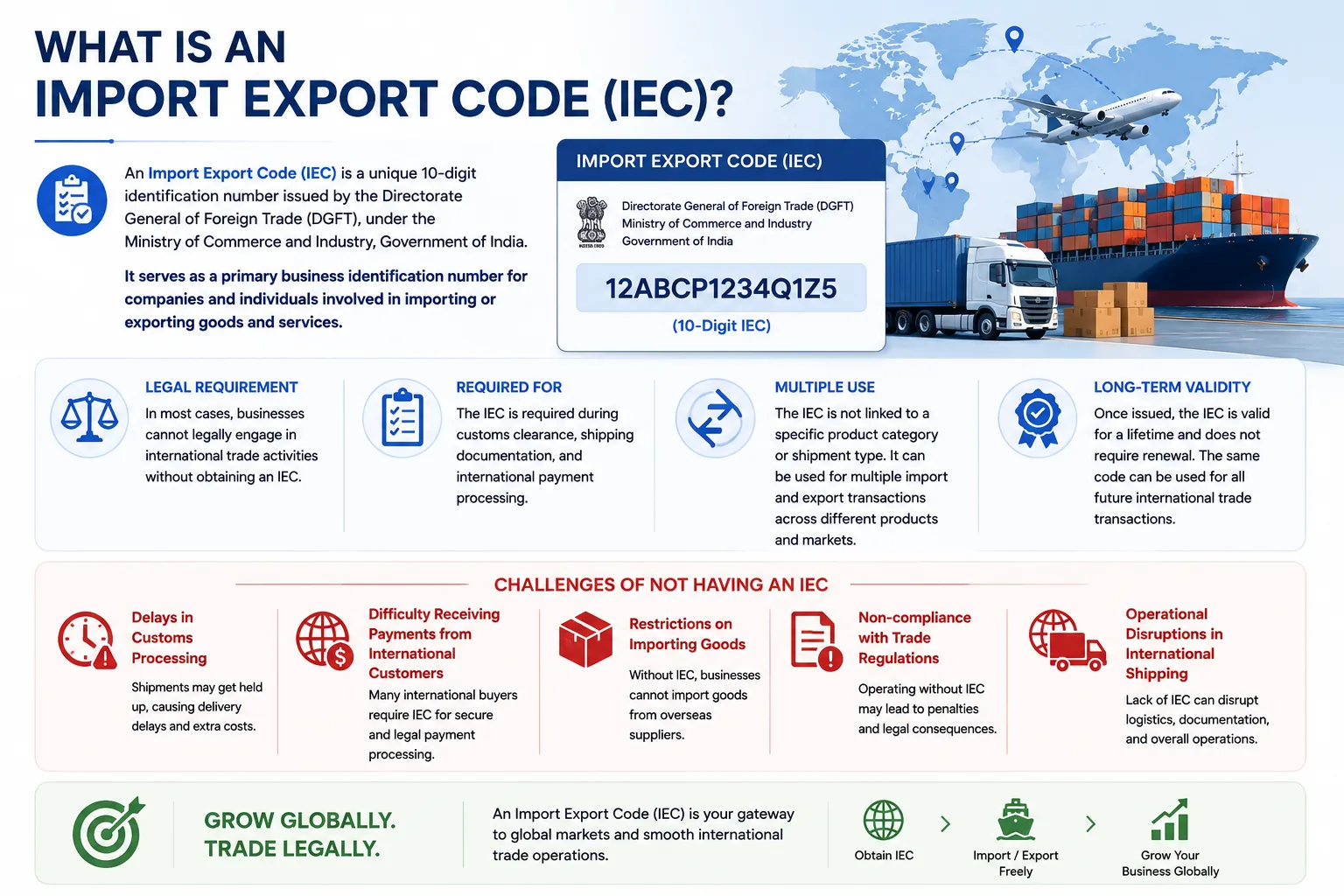
An Import Export Code (IEC) is a unique 10-digit identification number issued by the Directorate General of Foreign Trade (DGFT), which operates under the Ministry of Commerce and Industry in India. The IEC serves as a primary business identification number for companies and individuals involved in importing or exporting goods and services.
In most cases, businesses cannot legally engage in international trade activities without obtaining an IEC. The code is typically required during customs clearance, shipping documentation, and international payment processing.
The IEC is not linked to a specific product category or shipment type. Once issued, the same code can generally be used for multiple import and export transactions across different products and markets.
Businesses that do not obtain an IEC when required may face challenges such as:
- Delays in customs processing
- Difficulty receiving payments from international customers
- Restrictions on importing goods from overseas suppliers
- Non-compliance with trade regulations
- Operational disruptions in international shipping
For businesses planning to grow globally, understanding the importance of an IEC is critical.
What is an IEC Requirement Checker?
🔍 What is an IEC Requirement Checker?
A simple tool that helps businesses determine whether they need an Import Export Code (IEC) before starting international trade activities.
An IEC Requirement Checker is an online tool designed to help businesses determine whether they need an Import Export Code for their activities.
The tool usually works by asking users a series of simple questions related to:
- Business type
- Import or export activities
- Product categories
- International shipping plans
- Marketplace selling activities
- Overseas payment collection
- Service exports
Based on the responses provided, the checker helps businesses understand whether obtaining an IEC is necessary before starting international trade operations.
For first-time importers and exporters, this tool can simplify what may otherwise seem like a complicated regulatory process.
Why is an IEC Requirement Checker Important?
Many businesses entering global markets are unfamiliar with import-export compliance requirements. An IEC Requirement Checker removes uncertainty and provides clarity before businesses invest time and resources into international expansion.
Avoid Compliance Issues
One of the biggest benefits of using an IEC Requirement Checker is avoiding regulatory complications. Businesses that begin importing or exporting without proper documentation may face shipment delays, customs holds, or payment processing issues.
By understanding whether an IEC is required early in the process, businesses can ensure they remain compliant with international trade regulations.
Save Time and Effort
Trade regulations can often feel complex, especially for small businesses and startups that are new to global commerce. Instead of manually researching government websites or legal guidelines, businesses can use an IEC Requirement Checker to receive quick guidance.
This saves valuable time and allows entrepreneurs to focus on product sourcing, sales, customer acquisition, and operational growth.
Improve Business Planning
Knowing regulatory requirements in advance helps businesses plan international operations more effectively. Companies can prepare the necessary documents, set up payment systems, and coordinate shipping arrangements without unnecessary delays.
This proactive approach helps businesses launch international operations smoothly.
Build Confidence for International Expansion
Many businesses hesitate to enter global markets because they are unsure about compliance requirements. An IEC Requirement Checker provides clear direction, helping entrepreneurs move forward with greater confidence.
When businesses understand the legal framework involved in cross-border trade, they are better equipped to scale internationally.
Who Typically Needs an IEC?
In most cases, businesses and individuals involved in international trade activities require an Import Export Code.
Exporting Goods
Businesses that ship products to customers located in other countries generally require an IEC.
Examples include:
- E-commerce brands selling internationally
- Manufacturers exporting products overseas
- Handmade or artisan businesses shipping globally
- Retailers serving international customers
- D2C (Direct-to-Consumer) brands expanding globally
Whether products are shipped in large commercial quantities or smaller parcel shipments, an IEC is commonly required for export operations.
Importing Goods
Businesses importing goods, machinery, raw materials, inventory, or packaging materials from overseas suppliers also usually require an IEC.
Importers may include:
- Manufacturers sourcing raw materials
- Retail businesses importing inventory
- Technology companies purchasing equipment
- Fashion brands importing products
- Businesses sourcing packaging or accessories internationally
Without an IEC, customs clearance for imported goods may become difficult.
International Marketplace Sellers
Businesses selling through global online marketplaces often need an IEC to support export documentation and overseas payment collection.
Examples of international marketplaces include:
- Amazon Global Selling
- Etsy
- eBay
- Walmart Marketplace
- Shopify-based international stores
As cross-border e-commerce continues to grow, many online sellers require an IEC to streamline international operations.
Service Exporters
In certain cases, service providers receiving payments from overseas clients may also need to comply with IEC-related regulations.
Examples may include:
- Freelancers working with international clients
- IT and software service providers
- Marketing agencies
- Consultants
- Digital service businesses
Requirements may vary depending on the nature of services provided and applicable regulations.
Situations Where IEC May Not Be Required
Although an IEC is mandatory for many international trade activities, there are situations where businesses or individuals may not require one.
Exceptions may depend on:
- Nature of goods or services
- Government exemptions
- Transaction type
- Personal versus commercial use
- Business structure
- Regulatory conditions
For example, certain government departments or specified categories of import-export transactions may receive exemptions under applicable trade regulations.
Because eligibility and exemptions can vary, businesses should verify their specific requirements carefully before proceeding.
Using an IEC Requirement Checker helps businesses understand whether their activities fall under categories where an IEC may or may not be mandatory.
Benefits of Obtaining an IEC
🌍 Benefits of Obtaining an IEC
An Import Export Code (IEC) not only ensures compliance but also helps businesses grow globally with smoother international operations.
Beyond regulatory compliance, obtaining an IEC offers several long-term business advantages.
Access to Global Markets
An IEC allows businesses to legally participate in international trade activities. This opens opportunities to reach customers in multiple countries and expand beyond domestic markets.
Businesses can:
- Export products globally
- Source goods internationally
- Partner with overseas suppliers
- Serve international customers
- Explore new revenue streams
Simplified Customs Clearance
Customs authorities often require IEC details during import and export procedures. Having an IEC helps streamline documentation and clearance processes.
This can reduce shipment delays and improve operational efficiency.
Easier International Payments
Businesses receiving payments from overseas customers may require an IEC to process international transactions smoothly.
The code supports better coordination between exporters, customs authorities, banks, and payment systems.
Improved Business Credibility
Having an IEC demonstrates that a business is prepared for international operations and follows proper regulatory procedures.
This can improve credibility with:
- Overseas buyers
- Suppliers
- Logistics providers
- Payment partners
- International marketplaces
Business Growth Opportunities
International trade creates opportunities for higher sales volumes, broader customer reach, and market diversification.
Businesses are no longer limited to local demand and can expand into regions where their products or services have strong potential.
Common Challenges Faced by First-Time Importers and Exporters
Many businesses entering global markets encounter challenges during the early stages of international trade.
Understanding Regulations
Import-export regulations can vary depending on products, destination countries, and shipping methods. New businesses may struggle to understand which documents and licenses are required.
Managing Customs Documentation
Incomplete or incorrect documentation can lead to customs delays, shipment holds, or additional costs.
Handling International Shipping
Coordinating cross-border logistics, shipping timelines, and customs clearance can feel overwhelming for businesses without prior experience.
Navigating Payment Collection
Receiving international payments securely and efficiently is another common concern for exporters.
This is why having reliable logistics and trade support partners is important.
How ShipGlobal Supports Importers and Exporters
At ShipGlobal, we help businesses simplify international shipping and cross-border trade operations. From logistics management and customs guidance to shipping solutions and export support, we assist businesses at every stage of their global expansion journey.
Whether you are a first-time exporter or an established company entering new international markets, ShipGlobal provides tools and support designed to make global commerce more accessible.
International Shipping Solutions
ShipGlobal helps businesses manage cross-border deliveries efficiently with shipping solutions tailored to different business sizes and shipment requirements.
Customs and Documentation Guidance
Navigating customs procedures can be challenging, especially for businesses new to international trade. ShipGlobal helps businesses better understand shipping documentation and customs requirements.
Support for E-commerce Exporters
Global e-commerce sellers require reliable shipping and payment support to serve international customers successfully. ShipGlobal supports businesses selling through international marketplaces and D2C channels.
Simplified Cross-Border Operations
By streamlining shipping, tracking, and logistics processes, ShipGlobal helps businesses focus on growth rather than operational complexity.
Why Businesses Should Check IEC Requirements Before Starting International Trade
Many businesses make the mistake of beginning international operations before fully understanding compliance requirements. This can create avoidable delays and operational issues.
Checking IEC requirements early offers several advantages:
- Faster business setup
- Better operational planning
- Reduced compliance risks
- Smoother customs clearance
- Easier international transactions
- Greater confidence in global expansion
An IEC Requirement Checker provides a quick and practical starting point for businesses planning to enter international markets.
Final Thoughts
An IEC Requirement Checker is a valuable resource for businesses planning to import or export goods and services from India. It helps businesses determine whether an Import Export Code is required, reduces confusion around trade regulations, and supports smoother entry into international markets.
As global commerce continues to grow, more businesses are exploring opportunities beyond domestic markets. However, successful international expansion begins with understanding regulatory obligations and preparing the right documentation.
By using an IEC Requirement Checker, businesses can take informed steps toward global trade readiness.
With proper planning, compliance awareness, and trusted logistics support from ShipGlobal, businesses can confidently expand beyond borders, reach international customers, and build long-term global growth opportunities.