
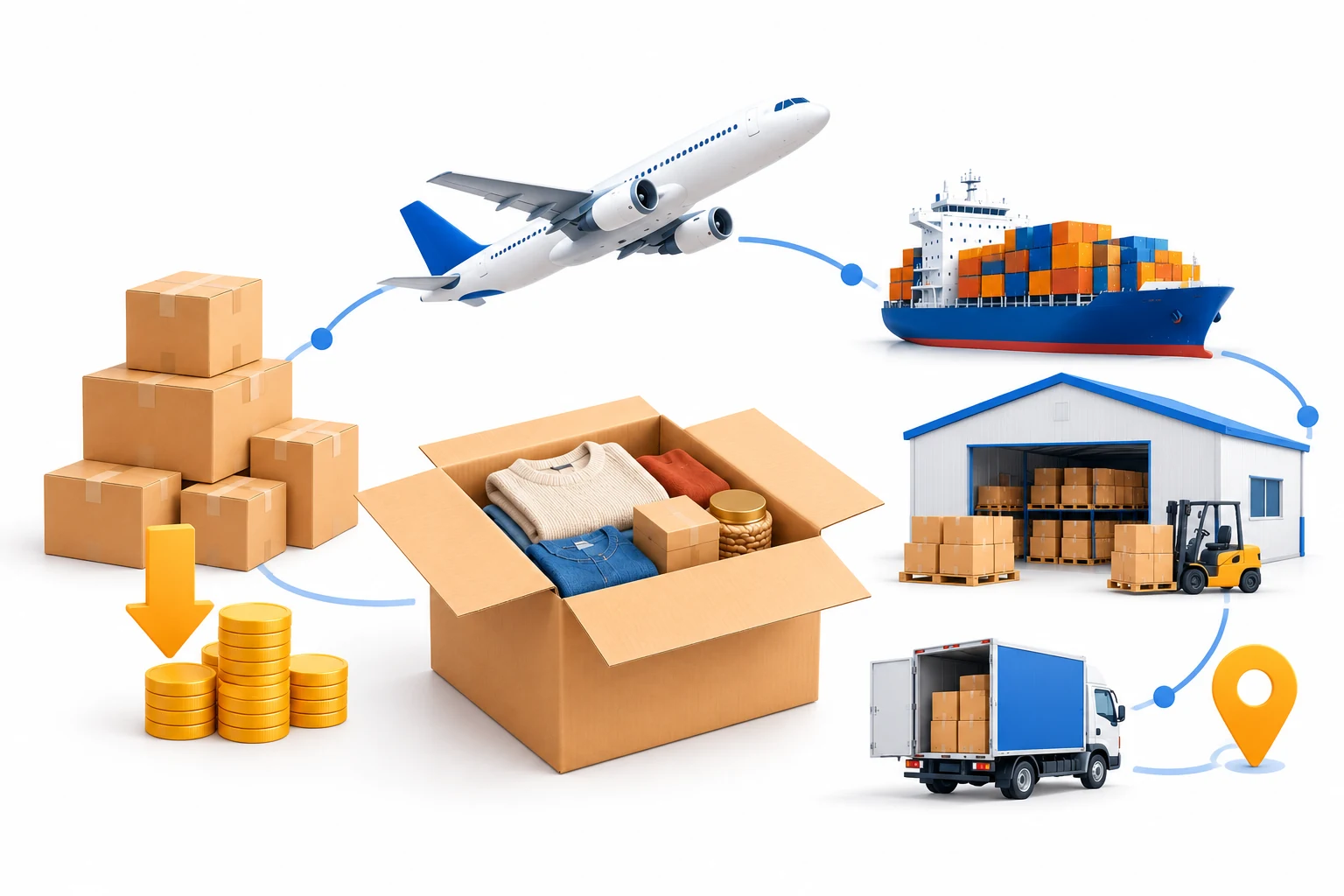
Bundled shipping simply means putting several products or orders into one shipment instead of sending them out one by one. It can make packing and dispatch much easier, and sometimes it brings your shipping bill down too. If you sell online or plan to start selling abroad, knowing what is bundle shipping and how it works will save you a lot of hassle. Fewer parcels to handle means fewer mix-ups, and your customers get a cleaner delivery experience.
Say a buyer orders three items from you. With bundled shipping, they all travel in one box rather than three separate ones. But it doesn’t always work out cheaper. The final cost depends on the size of the package, its total weight, where it’s going, and what the courier charges. For international orders, there’s more to check. You’ll need the right customs paperwork, and some products have their own shipping rules, so you can’t just throw everything into one box.
If you’re still figuring out how to export products from India, start with the basics. Our guide on how to export from India for new businesses walks you through the first steps of selling to customers overseas. And once you’re ready to ship, export documents for international courier shipments explains what paperwork you need to have in place.
Below, we’ll explain what bundled shipping means and how bundle shipping works. We’ll also look at where it actually saves you money, and what to check before you combine orders, whether they’re going across the city or across the world.
What Exactly is Shipment Bundling for Exporters
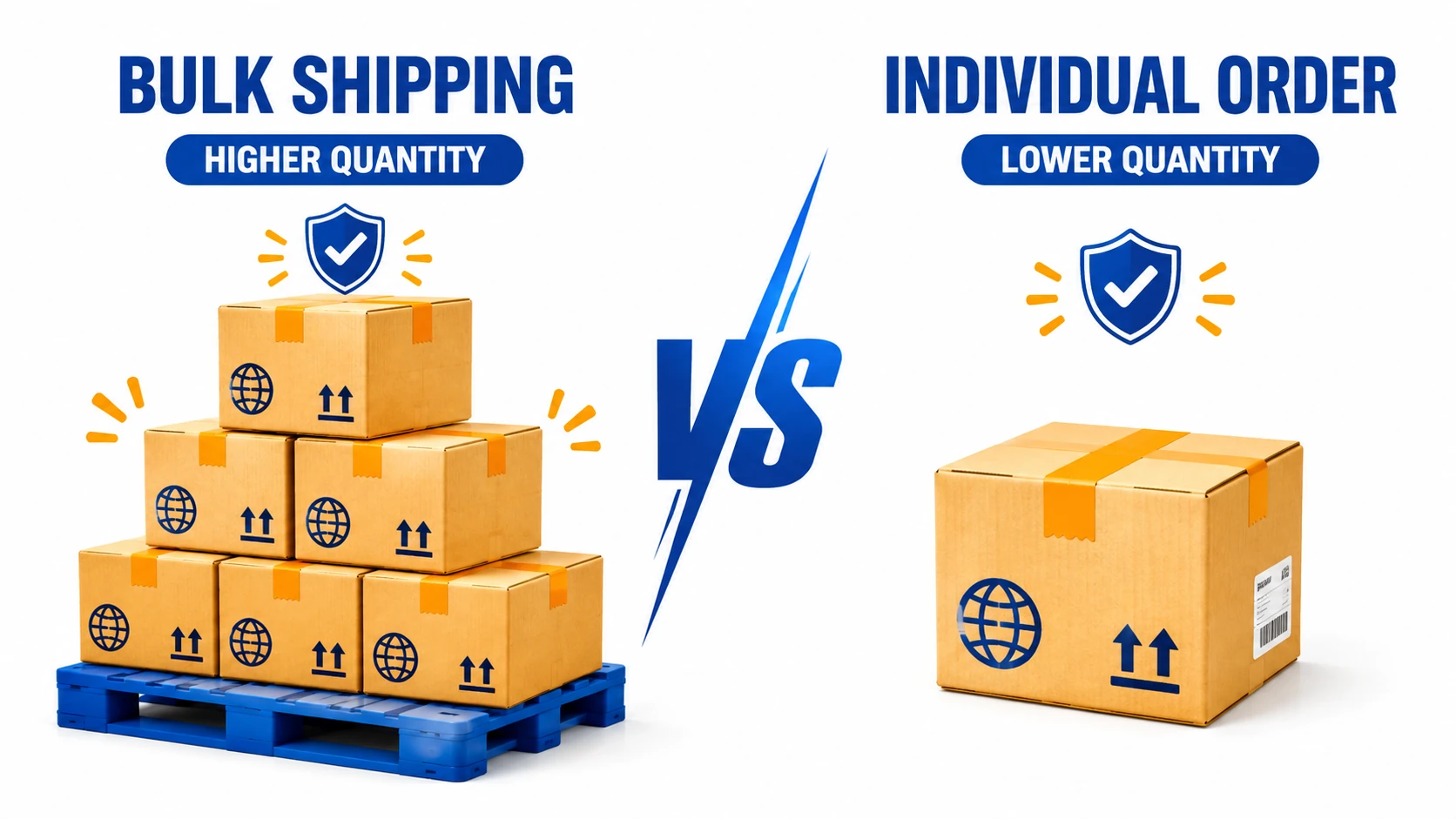
Simply, shipment bundling involves consolidation of export orders in order to save. Exporters can make several small packages separately and combine them into one large shipment to the same region or distribution center.
Consider it as carpooling, you do not have to spend money on buying several cars to get to the same destination but you fill in one car and divide the payment.
Such is precisely what multi-order consolidation shipping does to the exporters: it lowers the per-unit freight costs and makes the management of logistics easier.
Bundling is not only available to large exporters. This technique can be employed by small and medium businesses (SMEs) to access the optimization of logistics costs and make global sales more lucrative.
1. The Cost Advantage: Logistics Cost Optimization
The biggest reason exporters embrace bundling is logistics cost optimization. When you combine orders, your cost per shipment unit drops drastically.
Here’s how bundling directly impacts your bottom line:
Freight carriers may offer better per-unit rates for larger shipments. Moving more volume together can help exporters reduce international freight costs.
Combining suitable shipments can reduce repeated handling and processing, potentially lowering overall logistics expenses.
Certain consolidation arrangements may reduce repeated brokerage or processing charges. Actual savings depend on customs requirements and how shipments are declared.
Bulk shipments can be routed to regional hubs for local distribution, helping businesses manage last-mile delivery costs and improve fulfillment efficiency.
2. Shipping Container Optimization: Maximize Every Inch
Save More with Smart Shipping
Multiple shipments may increase overall shipping expenses.
Potential Savings: ₹2,000–₹3,000
Key Takeaway: Consolidating smaller shipments into one bulk shipment may help reduce overall shipping costs and improve logistics efficiency.
Note: Figures are illustrative estimates. Actual shipping costs and savings depend on shipment dimensions, destination, carrier rates, customs requirements, and other charges.
In case your exports are shipped by sea, then optimization of shipping containers is important. Every cubic foot of your container is a precious real-estate. Unoccupied spaces signify wastage of money.
Here’s how you can optimize:
Visualize the space used with container-loading software or three-dimensional modeling software.
Place heavier items at the bottom and distribute weight evenly, keeping lighter and fragile items protected during transit.
Use sturdy, stackable boxes with standardized dimensions to maximize available shipping space.
Coordinate shipments with other exporters or suppliers to share container space where practical, helping small exporters manage freight costs.
The advantages of this process are not just financial as it saves money, but also enhances global sale events logistics because you do not have to manage and monitor as many containers.
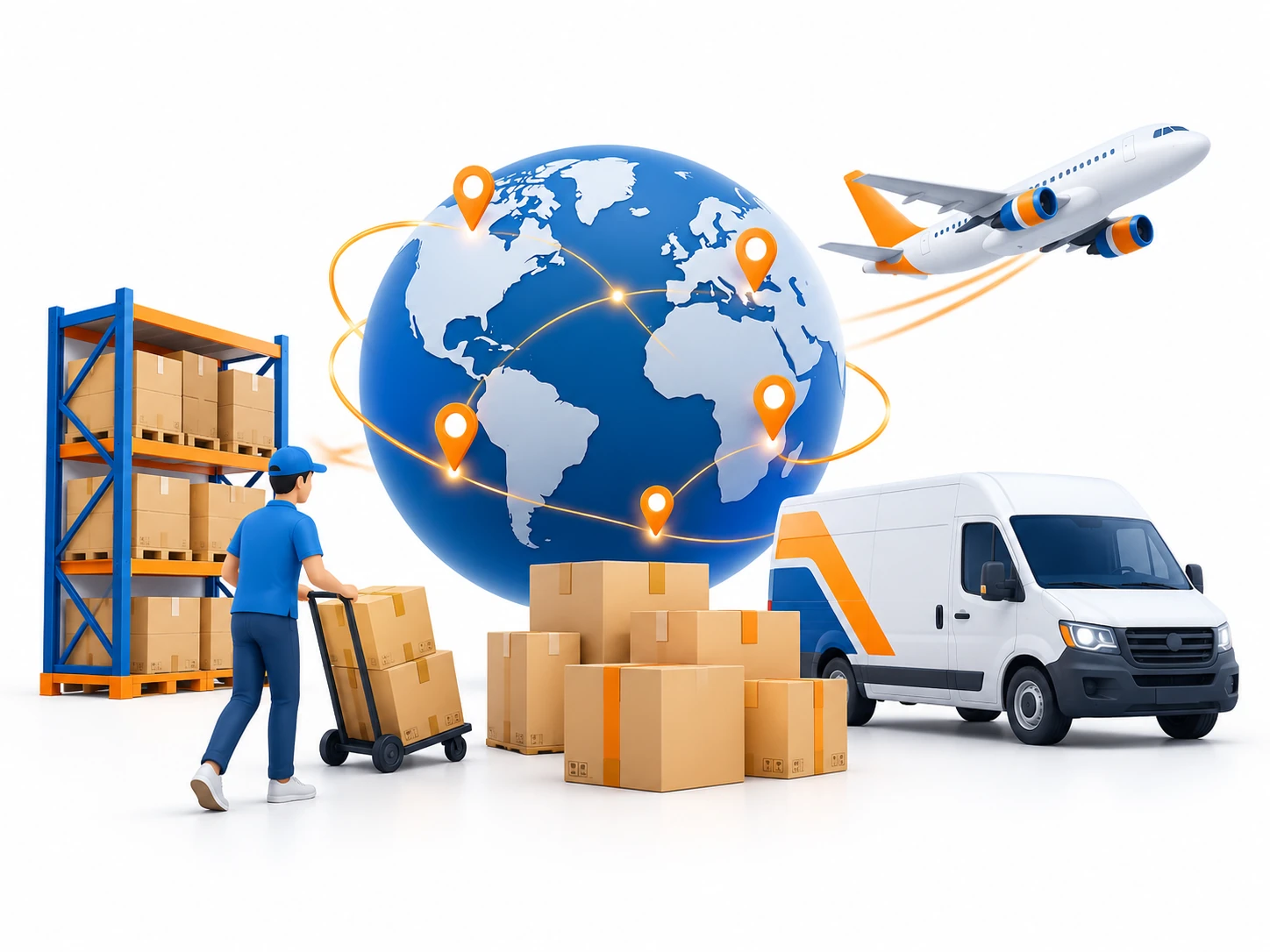
3. Faster Customs Clearance During the Sales Season
The customs offices all over the world become overwhelmed during high sales seasons such as Black Friday and Cyber Monday.
The whole procedure of the clearance of customs during the sales season can turn into a nightmare provided you have to send several small packages and each has its own paperwork.
Consolidated or bundled shipments make this step much more simple:
Consolidating shipments can simplify document management by reducing duplicate paperwork where permitted by customs regulations.
Organised records and coordinated shipment details can reduce misplaced paperwork and mismatched invoices.
Properly prepared shipping documents and accurate declarations can help prevent avoidable customs delays, although clearance times may vary.
In the case of exporters in India that are shipping their goods to the U.S. or Europe, collaborating with a freight forwarder with experience in cross-border eCommerce Black Friday operations can assist in making the process of clearance easier and faster last-mile delivery.
4. Warehouse and Fulfillment Planning: The Unsung Hero
Bundling strategy can or cannot work in your warehouse and fulfillment planning. More effective bundling begins at your warehouse.
Here’s How to Make It Work
Receive smaller shipments from suppliers, package them by destination, and consolidate them into larger shipments for savings and efficiency.
A reliable WMS helps monitor stock, automatically group orders, and prevent errors or mix-ups, keeping operations smooth and efficient.
Events like Black Friday can cause unpredictable demand. Pre-pack and pre-route shipments to major regions to stay ahead and deliver on time.
The presence of a separate space in your warehouse that is used to ship multi-orders by consolidation would be a sure way not to lose anything should demand surge.
5. Tackling Last-Mile Delivery Challenges
The problem of last mile delivery during Black Friday intensifies dramatically – imagine streets with traffic jams, fewer delivery times, and clogged courier networks.
Exporters can overcome this by:
Send bulk shipments to local fulfillment centres in your target countries before the sale to prepare inventory for customer orders.
Collaborate with 3PL (third-party logistics) companies that specialise in warehousing and regional distribution.
Use eCommerce platforms and local fulfillment partners to provide domestic delivery or pickup options where available.
Such approach facilitates the reduction of expenses, reduction of delays, and customer satisfaction, at the same time preserving your export profit margins Black Friday season.
6. Multi-Order Consolidation Shipping: A Game-Changer
Multi-order consolidation shipping takes bundling one step further. Instead of consolidating at the warehouse level, exporters collaborate with logistics providers to combine multiple customer orders that share the same destination route.
Collaborative Shipping = Shared Savings
For example, if several Indian sellers have orders bound for Germany, their goods can be combined into one consolidated container, where practical.
Key Takeaway: Consolidating shipments can help exporters reduce costs and improve logistics efficiency.
This approach is increasingly popular among cross-border eCommerce Black Friday sellers who rely on platforms like Amazon, eBay, or Shopify.
7. Global Sale Event Logistics: Plan Early, Ship Smart
Preparation is the secret of succeeding in the global sale event logistics.
Exporters that book early in the freight space, warehouse space, and arrange meetings with the customs agents beat those who procrastinate at the end.
The following is a brief list of Black Friday export preparedness:
Forecast demand early. Take historical data of past years to come up with predictions of what will sell most.
Reserve shipping capacity before the Black Friday rush. Booking early may help you secure better rates and avoid limited carrier availability during peak season.
Stay in touch with buyers and logistics partners. Share expected delivery schedules and communicate any changes or delays promptly.
Allow extra time for customs clearance and unexpected carrier delays. Keep alternative shipping arrangements ready to reduce disruptions.
Note: the sooner your products are delivered, the more time you have to deliver them via the final mile delivery and local delivery before the demand of customers reaches the maximum.
8. Real-World Example: Indian Exporters to the U.S.
Suppose that you are an Indian exporter to the U.S. and you are selling handmade leather bags. On the Black Friday, you anticipate 500 or more orders made by various customers in the various states of the U.S.
One option is to ship each customer order separately from India to the U.S. This works for businesses fulfilling orders directly from India.
Alternatively, combine suitable orders or inventory into one air or sea shipment to a U.S. fulfillment partner, subject to customs requirements.
Once goods reach the U.S. warehouse and clear customs, the fulfillment partner can sort, pack, and dispatch individual orders to customers across the country.
Result? You save up to 40% of international shipping expenses, save custom documents, and ship goods faster whilst you increase your profit margins on exports.
💡 Keep in mind: The sooner your products reach the market, the more time you’ll have for last-mile delivery and neighborhood fulfillment when demand is at its highest.
Final Thoughts: Bundle Smarter, Export Better
With the eCommerce world of cross-border expanding at a pace, it is necessary that exporters change with the aim of maintaining healthy margins.
Exporter shipment bundling is not some hack but long-term optimization of logistics costs and facilitation of the global sale event logistics, as well as customer satisfaction.
This is to say that on this Black Friday, don’t merely concentrate on offering discounts to your customers, but also concentrate on discounts on your shipping invoices.
You will also know how to consolidate export orders to save money, how to maximize containers, and how to make the fulfillment process as efficient as possible and then you will remain profitable no matter how intense the selling season can be.
Efficiency is the new coinage in international commerce and shipment bundling is your most lucrative exchange rate.
⚠️ Note: The sooner your goods are received, the more time you have to handle last-mile delivery and complete local fulfillment before customer demand hits its peak.
FAQs
Shipment bundling means consolidating multiple small export orders into one large shipment going to the same region or destination. It helps exporters save on freight, customs, and handling costs while improving logistics efficiency.
No. Small and medium exporters (SMEs) can also benefit from bundling. By pooling shipments with other exporters or consolidating their own smaller orders, SMEs can access bulk rates and improve cost efficiency.
Container optimization means using every cubic inch of a shipping container efficiently. Proper packing, stacking, and use of standardized boxes prevent wasted space — which translates directly into reduced freight costs and better logistics efficiency.
Consolidated shipments require fewer sets of documents and fewer customs entries. This reduces paperwork, minimizes the risk of errors or mismatches, and accelerates the clearance process — especially during peak seasons like Black Friday.
Multi-order consolidation allows multiple exporters shipping to the same route or destination to combine their orders into one container. It reduces costs, improves transit time, and ensures better logistics coordination — especially useful during Black Friday when freight capacity is tight.