
Imagine sending a package halfway across the world and knowing exactly where it is at any moment. That’s the magic of airfreight, a fast and efficient mode of transport for goods that rely on speed and precision. Every shipment sent via air comes with a vital document known as the airway bill (AWB). Think of it as a passport for your cargo – proof that it’s been accepted for transport, complete with concise summary of shipment details.
What makes the Airway bill number truly indispensable is its unique number, the AWB Number. This number is like a tracking beacon, revealing essential information such as the dispatch airport, destination airport, flight details, and current status. With AWB tracking, you can easily monitor your shipment’s progress and stay updated throughout its journey. Whether you’re shipping precious items or urgent materials, the AWB number ensures you can monitor your cargo and stay informed every step of the way.
Here’s a twist: Each airline has its own system of generating Airway bill number. It’s a signature process that reflects their unique approach to logistics. Understanding how this number works isn’t just for experts; it’s your key to ensuring your cargo reaches its destination safely, on time, and in perfect condition. So, the next time you send your goods by air, remember – the Airway bill number. isn’t just a number; it’s your cargo’s lifeline in the skies.
What is AWB Number: Why is it Essential
The Airway Bill is more than just a piece of paper – it’s the backbone of airfreight logistics. This crucial document links the shipper, airline, and consignee, offering transparency and accountability throughout cargo’s journey. But what exactly makes the AWB number so significant? Let’s break it down and explore its importance and practical uses in a way that’s both engaging and easy to understand.
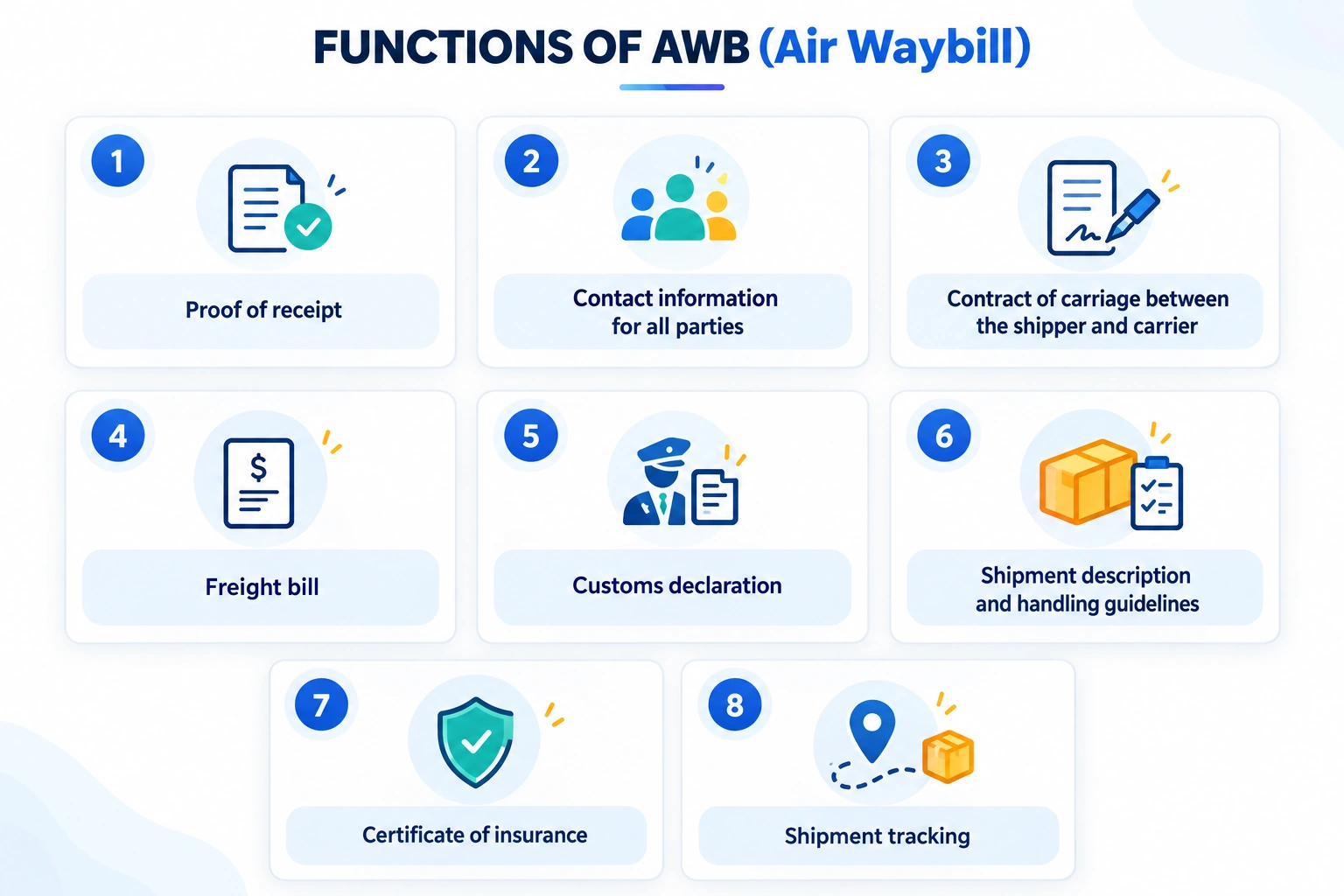
Multifaceted Role of AWB Number
Proof of Receipt
The AWB no. serves as an undeniable proof that goods have been received by the airline for transport. It outlines critical details such as:
- Shipper (Consigner) name, address and, contact information
- Consignee name, address and contact details
This Air Freight documentation solidifies the relationship between all parties involved ensuring clear communication and accountability.
Identifying the Carrier
Wondering which airline is handling your shipment? The AWB number has you covered. It provides:
- Airline details
- Cargo contents and packing specifics (number of packages, dimensions and weight)
- Routing information, including the dispatch airport, intermediate stops, final destination, flight numbers and dates.
With this information tracking your cargo becomes straightforward, offering peace of mind and transparency.
A Unique Code for Every Shipment
Think of the Air Waybill (AWB) number as the passport for your cargo; it’s what allows you to track and trace your shipment every step of the way. Every AWB comes with a unique 11-digit code that ensures your goods are never confused with someone else’s, no matter how busy the skies are
Breakdown of an AWB Number
125-12345675
Let’s look at a real-world example of AWB Number:
Understanding Your AWB Number
✈️ AWB Number = Airline Prefix + Serial Number + Check Digit
This simple but powerful format ensures there’s no mix-up, even if there are thousands of packages flying across the globe. And the best part? You, your buyer, and the carrier can all stay in the loop with real-time updates using this one number.
Consolidation with House Airway Bills (HAWB)
When multiple shipments are consolidated by a freight forwarder, each shipment may receive its own house air waybill (HAWB). Unlike the MAWB, the HAWB doesn’t follow a strict format and can vary in length and structure. This flexibility helps freight forwarders streamline operations for aggregated cargo
Key Role in Customs Declaration
The AWB no. doubles as a customs declaration, providing customs officials with essential information about the cargo’s value, contents, and dimensions. This helps them:
- Determines duties and taxes
- Ensure compliance with import/export regulations
- Approve or deny entry based on the cargo’s nature
AWB Number in Everyday Logistics
Beyond airlines, marketplaces and couriers like FedEx, eBay, and TNT also issue AWB numbers for tracking and logistics. These numbers simplify the customer experience by enabling easy tracking and accountability for shipped goods.
Air Freight Documentation and AWB Legal Status
- AWB is Central to Air Freight Documentation
The Air Waybill (AWB) is the primary document used in air freight shipments. It contains critical details like shipper and consignee information, description of goods, and flight routing. - AWB Legal Status: Non-Negotiable Document
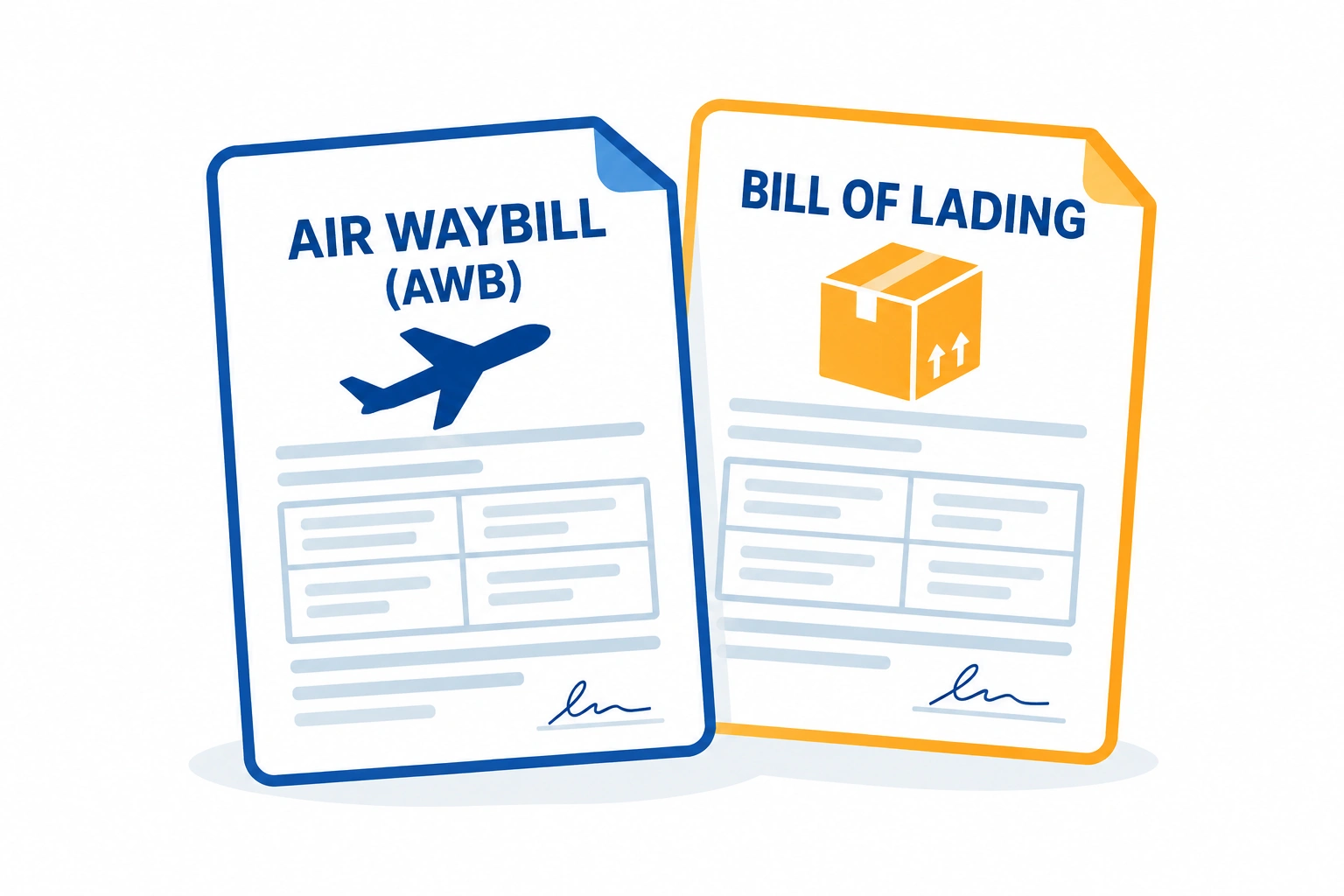
The AWB is not a document of title. This means it cannot be transferred or endorsed to another party like a Bill of Lading. It only serves as proof of shipment and a contract of carriage. - Multiple Copies for Transparency
An Air Way Bill number is issued in several copies, one each for the shipper, consignee, carrier, and customs authorities, ensuring all parties stay updated and aligned. An AWB number example helps illustrate how this information is structured. - Contractual Agreement with the Airline
When signed, the AWB becomes a legal agreement between the shipper and the carrier, confirming that the airline agrees to carry the goods under specified conditions. - Tracking Made Simple
Every AWB has a unique number that enables AWB number tracking, allowing real-time monitoring of the shipment across airports and airlines. Using AWB number tracking with a clear AWB number example can help shippers understand how to track their cargo and maintain better shipment visibility and control. - Supports Efficient Customs Clearance
Properly prepared air freight documentation, especially the AWB, accelerates the customs process by clearly presenting all the necessary shipment details. - Cannot Be Used to Claim Ownership
Since the AWB is non-negotiable, the consignee can’t be changed once it’s issued. This protects both the shipper and the buyer from any mid-journey ownership disputes.
Who Oversees AWB System
AWB numbers are those secret weapons in the field of global logistics that ensure that cargo moves smoothly around the world. AWB numbers are mostly controlled by the airlines and the freight forwarders where both play an important role in the supply chain. The AWB generated serves as a unique identification and tracking method for any shipment. The airlines use AWB numbers for the cargo flights they carry. The AWB generated usually has a distinct prefix of three digits provided by IATA for each airline – consider it a passport stamp for your cargo! With the AWB number tracking service you can keep track of shipment’s location and status throughout its journey.
For instance, the AWB number example 123-45678911 informs you that the number belongs to the airlines that have the prefix “123”. The AWB number is also used to track AWB number tracking for shipment updates and delivery status. Freight forwarders add their touch to this process through issuing the House Airway Bills (HAWB) for consolidating shipments under one Master Air Way Bill (MAWB). Once the shipments have been processed and the AWB has been issued, the details of the AWB may be shared for tracking and shipment management.
IATA keeps everything running smoothly ensuring AWB numbers are globally unique, while ground handling agents often step in at cargo terminals to manage the nitty-gritty. Together, these players create a synchronized system that keeps the world’s goods flowing.
Conclusion
In a fast-paced world of air freight logistics, the airway bill (AWB), stands as the cornerstone of efficiency, transparency, and reliability. From ensuring clear communication among shippers, airlines and consignees to simplifying customs declaration and providing real-time tracking, the AWB number is more than just an identifier – it’s the lifeline of your cargo.
Understanding its structure and purpose empowers you to navigate the complexities of global shipping with confidence. Whether it’s HAWB or MAWB, each number reflects a carefully orchestrated system designed to keep your goods moving safely and efficiently.
FAQs
Yes! You can use the AWB number to track your cargo’s status via the airline’s tracking system or freight forwarder’s platform.
The AWB system is managed by airlines, freight forwarders, and the International Air Transport Association (IATA). IATA assigns unique three-digit prefixes to airlines to ensure AWB numbers are globally standardized.
The AWB provides customs officials with details about the shipment, including its value, contents, and dimensions. This helps determine duties, taxes, and compliance with import/export regulations.
With the AWB number, you can check details like: Current location of the shipment, Expected delivery date, Shipment history, Any delivery exceptions or delays
An AWB number is typically valid for tracking until the shipment is delivered and for a few months after delivery, depending on the carrier’s policies.
If you lose your AWB number, you can retrieve it from your order confirmation email, your ShipGlobal account dashboard, or by contacting customer support.