
When it comes to moving goods from one place to another – especially across international borders—the process can quickly become overwhelming. This is where a freight forwarder steps in. Acting as the middleman between shippers and transportation services, freight forwarders help businesses navigate the often-complex world of logistics, shipping, and supply chain management. Their job is to ensure that cargo reaches its destination safely, efficiently, and in compliance with all necessary regulations.
Whether you’re a small business looking to expand internationally or a large corporation managing high volumes of shipments, a freight forwarder can take the burden off your shoulders. They coordinate everything from customs brokerage and cargo transportation to warehousing and documentation. By leveraging their expertise and network, they simplify what could otherwise be a stressful and costly process.
Role of a Freight Forwarder in Logistics
Freight Forwarding is much more than just moving goods from point A to point B. It involves carefully planned steps to ensure smooth and seamless shipping. Here’s a closer look at what freight forwarders do:
- Coordinating Transportation – Choosing the right transportation mode is crucial whether it’s air, sea, or land. Freight forwarders analyze factors like cost, speed, and reliability to determine the best shipping method for a particular cargo. If a business needs to ship perishable goods quickly, air freight might be the best option, while bulk shipments that aren’t time-sensitive are often transported via sea freight.
- Managing Customs Brokerage – Dealing with customs can be a nightmare for businesses unfamiliar with import and export regulations. Freight forwarders handle all necessary paperwork, ensuring compliance with local and international laws. Without the right documents, shipments can be delayed or even seized at the border, resulting in costly consequences.
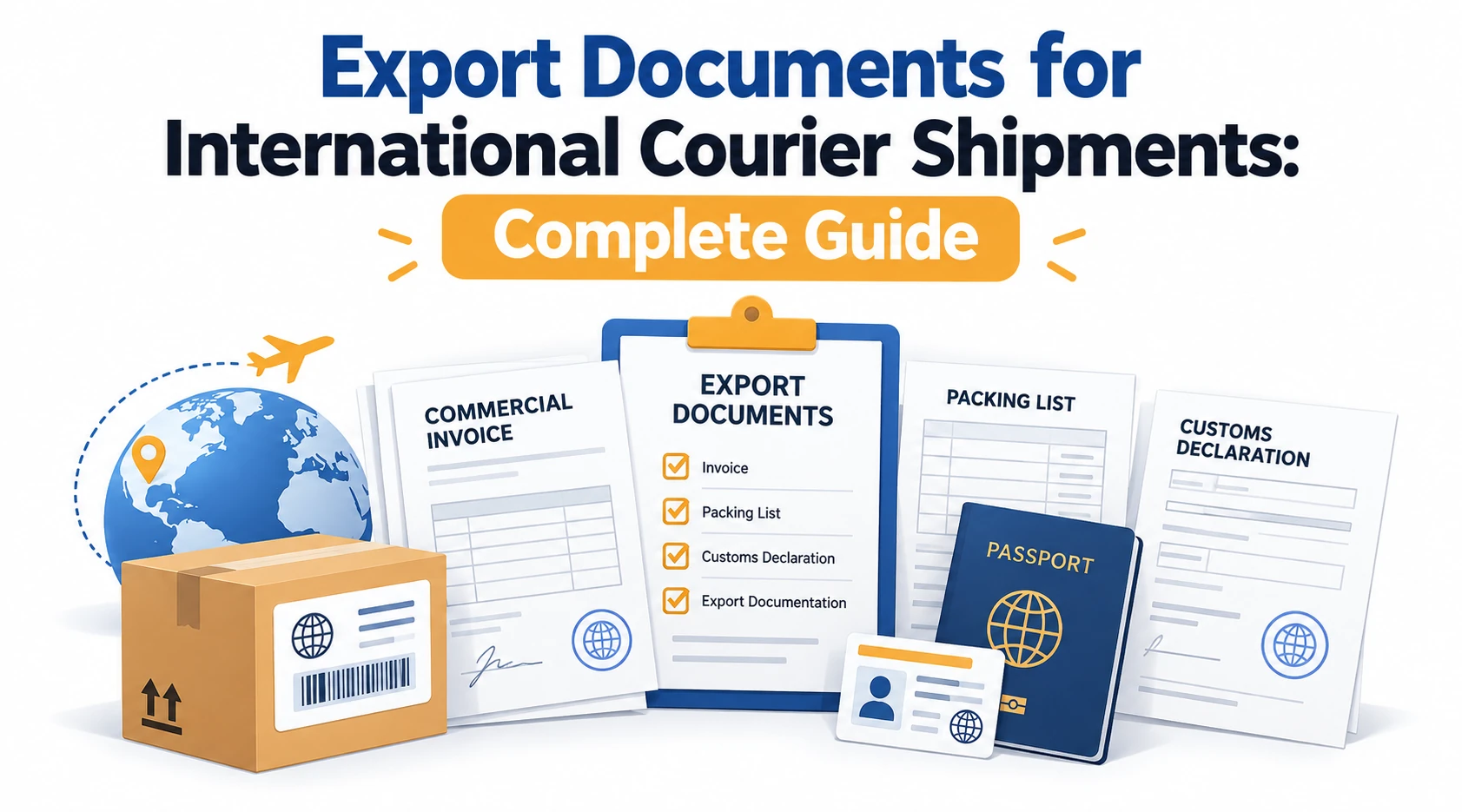
- Handling Documentation -Shipping goods involves a lot of paperwork, including bills of lading, commercial invoices, and certificates of origin. Freight forwarders make sure everything is in order, reducing the risk of errors that could delay a shipment.
- Cargo Consolidation – If a company doesn’t have enough goods to fill an entire container, a freight forwarder can consolidate shipments from multiple clients into one. This not only saves money but also optimizes space, making shipping more efficient.
- Warehousing Services – Freight forwarders often provide warehousing solutions where goods can be stored temporarily before being shipped to their final destination. This is especially helpful for businesses that need to manage inventory efficiently without investing in their own storage facilities.
- Risk Management and Cargo Insurance – What happens if the cargo gets damaged or lost in transit? Freight forwarders help mitigate these risks by offering cargo insurance and implementing risk management strategies. This ensures businesses are financially protected in case of unforeseen circumstances.
Understanding the Freight Forwarding Process
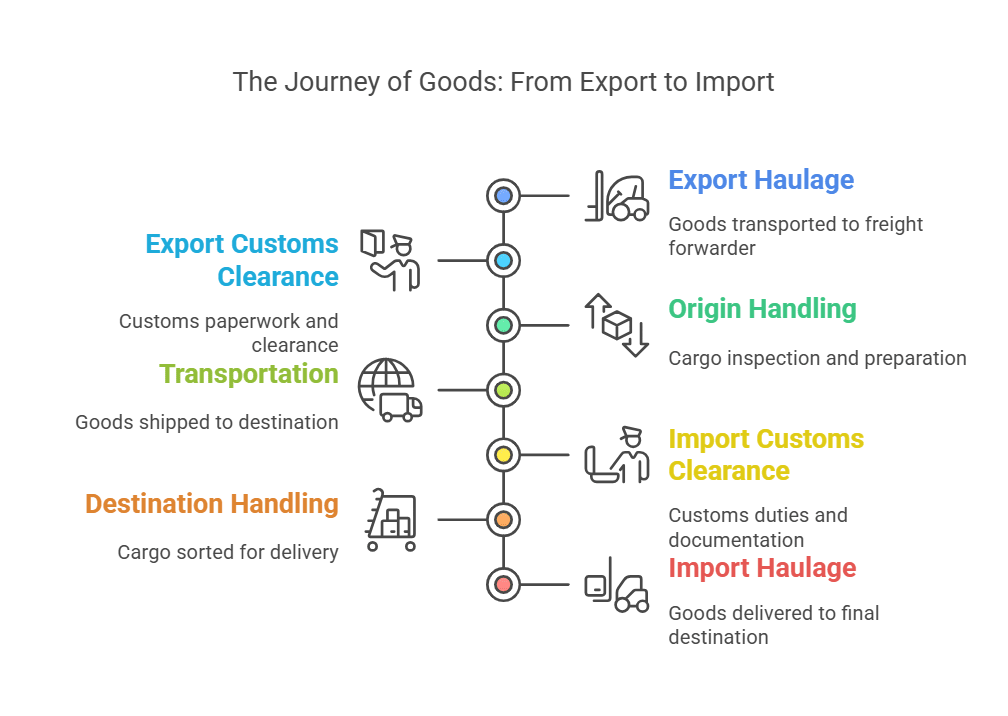
To get a better idea of how a freight forwarder operates, let’s break down the process into seven key stages:
- Export Haulage – This is the first step in shipping, where the goods are transported from the supplier’s warehouse or factory to the freight forwarder’s warehouse or designated port.
- Export Customs Clearance – Before goods leave the country, they must go through customs. Freight forwarders handle the necessary paperwork and obtain clearance from relevant authorities to prevent any hold-ups.
- Origin Handling – at this stage, cargo is unloaded, inspected, and prepared for the next phase of its journey. Freight forwarders ensure that everything is in order before shipment.
- Transportation – the goods are shipped via the selected mode – air, sea, or land – to their destination. This step involves coordination with carriers, tracking shipments
- Import Customs Clearance – Once the cargo arrives in the destination country, it must go through customs clearance again. Freight forwarders manage this process ensuring all duties and taxes are paid and documentation is in place.
- Destination Handling – The cargo is transferred from the arrival port or airport to the import warehouse, where it is sorted and prepared for final delivery.
- Import Haulage -The last step in the process is getting the goods to their final destination, whether it’s a retail store, distribution center, or directly to the customer.
Choosing the Right Transportation Mode for Freight Forwarding
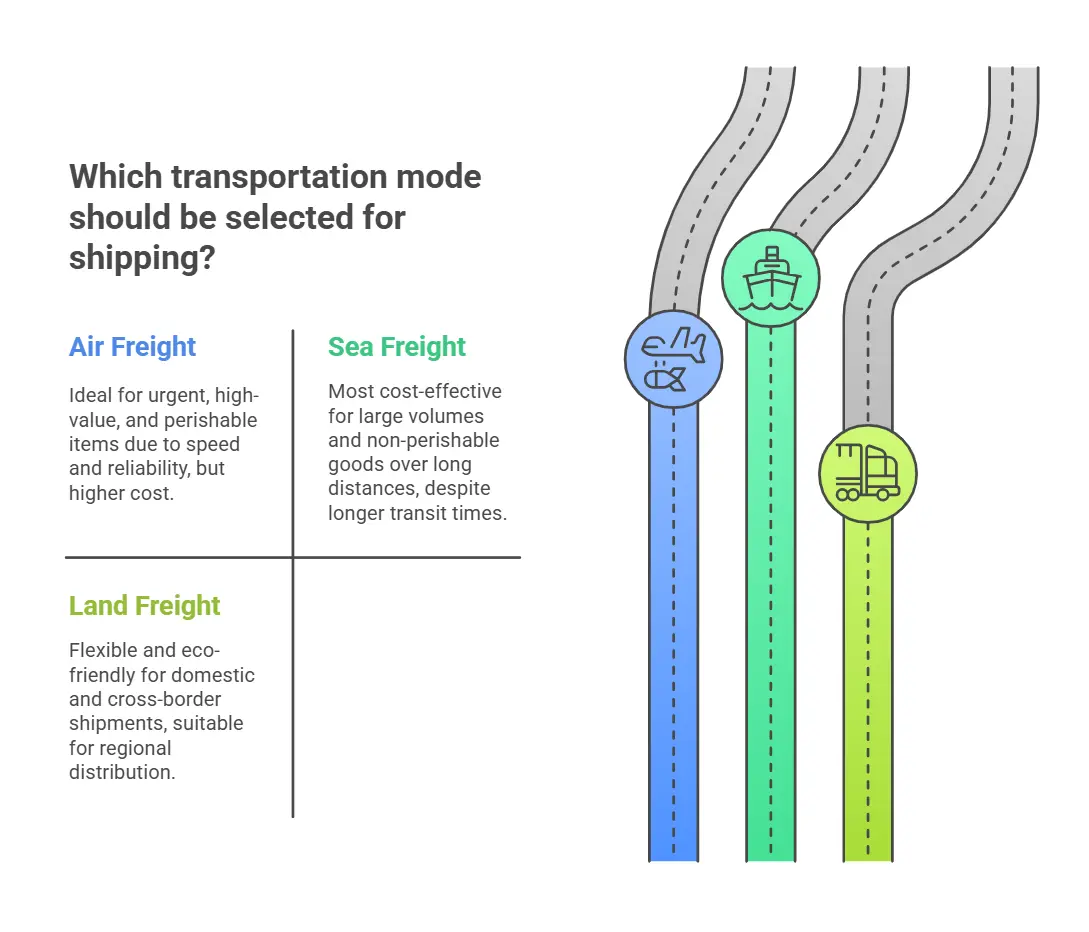
One of the biggest decisions in freight forwarding is selecting the right transportation mode. Each option comes with its benefits and drawbacks:
- Air Freight – Air freight is the fastest shipping method available, making it ideal for urgent shipments, high-value goods, and perishable items like food and pharmaceuticals. While it offers excellent speed and reliability, it comes at a higher cost compared to other transportation modes. Air freight is commonly used for electronic components, luxury goods, and time-sensitive deliveries where rapid transit is essential.
- Sea Freight – Sea freight is the most cost effective option for moving large volumes of goods over long distances. It’s widely used for heavy cargo, bulk commodities, and non-perishable goods. However, shipping via sea takes significantly longer than air freight, often ranging from a few weeks to over a month depending on the route. Despite the longer transit times, businesses opt for sea freight because it significantly reduces shipping costs, making it the preferred method for industries like manufacturing and retail.
- Land Freight – Land freight involves transporting goods via trucks or rail, making it the primary choice for domestic and cross-border shipments within a region. Trucking offers flexibility and can reach locations that are inaccessible by air or sea. Rail freight is an excellent alternative for moving large shipments over land, providing a more cost-effective and eco-friendly solution compared to road transport. Land freight is commonly used for regional distribution, e-commerce deliveries, and supply chain replenish
Why Freight Forwarders are Essential for International Trade
Freight forwarders play an indispensable role in international trade. Without them, businesses would struggle to navigate the complexities of shipping regulations, customs procedures, and transportation logistics. Here’s how they add value:
Regulatory Compliance – Different countries have different rules for imports and exports. Freight forwarders ensure shipments meet all legal requirements, preventing costly mistakes.
Supply Chain Optimization – By managing logistics efficiently, they help businesses reduce costs and improve delivery times.
Market Insights – With their extensive experience, freight forwarders provide valuable advice on shipping routes, pricing trends, and regulatory changes.
How to Choose the Right Freight Forwarder in Logistics
Choosing the right freight forwarder is critical for smooth and efficient logistics management. A reliable partner can streamline freight forwarding services, reduce shipping delays, and improve overall supply chain efficiency. Whether you are handling domestic deliveries or international shipments, the right forwarder ensures seamless cargo handling, documentation, and international shipping.
Quick Tip: A good freight forwarding company not only moves goods but also simplifies customs clearance, improves shipment tracking, and ensures cost-effective global logistics.
Key Factors to Consider When Choosing a Freight Forwarder
Industry Experience
Look for a freight forwarder with proven experience in your industry. Experienced providers understand shipping challenges, documentation requirements, and can improve cargo management with better solutions.
Global Network
A strong global network ensures smoother international shipping and better coordination across borders. Well-connected logistics partners can handle customs, last-mile delivery, and reduce transit delays.
Service Offerings
Choose a provider offering end-to-end freight forwarding services, including warehousing, customs brokerage, cargo insurance, and risk management. A one-stop solution simplifies order fulfillment and logistics operations.
Technology and Tracking
Modern logistics depends on technology. Choose a forwarder that offers shipment tracking, digital documentation, and real-time updates. Advanced systems improve visibility and enhance supply chain transparency.
Customer Support
Responsive communication is essential. A reliable logistics service provider should offer proactive updates, resolve issues quickly, and ensure smooth coordination during cargo transportation.
Compliance and Certifications
Ensure the forwarder follows international trade regulations and holds necessary certifications. Proper compliance ensures safe, legal, and efficient cross-border logistics.
Cost Transparency
Transparent pricing is key. Choose a provider that offers clear cost breakdowns for freight charges, duties, and handling fees. This helps avoid hidden costs and improves shipping cost management.
Reputation and Reviews
Check client reviews and testimonials to evaluate reliability. A trusted freight forwarding company with positive feedback is more likely to deliver consistent logistics performance.
Final Takeaway
The right freight forwarder can transform your logistics operations by improving shipment efficiency, reducing risks, and enhancing supply chain management. By evaluating experience, network, technology, and service quality, businesses can choose a partner that ensures smooth and reliable international shipping.
Future of Freight Forwarding
- Digitalization – Automated systems and advanced tracking technologies are transforming the freight forwarding industry. AI-powered logistics platforms are improving supply chain visibility, reducing delays, and optimizing routes. Digital documentation and blockchain technology are also being integrated to enhance security and efficiency in cargo transportation.
- Sustainable Shipping – As the world moves towards greener solutions, the freight industry is focusing on reducing carbon emissions. Companies are exploring eco-friendly shipping alternatives such as electric trucks, biofuel-powered vessels, and carbon offset programs. More businesses are also adopting sustainable packaging and warehouse optimization strategies to minimize their environmental impact.
- Nearshoring Strategies – The disruptions caused by global supply chain crises have led many companies to relocate manufacturing and sourcing closer to their target markets. This shift, known as nearshoring, helps businesses reduce transportation costs, shorten delivery times, and mitigate risks associated with international trade barriers or geopolitical instability. As a result, freight forwarders are adjusting their strategies to accommodate regional logistics solutions and cross-border transportation efficiency.
Final Thoughts
Freight forwarders are the backbone of the global supply chain, ensuring that goods move seamlessly across borders while complying with regulations and optimizing logistics. Whether you’re shipping domestically or internationally, working with a reliable freight forwarder can save you time, reduce costs, and minimize risks. As global trade continues to expand, the role of freight forwarders will remain essential in keeping the world connected through efficient and reliable cargo transportation.
FAQs
A freight forwarder manages the logistics of transporting goods, including choosing transportation modes, handling documentation, customs clearance, and ensuring timely delivery.
A freight forwarder organizes and manages shipments on behalf of a company, whereas a carrier physically transports the goods via air, sea, or land.
Yes, most freight forwarders provide customs brokerage services to ensure shipments comply with regulations and pass through customs smoothly.
Yes, many freight forwarders offer warehousing services, providing temporary or long-term storage options before shipment.
Consider factors such as industry experience, service range, global network, technology for shipment tracking, and customer support quality.