
Indian exporters running ad campaigns in USD often overlook how USD to INR fluctuations can silently increase their real Customer Acquisition Cost (CAC). Even when ad performance stays constant, changes in exchange rates can distort the true cost of acquiring customers once marketing spend is converted into INR.
Most ad dashboards report CAC in USD, but exporters actually pay in INR through bank conversions and forex charges. This creates a gap between reported CAC and real CAC. Tracking CAC in INR helps exporters understand the real marketing expense, protect profit margins, and make smarter marketing decisions across global marketplaces and D2C channels.
Are you running your ads in US dollars? If yes, then read this blog and save money.
For many Indian exporters, selling internationally has never been easier. Platforms like Amazon FBA (Fulfillment by Amazon), Amazon MFN (Merchant Fulfilled Network), Etsy, eBay, Walmart Marketplace, and Alibaba allow sellers to reach customers across the US, Europe, and beyond.
At the same time, many exporters also run performance marketing campaigns to generate demand. Facebook ads (Facebook Ads), Instagram ads, and Google Ads international campaigns help drive traffic to listings or D2C (Direct-to-Consumer) websites.
But there is a hidden problem that most exporters overlook.
You might be running ad campaigns in USD (United States Dollars) while managing your business expenses in INR (Indian Rupees). And that small detail can quietly distort your customer acquisition cost (CAC) without you even noticing.
The result?
Your campaigns may appear profitable in dashboards, but your margins tell a different story.
Let’s break down how running ad campaigns in USD creates hidden distortions in CAC and what exporters selling globally should actually track.
USD Spend, INR Business
Currency Flow in an Export Business
💡 Export businesses often operate with multi-currency cash flows, making accurate forex tracking essential for profitability.
Many exporters operate in a hybrid financial environment. Some parts of the business are international, while others remain local.
Typical setup for an Indian exporter selling abroad:
Revenue Side
- Marketplace payouts in USD, EUR, or GBP
- D2C website sales in international currencies
- Wholesale payments from global buyers
Cost Side
- Packaging and manufacturing in INR
- Salaries and local operations in INR
- Domestic logistics and warehousing in INR
Marketing Side
- Paid ads cost in USD
- Facebook Ads billed in dollars
- Google Ads international campaigns billed in dollars

This creates a unique situation where USD revenue INR expenses become deeply connected to the currency exchange rate impact on business, and this is where the real complexity begins. Even when marketing performance stays stable, USD to INR fluctuation can silently change your acquisition cost in real time.
Understanding CAC
Before we dive deeper, it helps to understand the basic CAC formula that ecommerce businesses use. The customer acquisition cost calculation is simple.
CAC = Total Marketing Spend ÷ Number of Customers Acquired
Reported CAC vs Real CAC
💡 Export businesses should track both reported CAC and real CAC to understand the true impact of forex fluctuations.
For example:
If you spend $1,000 on ads and acquire 100 customers, your reported CAC becomes:
$10 per customer
Most dashboards stop here.
But for exporters, this is not the complete picture. Because the CAC shown in your dashboard is often reported as CAC, not real CAC. And the difference between real CAC vs reported CAC becomes visible when currency conversion enters the equation.
How Currency Distorts CAC
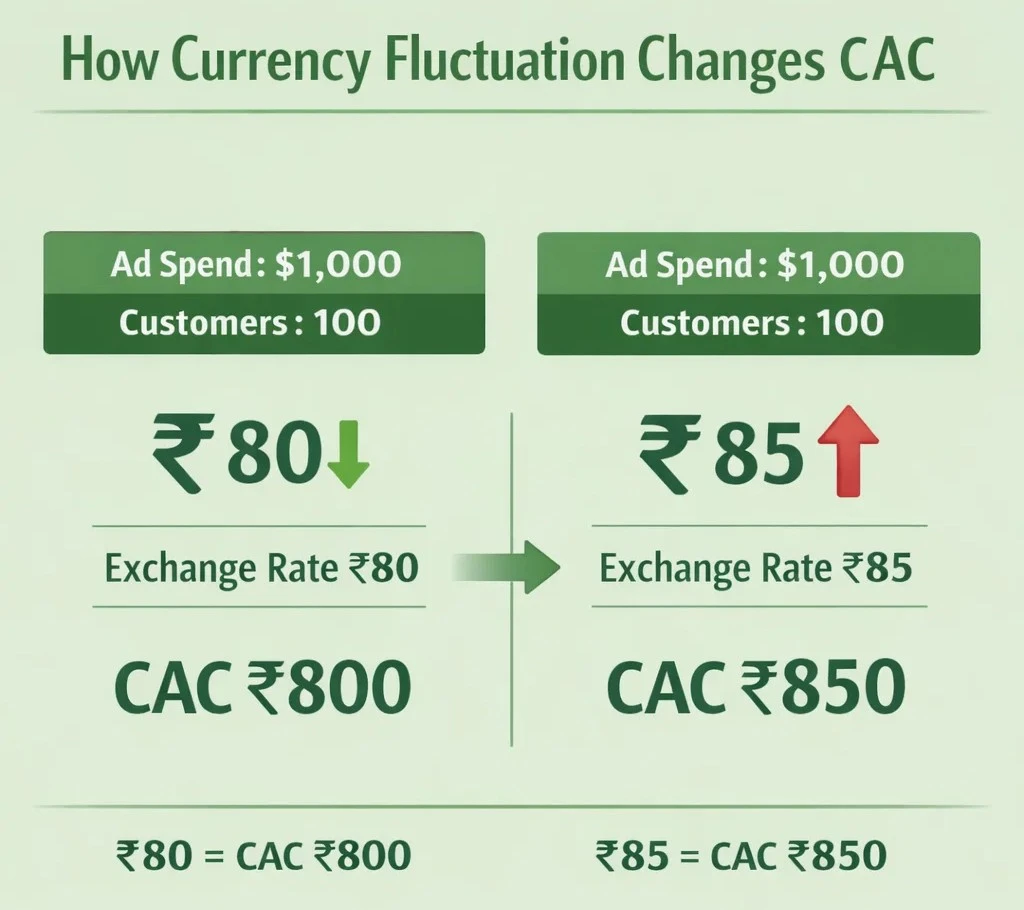
Example: How Exchange Rates Change Real CAC
💡 Even if ad spend in USD stays the same, currency fluctuations can increase your real CAC in INR.
Let’s look at a simple example involving USD to INR fluctuation.
Month 1
Ad spend: $1,000
Customers acquired: 100
Reported CAC: $10
If the exchange rate is: 1 USD = ₹80
Then the real cost becomes: ₹80,000 total spend
Real CAC: ₹800 per customer
Month 2
You run the exact same campaign.
-Same ads
-Same targeting
-Same results
Ad spend: $1,000
Customers acquired: 100
But now the exchange rate changes to 1 USD = ₹85
Now your ad spend becomes: ₹85,000 total spend
Real CAC becomes: ₹850 per customer
Your marketing performance did not change. But your CAC distortion due to currency increased your cost by 6.25%. This is the real exchange rate impact many exporters overlook when running ad campaigns in USD.
Why Exporters Feel Currency Risk More Than Domestic Sellers
Domestic sellers operate in a single currency environment. Exporters do not.
Every cross-border business carries cross-border currency risk, which introduces multiple layers of financial exposure.
This includes:
- Ad spend billed internationally
- Marketplace settlements happening later
- International payment conversion
- Currency conversion loss during payouts
All of this contributes to forex risk for exporters. And the effect becomes stronger when margins are thin. Most export businesses operate under intense competition and platform fees.
Consider the Common Cost Stack
- Amazon referral fees
- Amazon FBA storage fees
- Returns and refunds
- International shipping
- Payment gateway charges
When margins are already tight, even a small currency depreciation vs appreciation shift can change whether a customer is profitable or not. This is why the dollar rate impact on Indian businesses becomes very real in performance marketing.
Amazon Sellers: The CAC Problem in FBA and MFN
Amazon exporters experience this issue differently depending on their fulfillment model. Let’s take two scenarios.
Currency Risk Across Export Sales Platforms
💡 Each export platform introduces different currency and operational risks, making real CAC tracking important for profitability.
Amazon FBA (Fulfillment by Amazon)
A typical Amazon FBA exporter might run ads to:
- Boost brand awareness
- Drive traffic to listings
- Increase brand searches on Amazon
Many sellers combine Amazon PPC (Pay-Per-Click) with external ads like Facebook Ads cost in dollars or Google Ads international campaigns.
Now imagine the following situation.
You run $2,000 in external ads to push traffic to your product listing. Your CAC appears stable in USD. But your Amazon payout arrives two weeks later. But here’s an issue: if during this time the dollar to rupees fluctuates, this will directly impact your revenue.
This is a subtle form of international revenue conversion risk. Your dashboard shows profitable performance. But your real profit depends on the exchange rate at settlement.
Amazon MFN (Merchant Fulfilled Network)
For Amazon MFN sellers, the situation becomes more complex.
- Shipping costs may vary
- Returns are harder to manage
- Refunds sometimes happen weeks later
Imagine a campaign where:
CAC appears stable, but currency changes increase your real CAC vs reported CAC difference. Add refunds and return logistics. Now your profit per customer shrinks significantly.
This is where blended CAC international calculations become more important than simple dashboard numbers.
Etsy Sellers: Where Currency Hits Small Margins
Etsy exporters often sell products with strong craftsmanship and storytelling value.
- Handmade Goods
- Jewelry
- Decor
- Personalized Items
But Etsy products often have lower average order values compared to Amazon bundles. This means CAC tolerance is smaller.
Let’s consider a small Etsy seller.
A jewellery brand runs ads worth $500 to drive traffic to their Etsy store. They acquire 50 customers.
Reported CAC: $10 per customer
But if the rupee weakens against the dollar, the real CAC increases.
And since Etsy sellers often price at a high amount to stay competitive, even a small increase in CAC can affect profitability. This is an example of the currency exchange rate impact on business in cross-border ecommerce selling. And in many cases, this change goes unnoticed because the Etsy dashboard still shows the same USD metrics.
eBay, Walmart, and Alibaba Sellers Face Similar Risks
Whether you sell on eBay, Walmart Marketplace, or Alibaba, the underlying problem remains the same.
Ad spend is frequently in USD. Revenue conversion happens later. Operational costs remain in INR.
This mismatch creates cross-border currency risk. Even if platforms display revenue in one currency, your real profit depends on how that revenue converts back into INR. And this is where foreign exchange risk management becomes important.

D2C Export Brands: ROAS Can Mislead You
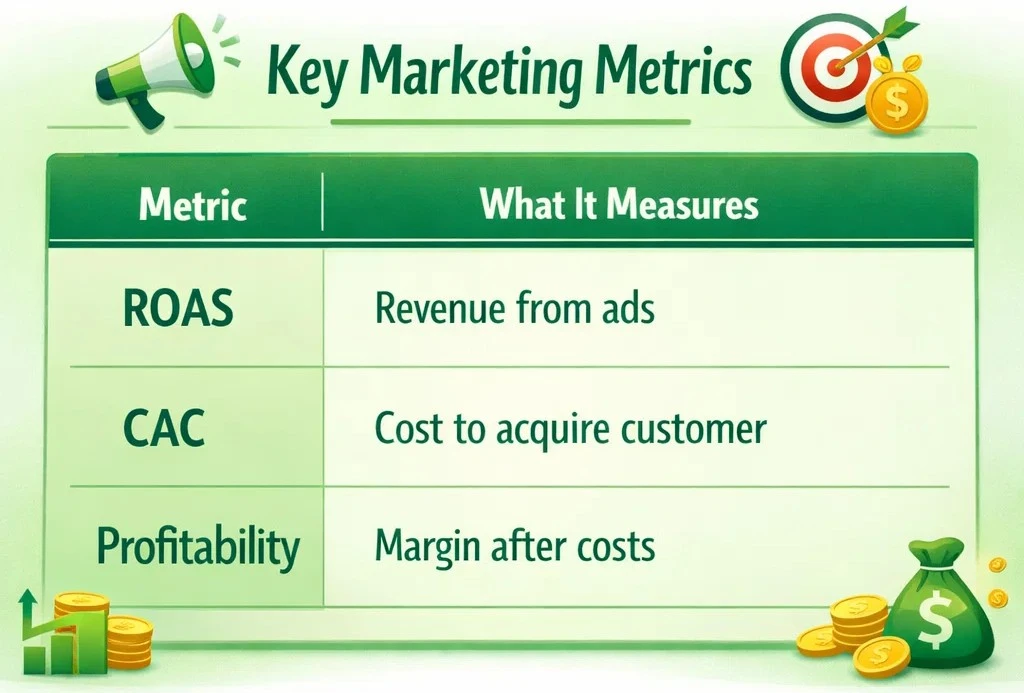
Exporters running their own websites face an additional challenge. Many D2C brands focus heavily on ROAS.
ROAS stands for Return on Ad Spend.
But there is an important difference between ROAS vs CAC difference. ROAS measures revenue generated from ads. CAC measures how much it costs to acquire a customer.
Both are important, but CAC directly connects to unit economics.
Consider this Example
A D2C skincare brand selling internationally generates $4 in revenue for every $1 spent on ads.
ROAS Appears Strong
But their margin after logistics and refunds is only 40%. Their break-even ROAS calculation might be closer to 3.5. Now imagine currency fluctuations increase CAC in INR. Suddenly the business is much closer to breaking even than expected.
This is why performance marketing for D2C brands must account for currency movement.
Where Currency Hits Exporters the Hardest
Currency does not affect exporters at just one stage. It affects multiple points in the business cycle.
Currency Risk Across Export Business Stages
💡 Currency risk can appear at multiple stages of an export business — from advertising spend to final marketplace payouts.
1. At Ad Spend
-Your ad platform charges your card in USD.
-Your bank converts that to INR.
-This is where currency conversion loss happens instantly.
2. At Marketplace Settlement
-Amazon, Etsy, or other platforms release payouts later.
-By the time funds arrive, exchange rates may have shifted.
-This creates international revenue conversion differences.
3. At Inventory Decisions
-Manufacturing decisions happen months before sales occur.
-Currency movement between production and sale introduces forex risk for exporters.
How Smart Exporters Calculate Real CAC
How to Calculate Real CAC
💡 Tip: Many exporters also track blended international CAC across marketplaces and D2C channels for a clearer view of marketing efficiency.
This helps calculate international customer acquisition cost more accurately. This gives a clearer picture of marketing efficiency across the entire export business.
Managing Currency Risk as an Exporter
You cannot eliminate currency risk entirely, but you can manage it. Here are some practical approaches exporters use.

Price With Currency Buffers
When pricing products internationally, many exporters include a small buffer for exchange rate changes. This protects margins during sudden currency movement.
Set CAC Targets in INR
Instead of focusing only on USD CAC, establish an INR-based CAC ceiling. If your INR CAC crosses that threshold, campaigns should be adjusted.
Match Currency Flows
Some exporters hold a portion of revenue in USD to pay for ads or tools. This reduces unnecessary currency conversions.
Scenario Planning
Evaluate what happens if USD-INR moves by 3%, 5%, or even 8%. This prepares the business for volatility. These are simple forms of foreign exchange risk management used by experienced exporters.
The Real Mindset Shift Exporters Need
If you are running ad campaigns in USD, you are not just doing performance marketing. You are operating a cross-border financial system.
Every ad dollar interacts with:
- Exchange rates
- Platform fees
- International payouts
- Local operating costs
Ignoring currency movement creates invisible distortions in marketing metrics.
Understanding the real exchange rate impact helps exporters make smarter decisions about pricing, ad budgets, and growth strategies. Because at the end of the day, your CAC should not only make sense in a dashboard.
It should make sense in your bank account.
And if your ads are in USD but your stress is in INR, it might be time to look beyond reported metrics and understand the true economics of your export business.
Frequently Asked Questions (FAQs)
When you are running ad campaigns in USD, the amount you actually pay in INR depends on the exchange rate on the day the charge happens. Even if your campaign performance stays the same, a change in the USD to INR fluctuation can increase your real marketing cost. This means the customer acquisition cost (CAC) you see in your dashboard may not match what you actually spend in INR.
Exporters usually earn in foreign currency but operate locally. In many cases, sellers have USD revenue and INR expenses, which makes their business sensitive to exchange rate movements. When the dollar strengthens or weakens, it changes the currency exchange rate impact on business and can affect margins, pricing, and profitability.
Reported CAC is the customer acquisition cost shown inside ad platforms like Meta Ads or Google Ads. This value is usually shown in USD. Real CAC is the actual cost after the amount is converted into INR (Indian Rupees) and charged to your account. Exchange rate changes can make the real CAC higher than what appears in the ad dashboard.
The basic formula remains the same:
CAC = Total marketing spend ÷ Number of new customers acquired
However, exporters should calculate CAC using the final INR amount charged after currency conversion, not just the USD value shown in the ad platform.
Exporters cannot eliminate currency risk, but they can manage it. Many businesses set CAC targets in INR and monitor exchange rate changes. Some exporters also keep part of their revenue in USD to pay for ad spend or tools, which reduces repeated currency conversions.