
Listing products on a marketplace is among the quickest ways for a budding entrepreneur to find customers without having to create their own website. The marketplace offers them a ready-made storefront, payments system, and sometimes logistics and customer support.
But being a good marketplace seller is more than listing a couple of items. It is about picking a suitable marketplace, signing up as a seller, creating listings, choosing the price, knowing the marketplace fees, managing the stock, and fulfilling orders.
What is an Online Marketplace
An online marketplace is a website or app that brings together buyers and sellers allowing the latter to sell their goods or services to the former via one common platform. Instead of building your own e-commerce website and promoting it on your own, you may benefit from the customer traffic of the marketplace itself.
Some of the roles of marketplaces in relation to e-commerce sellers may include:
- Customer acquisition
- Management of product catalogues
- Payments for transactions
- Order handling
- Shipping arrangements
- Client communication
- Reviews and ratings
- Refunds and returns
The charges for using the services of the marketplace may be based on commissions, subscription charges, fulfillment fees, or other service fees.
How to Start Selling on Online Marketplaces
Starting to sell on an online marketplace can be straightforward, but careful planning often separates successful sellers from unsuccessful ones.
Note : One needs to decide the most suitable marketplace for one’s products and customers before registration.
Detailed Steps to Follow to Start Selling on Online Marketplaces
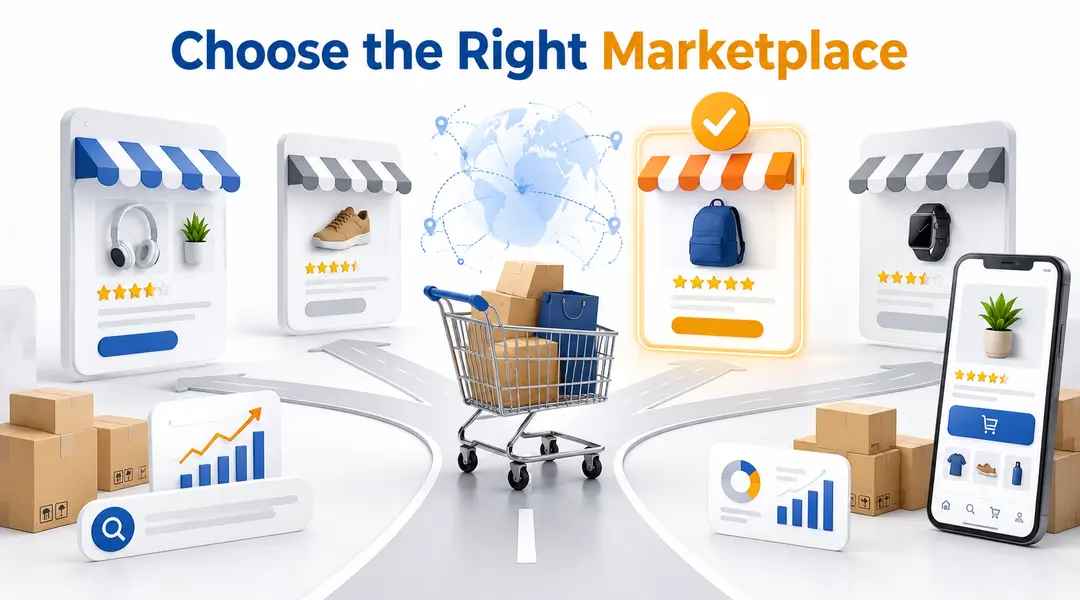
Step 1: Choose the Right Marketplace
Not all marketplaces will be suitable for all kinds of products. Start the process by researching the right place where potential clients are.
Compare marketplaces based on:
Having millions of user base does not mean that the platform is the right one to choose.
Step 2: Complete Seller Registration
After you choose your platform, you typically need to register yourself as a seller there.
The process of seller registration varies from one marketplace to another, but some of the details that businesses may be expected to provide include:
- Business name
- PAN
- Contact details
- Bank details
- Business address
- GST details, wherever applicable
- Category/product details
- Details about business registration, wherever applicable
The exact details may vary based on marketplace, category of products and applicable Indian regulations.
Do You Need to Register For GST?
It is up to your business type, products, turn over and other factors whether you need to register for GST or not.
If you are a registered business, then make sure that your name, tax details and bank details used in marketplace registration are consistent with those you have at your business end.
Step 3: Create Your Product Catalogue
After registering as a seller, your next big step is to build your product catalogue.
A catalogue will contain:
- Product name
- Category
- Brand
- SKU
- Product description
- Product pictures
- Price
- Product quantity available
- Product attributes
- Variants
- Tax information applicable
Some marketplaces will let you add individual products to your catalogue, some offer bulk-upload templates.
Step 4: Create High-Quality Product Listings
Your product listing is essentially your online sales page. Since customers won’t get a chance to see the product physically, your listing must address all their queries.
- Do not make any exaggerated claims or false statements just to boost conversions.
- Use Professional Product Pictures
- The product picture is an important factor in influencing customer purchase decisions.
Your pictures must contain
- Front view
- Back view
- Details of the product
- Size and dimensions
- Variants
- Images of packaging, if applicable
- Use of the product, if applicable
Follow marketplace guidelines for product pictures and prohibited content.
Utilize Relevant Product Attributes
Fill up as much relevant product attributes as possible because customers frequently utilize marketplace filters to narrow down their choices, and lack of information can hamper discovery of your product.
Step 5: Set Competitive Pricing
Pricing strategy is not just about pricing yourself according to your competitors.
Work out your entire cost structure before you arrive at the selling price.
The simplified formula is:
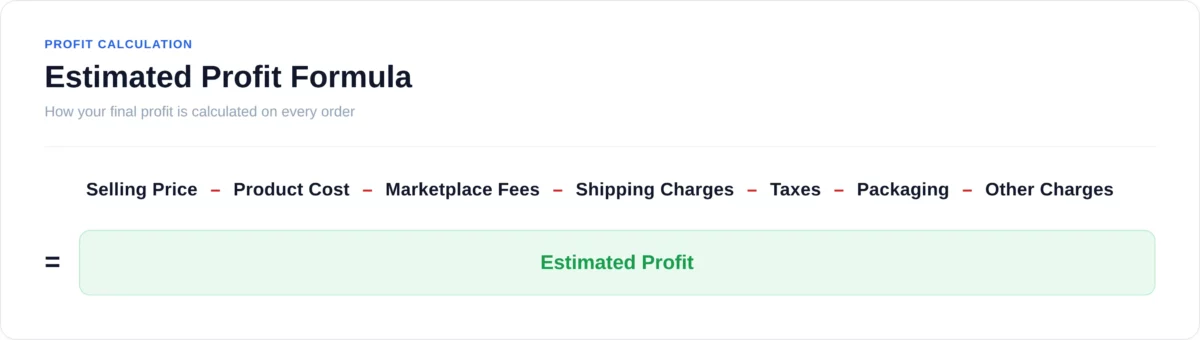
The marketplace commission structure may be percentage based, fixed rate or even combined.
For instance, a product which sells at ₹1,000 doesn’t mean that it generates ₹1,000 for the seller after the marketplace commission and other payments and deductions.
Study the fee structure of the marketplace well before determining your prices.
Step 6: Understand Marketplace Commission and Fees
Marketplace fees can greatly affect your profits.
Some of the marketplace fees could include:
- Referral/commission fees
- Closing fees
- Payment processing fees
- Shipping/fulfilment fees
- Storage fees
- Return fees
- Advertising fees
- Subscription fees
- Other service fees
Do not calculate profitability by the product cost and selling price alone. Use the total fees that the marketplace imposes on you to determine your true contribution margin.
Step 7: Configure Shipping and Order Fulfilment
Once you start selling, order fulfillment becomes crucial.
Depending on the particular marketplace you are dealing with, you will have various shipping options:
Seller Fulfilled Orders
It is you who stores, packages and hands over the product to the selected logistic service or carrier.
That is more control over your inventory and order packaging process.
Marketplace Fulfilled
It is either the marketplace itself or its logistics partner who stores the inventory and fulfills some or all of the orders.
Third Party Fulfilled
An external fulfillment service that stores your products and processes the orders for you.
Choose the best option depending on the number of orders, product characteristics, location, and operating costs.
Step 8: Manage Inventory Carefully
Inventory management matters because the availability on the marketplace is often directly connected to your performance as a seller.
In case you list inventory that you cannot fulfill, customers will place an order and then you will be forced to cancel it.
Keep track of the inventory and set the reorder points for fast-selling items.
It will be especially important for sellers operating in different marketplaces.
Step 9: Accept and Process Orders
Now that you have your listings up, you can receive the orders via the marketplace.
The following order fulfillment process is a standard one:
received
verified
verified
Fulfill your orders on time according to the marketplace’s deadlines. Your delays can hurt both the seller’s performance and the customer experience.
Step 10: Focus on Customer Reviews and Seller Rating
Once you have delivered your item, you will receive customer reviews and the seller rating from them.
Customer reviews are important for the future purchasing decision, whereas the seller rating affects your credibility and, depending on the marketplace, your listing performance.
The best way to get the good reviews is not to try manipulating them, but to provide:
- Accurate products
- Reliable shipping
- Good packaging
- Adequate product description
- Effective customer service
- Effortless problem resolution
You should never try making false reviews and manipulating your ratings.
Step 11: Understand Returns and Refunds
Returns and refunds are vital for any marketplace seller.
There could be differences in return policies depending on the category of the product being sold in each marketplace.
Before listing any product, you must know about:
- Return eligibility
- Return periods
- Refund process
- Return policy for damaged goods
- Replacement guidelines
- Reverse shipping costs
- Seller’s obligations
Returns must be considered during the process of profit calculation.
Step 12: Monitor Payment Settlement
After completion of an order, the marketplace will usually process the order and make the seller’s payment in line with its payment settlement terms.
Your payment amount will not be equal to the sale price of the product because there will be commission, tax, shipping costs, refund, etc.
Keep track of your sale and payment records for reconciliation with your accounts records.
Documents You May Need to Sell on Marketplaces
These requirements may vary from one marketplace to another and also depend on the type of business, but some common ones for Indian sellers include:
Food, cosmetics, medicines, and some consumer goods may need additional approvals in regulated categories.
Common Marketplace Seller Mistakes
Choosing a Marketplace Without Considering Fees
Large sales volume doesn’t always equal profitability. Net margin calculations should be done after taking into account marketplace fees, shipping costs and others.
Using Low-Quality Product Listings
Poorly uploaded images, lack of attribute values and insufficient descriptions negatively impact consumer trust.
Not Tracking Inventory
Overpromising can result in cancelled orders and bad performance of the seller.
Not Taking Into Account Returns
Return may consist of reverse logistics, product check, repackaging and even loss of sellable inventory.
Breaking Marketplace Policies
Each marketplace has specific policies concerning listings, reviews, pricing, customer communication, prohibited products and fulfillment. Learn all necessary marketplace policies before launching.
Marketplace Selling vs Your Own E-commerce Website
Marketplace sales and running your own store aren’t mutually exclusive.
Marketplaces are a great place for companies to begin their operations. As soon as the brand is established, then one can go ahead and build an independent website along with marketplace listing sales to have more control over the buying experience.
How to Start Selling on Online Marketplaces Successfully
The initial step here would be much more than just listing products. One must set up a selling operation that is replicable.
Begin by listing a few select products, ensure listings are of high quality and know your marketplace’s fee schedule, inventory tracking system and performance metrics.
As sales grow, utilize analytics to know which are your most performing products and optimise listings accordingly through pricing, images and description.
Conclusion
Getting acquainted with the process of selling via online marketplaces is easy enough; building a sustainable business through them involves proper planning. While registration might be an entry point, everything else comes down to product listing, good prices, inventory management, and delivery and customer service.
It’s important to familiarize yourself with all the terms and conditions of the marketplace commission structure, settlement process, delivery requirements, returns policy, and seller guidelines before launching. Begin with a limited product line, measure your margins, and grow slowly as you master the process.
Given the right marketplace and a disciplined selling strategy, one can easily leverage existing digital networks to increase their potential customer base.
FAQs
The GST requirements vary based on your business, type of products, turnover and GST rules. In order to ensure that you fulfill all relevant requirements, determine the present GST requirements relevant to your business before registration.
These differ according to the platform and include marketplace fee, payment-related costs, shipping, fulfillment costs, advertisement costs, storage costs and subscription costs. Determine all relevant costs before setting the price for your products.
This will be dependent on the marketplace and its fulfillment policy. It could either be you, the marketplace or even the third party logistic service providers.
Ensure that you provide accurate product details, have enough inventory, make prompt shipments and pack products in an effective manner.