
International e commerce has changed the way consumers and businesses buy products across borders. Now customers can order goods from another country in a matter of minutes, while businesses can sell globally without having to open physical stores overseas. But, international order fulfilment involves a load of technical details that will straight up affect payment processing, customs clearance, and delivery accuracy. One of the key things you need to understand though is the difference between a billing address and a shipping address.
Lots of online buyers and sellers get confused when putting in address details at checkout. And it’s the incorrect address that will cause all sorts of problems – payment failures, delayed shipments, customs issues and even fraudulent activity. So it’s super important to get a handle on the billing vs shipping address.
Whether you are an e commerce business, exporting goods, drop shipping or just a regular online shopper, having a grasp on how billing and shipping addresses work will save you a whole heap of hassle and wallet damage from making costly international order processing mistakes.
Understanding the Billing vs Shipping Address Difference
The idea of a billing vs shipping address difference isn’t rocket science, but it is more important that you might think in ecommerce transactions.
A billing address is the address linked to the customer’s payment method – usually a debit card, credit card, or bank account. Banks use this address to check that payments are legit and make sure there’s no dodgy activity going on.
A shipping address on the other hand is where the goods are delivered to. Most of the time these two will be the same, but international orders will often see different billing and shipping locations.
For example a customer living in Canada might have a billing address linked to their Canadian bank account but have their goods delivered to a friend or a warehouse in the States.
Getting a grip on the difference between these two addresses helps businesses sort out payment verification and shipping accuracy.
Billing Address Meaning in Ecommerce Transactions
The billing address meaning ecommerce for businesses refers to the official address they have registered with the payment provider.
When you’re checking out online, payment gateways compare the billing address you entered with the address stored by the bank or card issuer – this is known as Address Verification System (AVS) verification.
If the address details don’t match the payment may be flagged as suspicious and rejected or fail.
The billing address plays a pretty big role in preventing fraud, especially in cross border ecommerce transactions where fraud is a bigger risk.
Businesses that deal with international payments rely on billing address verification to cut down on chargebacks and unauthorized transactions.
Understanding how billing addresses work is pretty essential for both customers and ecommerce merchants.
Shipping Address Importance in International Ecommerce
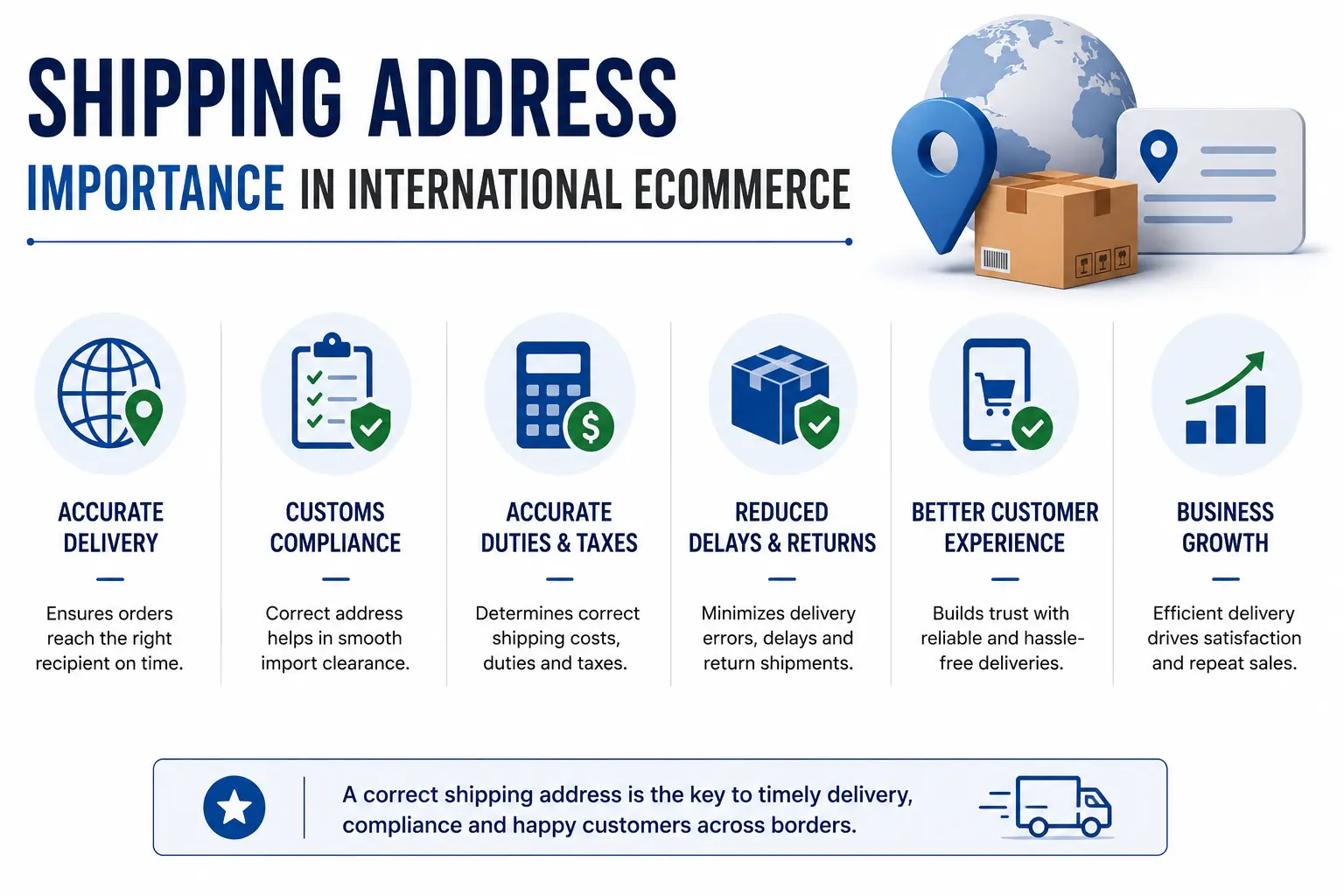
The shipping address importance gets even bigger in international transactions because delivery involves customs, logistics and all sorts of other regulations to navigate.
International couriers also use shipping addresses to sort out customs documentation and plan the route for delivery.
So for big ecommerce businesses that handle a lot of international orders, address accuracy will have a direct impact on how happy customers are and how well the operation runs.
The growing importance of international ecommerce has made address verification an absolute must for order management processes.
Billing vs Shipping Address – The International Order Processing Lowdown
When it comes to billing vs Shipping Address, things get extra complicated during international order processing.
When an international order comes in, payment systems first have to verify the billing address details to confirm the transaction. Only after that are the shipping details processed for packaging and delivery.
But if the billing and shipping addresses are in different countries – well, things get a lot more complicated. Businesses may do an extra level of fraud checking before they even send the order.
Take a customer for example who puts their billing address in India but wants the goods shipped somewhere else – that’ll trigger some serious manual verification on our end.
A lot of ecommerce platforms will flag unusual address combinations to cut down on fraud and reduce payment disputes.
Understanding how all this address verification stuff works is key to keeping transactions secure and keeping things from getting bogged down.
International Shipping Address Format – Get It Right
If you want to get your international shipments delivered on time, you need to get the international shipping address format right.
Every country has its own rules about how to write addresses, its own postal systems, and its own formatting conventions.
It’s always a good idea to educate your customers about how to do addresses right, so you can avoid all sorts of shipping errors.
Payment Verification and Billing Address – The Fraud Prevention Powerhouse
Payment verification is one of the most important tools in the fight against e-commerce fraud.
When a customer tries to make a payment, the bank or payment gateway will compare the billing info they enter with the official banking records to see if it’s legit.
If the billing address doesn’t match up with what’s in the bank’s records, the transaction will get flagged – maybe even denied.
Fraudsters often try to use stolen credit card details, but they can’t get the billing address right.
So, this system is a pretty effective tool to protect both the merchants and the customers from getting ripped off.
And it’s especially important when you’re dealing with international transactions, because the risk of getting scammed is a lot higher when you’re crossing borders.
Address Mismatch Issues Online Orders Hate You For
Let’s face it – ecommerce businesses are plagued by address mismatch issues online orders all the time.
And those mismatches can happen in all sorts of ways – the billing address might not be what the customer’s bank has on file, or the shipping address might be incomplete or just plain wrong.
And international orders are especially vulnerable to all this because customers might be using some kind of forwarding service or a temporary overseas address.
These kinds of mismatches can lead to all sorts of problems, from payment rejection to customs delays to just plain lost packages.
But if you’ve got an automated address validation system in place, you can all but eliminate all these problems and get your orders delivered reliably.
Cross-Border Shipping Address Rules That’ll Save Your Bacon
Understanding the rules around cross-border shipping address is just plain essential if you want to succeed at ecommerce.
Every country has its own set of rules about what kind of documentation you need to bring with your shipment, who you need to identify as the recipient, and how you need to write the address.
Some countries demand postal codes for customs clearance, others want the recipient’s tax ID numbers or phone numbers.
If you don’t comply with local address rules, you might run into customs holds or your shipment gets rejected.
International logistics companies rely on standard address formats so they can process shipments quickly and efficiently.
But if you’re selling globally, you need to stay on top of country-specific shipping rules, or you’ll have compliance headaches.
The Importance of Customs Address Requirements in International Trade
Customs address requirements play a pretty big role in international shipping.
Some countries go so far as to require detailed address information for high value imports, including the recipient’s ID documents or tax registration numbers.
Customs clearance systems are pretty reliant on accurate paperwork, and if your address is wrong it can cause all sorts of delays.
For ecommerce businesses keeping shipping records accurate is a vital part of getting packages delivered on time.
The impact of Ecommerce Checkout Address Fields on Customer Experience
The way you set up your ecommerce checkout address fields has a pretty big effect on the customer experience and whether orders get processed correctly.
If you’ve got a complicated or poorly designed form, it’s only going to make customers frustrated and more likely to abandon their cart.
On the other hand, if your address fields are too limited you might get incomplete shipping info and packages won’t turn up.
A lot of modern ecommerce platforms use intelligent systems that help customers by suggesting the right address format based on where they live.
These systems make the checkout process a lot smoother and reduce the chances of shipping errors.
Businesses that get their address collection right tend to have lower return rates and happier customers.
Address Problems Cause International Order Processing Errors
International order processing errors often happen because the billing and shipping address were wrong.
This can mean things like payment rejections, customs clearance delays, failed deliveries, returned shipments, or even duplicate charges for shipping.
International logistics are complicated with lots of different players – payment processors, couriers, customs, and delivery networks – If one of these things gets a wrong address it can cause all sorts of problems
For example, if you miss out the postal code or just get the country name wrong, the package might get sent to the wrong place.
Businesses that do a lot of international orders should get some kind of automated verification tool and manual review process to keep this sort of problem to a minimum.
Billing vs Shipping Address for Drop Shipping and Gift Orders
The billing vs shipping address question gets even more complicated with drop shipping and gift orders.
In drop shipping, customers might order with their billing address but want the package to go to a different address.
It’s the same with gift orders where the person paying and the person getting the gift are not the same.
Communicating clearly with customers about address verification can help avoid disputes over delivery and make order processing smoother.
Why Address Accuracy Matters for International Ecommerce Success
Getting the address right is key to international ecommerce success and making your customers trust you.
If you get the address wrong you’re going to be wasting money on shipping, have more returns, and be less efficient.
Payment verification failures are a disaster for sales and customer satisfaction.
As the global e-commerce landscape gets increasingly crowded, the businesses that can deliver – literally – with reliable delivery experiences are going to be the ones ahead of the curve.
Making an investment in some decent address validation tech, fraud prevention systems, and taking the time to educate your customers can make a huge difference in how your business operates.
Getting your billing and shipping processes spot on is pretty much essential if you want to make it in the long term in international e-commerce markets.
Conclusion
Getting to grips with the difference between billing and shipping addresses is something that’s crucial for both businesses and consumers when it comes to international e-commerce transactions.
Billing addresses are basically just used to check that you’ve got the right person for the payment, while shipping addresses are where the magic happens – or doesn’t – when it comes to getting your order to the right place on time.
When billing and shipping addresses don’t match up, or are incomplete or just plain wrong, you can end up with all sorts of problems – payment failures, delayed shipments and seriously unhappy customers.
Businesses that can get verification systems, address validation tools, and all that other compliance stuff sorted out are going to be a lot better off in the long run. And with cross border e-commerce just getting more popular by the day – efficient management of billing and shipping addresses is going to be a major factor in whether or not your international orders get fulfilled successfully.
FAQs
A billing address is the one linked to the payment method – the one that gets verified to make sure you’re the right person. A shipping address is where the order gets delivered.
Yeah they can, especially on international orders, or if you’re buying a gift or using a forwarding service.
Well, it helps payment processors keep an eye out for any dodgy activity and stop the wrong person making payments.
Well, if the address is wrong you’re going to end up with delayed shipments, packages getting lost, customs issues or having to send the whole thing back.