
A shipment may be held by US Customs when there are issues with documentation, product declarations, duties, or regulatory compliance. Most holds happen due to simple problems like missing invoices, incorrect HS codes (Harmonized System Codes), or unclear product descriptions. By preparing accurate documents and understanding US import requirements, exporters can usually resolve or avoid these delays.
You know that feeling when everything seems to be going smoothly?
Your shipment leaves India.
Tracking shows it landed in the United States.
You start thinking, Great, delivery should happen in a day or two.
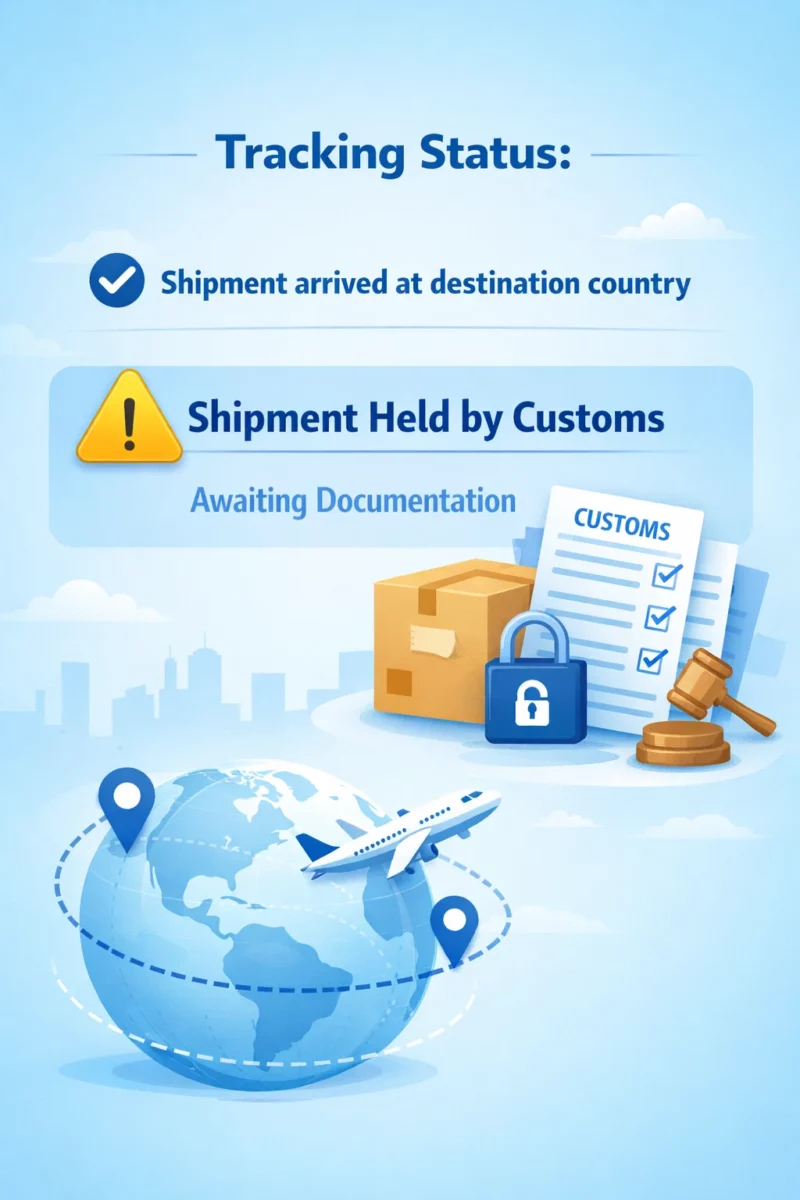
And then suddenly the tracking status changes.
“Shipment Held by Customs.”
If you’ve ever shipped products internationally, you’ve probably Googled why shipments are held by US Customs at least once. And honestly, you’re not alone. Exporters, e-commerce sellers, and even individuals shipping gifts run into this issue.
The good news? Most customs holds are fixable.
In this guide, we’ll talk about why shipment is held by US Customs, what happens behind the scenes, and how to release shipment from US Customs without losing your sanity (or your shipment).
What Happens When Your Shipment Reaches USA?
| What Customs Reviews | Why It Matters |
|---|---|
| Shipping documents | Confirms product details and importer information |
| Product description | Helps identify the exact goods being imported |
| Declared value | Used to calculate duties and taxes |
| Importer details | Confirms the responsible party for the shipment |
| Duties and taxes | Ensures correct payments are made |
| Regulatory compliance | Checks if products meet US import regulations |
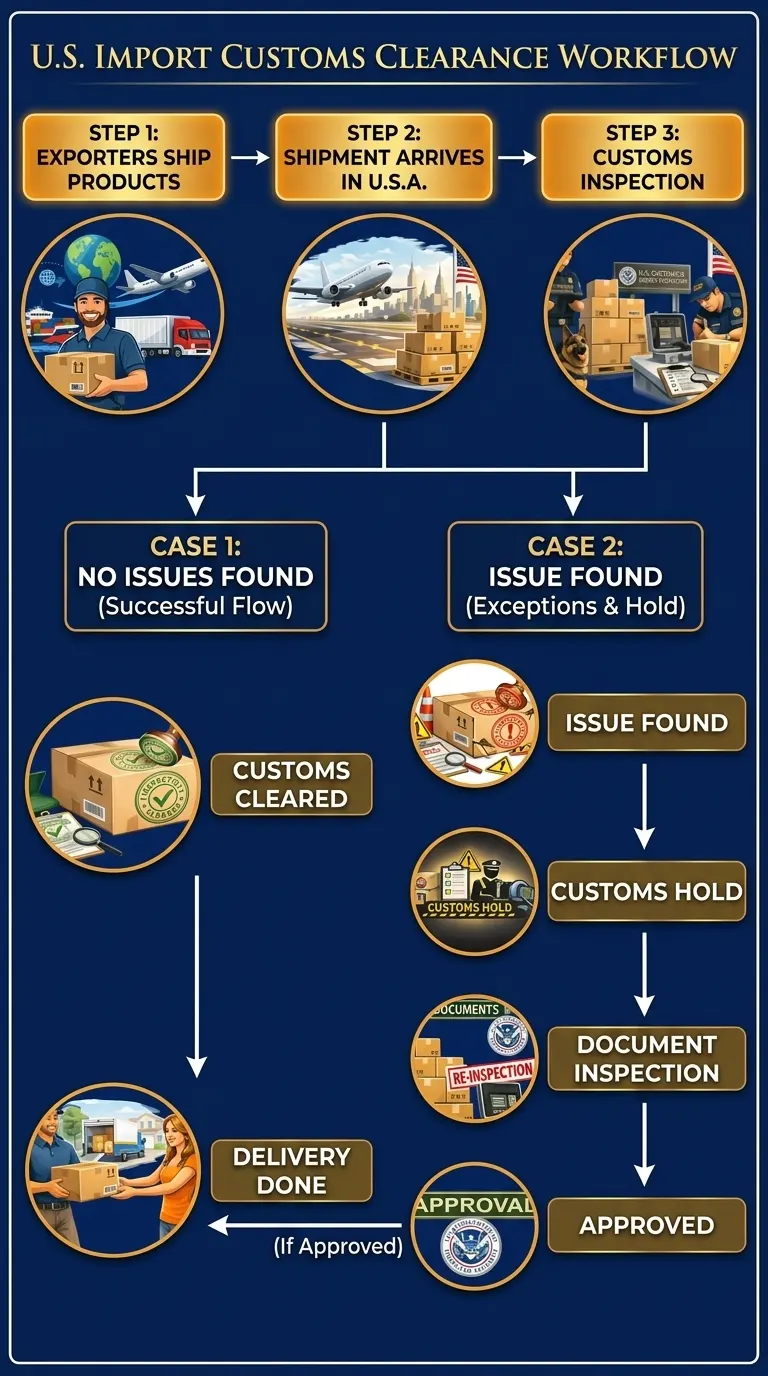
Before we get on with the topic about what happens when your shipment gets held, let’s first talk about the process through which your parcel goes.
Every package entering the country goes through the CBP inspection process (Customs and Border Protection).
If everything checks out perfectly, then your shipment moves forward for delivery. But if something seems unclear, incomplete, or suspicious, the shipment may get placed on hold.
Think of it like airport security for cargo.
Sometimes you walk straight through.
Sometimes you get pulled aside for a bag check.
Documentation Issues
Let’s start with the most common issue exporters face. If you’re wondering why shipment is held by US Customs, documentation is more often the answer. Customs officers rely heavily on paperwork to understand what’s inside the shipment.
If something is missing or unclear, they pause the shipment.
| Issue | What Happens | Example |
|---|---|---|
| Missing commercial invoice | Customs cannot determine product value | Invoice not attached |
| Incomplete packing list | Quantity mismatch triggers inspection | Invoice says 200 units, packing list says 150 |
| Incorrect product description | Customs cannot classify product | “Accessories” instead of “Leather wallets” |
| Incorrect HS code (Harmonized System Code) | Duties and compliance rules may be wrong | Industrial tool classified as consumer goods |
| Under-declared value | Customs may suspect duty evasion | $120 product declared as $40 |
Missing Commercial Invoice (The Most Common Mistake)
One of the fastest ways to trigger a hold is a Missing commercial invoice US import situation.
Without a commercial invoice, customs has no idea:
- What the product is
- What it’s worth
- Who is importing it
And customs doesn’t like guessing.
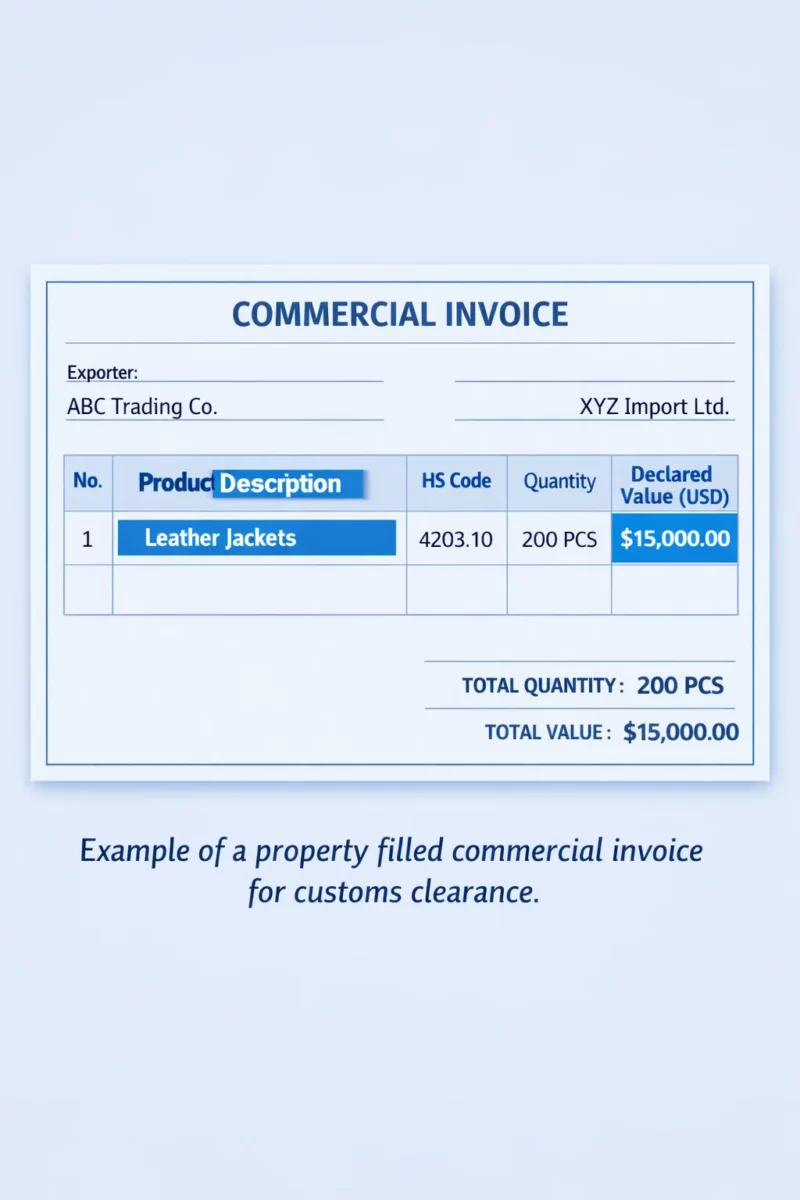
For example:
Imagine you’re a D2C seller (Direct-to-Consumer) shipping handmade leather wallets from Jaipur to customers in New York.
If your invoice simply says:
“Accessories” Customs will likely stop the shipment.
Instead, the description should say something like: Handmade leather wallets made from genuine cow leather. Specific descriptions reduce the chances of customs questioning your shipment.
Incomplete Packing List
Another common issue is an Incomplete packing list customs problem.
A proper packing list should include:
- Number of packages
- Product breakdown
- Weight of packages
- Dimensions
Now imagine a B2B exporter (Business-to-Business) shipping 200 stainless steel kitchen tools to a US distributor. If the invoice says 200 units but the packing list says 150 units, customs will stop the shipment to verify the discrepancy.
And that’s when delays begin.
Wrong Product Declaration
A Wrong product declaration USA is another major reason why shipment is held by US Customs.
Here’s a real-world style example.
Let’s say you’re an ecommerce brand selling herbal skincare products to US customers. Instead of declaring the product as: “Herbal face cream”
you write: “Beauty product.”
That sounds harmless, but to customs it raises questions.
Is it cosmetics?
Is it medicine?
Does it need FDA approval?
When customs isn’t sure, the shipment gets paused.
Incorrect HS Code (Harmonized System Code)
The Incorrect HS code US Customs (Harmonized System code) issue causes delays more often than exporters realize.
The HS code determines:
- Duties
- Import regulations
- Compliance requirements
For example:
A B2B exporter shipping industrial tools might accidentally classify a product under a consumer goods HS code. When customs notices the mismatch between the product description and HS code, they may initiate a manual inspection.
That’s another reason why shipment is held by US Customs.
Under Valuation Issues
Sometimes exporters declare a lower value to reduce import duties. Customs officers are very familiar with this trick.
If CBP suspects an Under-valuation customs issue, they may request:
- Product Invoices
- Payment Proof
- Supplier Pricing
For example:
An ecommerce brand shipping premium sneakers worth $120 might declare them at $40. If customs notices the mismatch with market value, duties may be reassessed. And yes, penalties can apply too.
Import Duties Not Paid
Another reason why shipment is held by US Customs is unpaid duties. Before release, the importer must Pay customs duty USA.
If the importer delays payment, the shipment stays at the port or warehouse. And that’s when another problem appears.
Demurrage Charges
When shipments sit too long at the port, Demurrage charges US port start accumulating. Think of demurrage as parking fees for cargo.
For example:
A B2B shipment of electronics arriving at Los Angeles port may incur storage charges if customs clearance takes too long. These charges increase daily. So resolving customs holds quickly becomes important.
US Customs Bond Requirement
Importers bringing goods into the US must meet the US Customs bond requirement.
A customs bond guarantees that:
- Duties will be paid
- Import laws will be followed
Without a bond, shipments cannot clear customs.
That’s why many importers work with a Customs broker for US imports to handle these formalities.
ISF Filing USA (Importer Security Filing)
For ocean shipments, the ISF filing USA (Importer Security Filing) is mandatory. This filing must happen before cargo leaves the origin port.
If the filing is missing or incorrect, the shipment may be stopped once it reaches the US. This is another frequent answer to the question why shipment is held by US Customs for sea freight.
Regulatory Holds (When Other Agencies Get Involved)
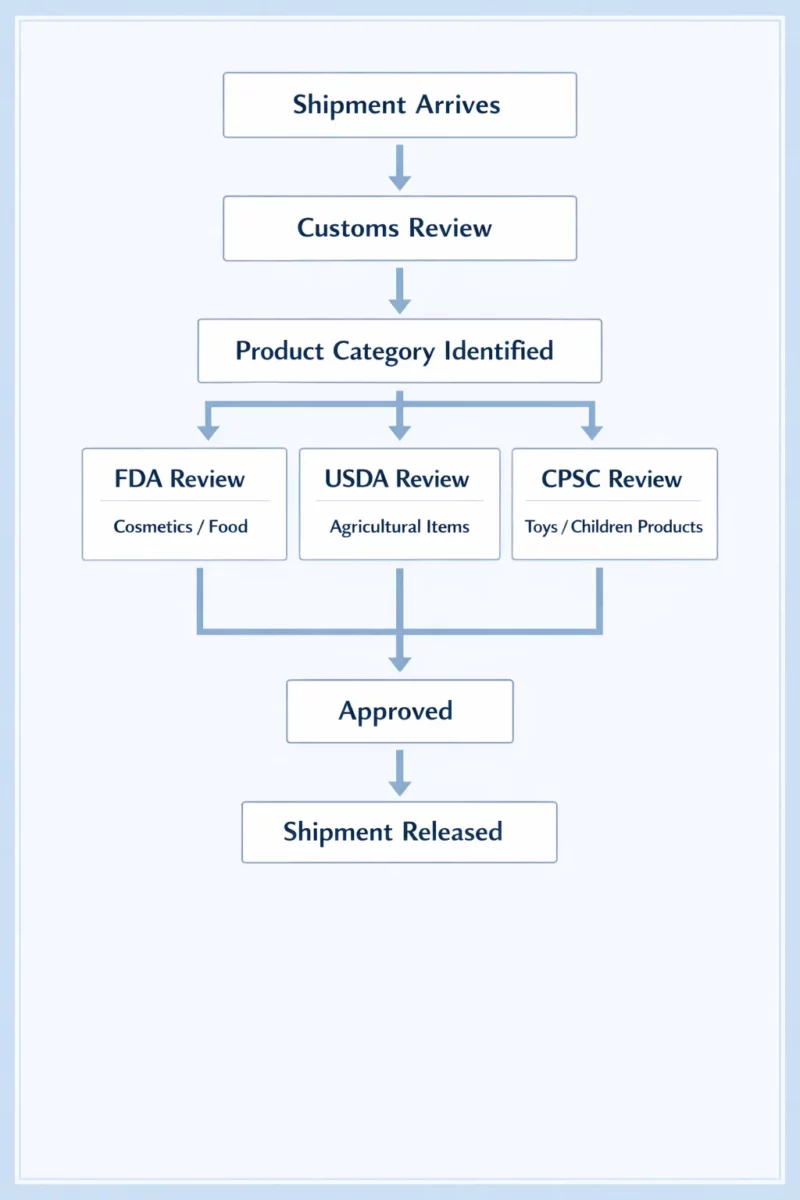
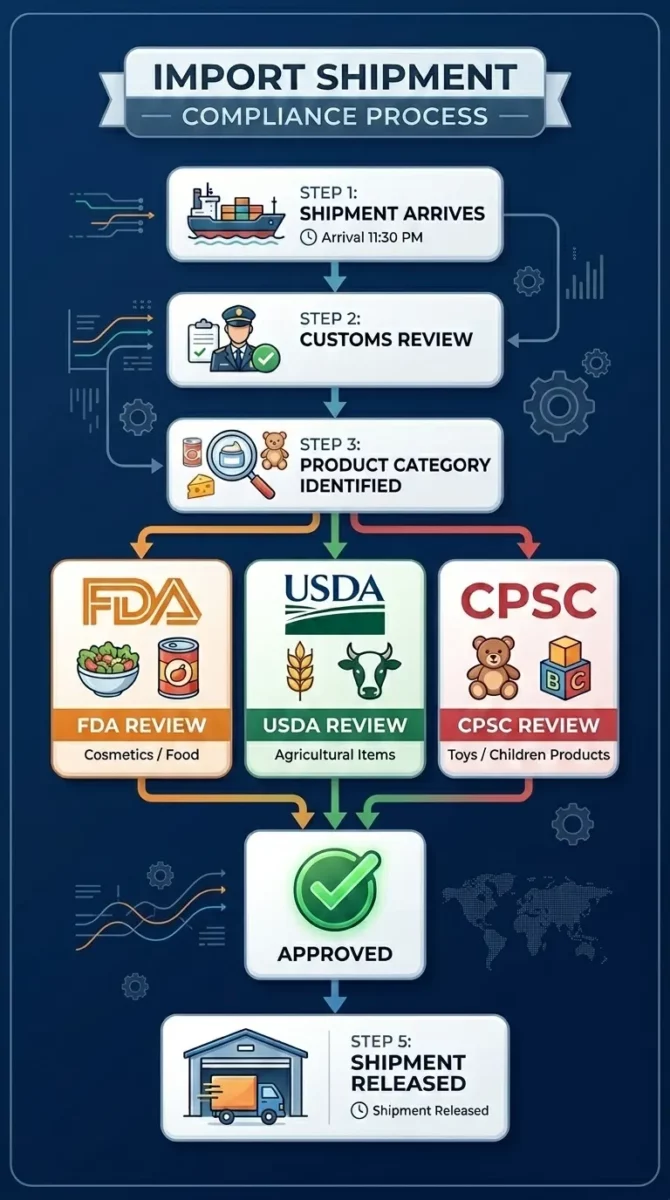
Sometimes customs isn’t the only authority reviewing your shipment. Certain products are regulated by USA government agencies. Let’s look at the most common ones.
| Agency | Full Name | Products They Regulate |
|---|---|---|
| FDA | Food and Drug Administration | Food, cosmetics, supplements, medical devices |
| USDA | United States Department of Agriculture | Plants, seeds, agricultural products |
| CPSC | Consumer Product Safety Commission | Toys, children’s products, consumer safety items |
FDA Clearance Delay
Products like:
- Food Items
- Cosmetics
- Supplements
- Medical Devices
are reviewed by the FDA (Food and Drug Administration). If documents are missing, shipments may face an FDA clearance delay USA. In some cases, an FDA shipment hold USA (Food and Drug Administration) may occur.
Let’s take an example, think of yourself as a brand owner and you run an Indian skincare brand and you sell turmeric face masks online. Once you start shipping those orders to customers in the US, customs might take a closer look. If the ingredient list isn’t clearly mentioned on the packaging or the label doesn’t follow FDA guidelines, the shipment could get held for review. It’s not unusual that the FDA just wants to make sure products entering the country meet their safety and labelling rules.
USDA Import Hold
Agricultural products fall under USDA (United States Department of Agriculture).
Items such as:
- Seeds
- Wooden products
- Plant-based materials
may face a USDA import hold (United States Department of Agriculture). Even wooden pallets can cause issues if they are not properly treated.
CPSC Compliance Hold
Products meant for children or consumer safety are reviewed by the CPSC (Consumer Product Safety Commission). When your product fails to meet safety requirements it may result in a CPSC compliance hold (Consumer Product Safety Commission).
For example:
A toy manufacturer exporting from India to US retailers must provide product safety certificates. Without them, the shipment may be stopped.
Anti-Dumping Duties
Some industries are affected by Anti-dumping duty USA. These duties apply when imported products are priced lower than domestic market value.
Products often affected include:
- Steel
- Aluminum
- Certain Chemicals
How to Release Shipment from US Customs
Now let’s talk about solutions.
If your cargo is stuck, the first step is understanding how to release shipment from US Customs.
| Step | Action | Details |
|---|---|---|
| Step 1 | Identify the Reason | The carrier or broker usually informs the importer why the shipment is on hold. Common reasons include missing documents, regulatory approvals, or duty payment issues. Once the cause is identified, resolving the hold becomes easier. |
| Step 2 | Provide Required Documents | Most customs holds are resolved by submitting the correct paperwork. Common documents required for US Customs clearance include commercial invoice, packing list, importer identification, and product certificates. Providing documents quickly helps resolve the hold. |
| Step 3 | Work with a Customs Broker | If the issue is complex, working with a customs broker for US imports can help. Brokers provide customs clearance support in the USA and communicate directly with customs authorities. They manage documentation, duty calculations, and regulatory compliance to resolve US Customs hold situations. |
Few Practical Tips to Avoid Customs Holds
If you ship internationally often, sooner or later you’ll hear someone say their shipment got stuck at customs. It happens. But in many cases, it’s avoidable with a little extra attention before the shipment even leaves your warehouse.
Let me share a couple of simple habits exporters follow that save a lot of headaches later.
| Checklist Item | Why It Matters |
|---|---|
| Match invoice and packing list | Prevents quantity discrepancies |
| Use clear product descriptions | Helps customs classify goods correctly |
| Use correct HS code (Harmonized System Code) | Ensures correct duties and compliance |
| Declare accurate product value | Avoids valuation disputes |
| Check regulatory requirements | Prevents FDA / USDA / CPSC holds |
Double Check your Documents before Shipping
This might sound obvious, but this is where most problems begin.
Before your shipment leaves, take two minutes and quickly compare your documents. Just make sure everything lines up. For example:
- The commercial invoice and packing list should match same quantity, same product names.
- The product value should be realistic. If the price looks unusually low, customs may question it.
- The HS code (Harmonised System code) should match the product you’re shipping.
A small mismatch can slow things down.
For instance, one ecommerce seller shipping cotton t-shirts to the US once mentioned how his invoice said “100 cotton t-shirts” but the packing list showed “90 units.” Nothing major, just a typing error. But customs still paused the shipment until the correction was sent.
So yeah… those little details matter more than people expect.
Check if your Product needs Approvals
Another thing exporters sometimes overlook is regulatory requirements.
Some products entering the US fall under agencies like:
- FDA (Food and Drug Administration)
- USDA (United States Department of Agriculture)
- CPSC (Consumer Product Safety Commission)
If your product falls into one of these categories, you’ll need the right certifications or documentation ready.
For example, a small skincare brand exporting face creams to the US once ran into a delay because the ingredient list on the label didn’t follow FDA formatting rules. The product itself wasn’t dangerous – it just needed clearer labelling.
Once they updated the information and sent the details to customs, the shipment moved forward.
So if your product is something like food, cosmetics, toys, supplements, or plant-based items, it’s always worth checking the regulations first.
Final Thoughts
Getting a notification that your shipment is stuck at customs can definitely raise your stress levels – especially if customers are waiting for their orders.
But in reality, most holds are not disasters. They usually happen because something small needs clarification. Maybe a document is missing, maybe the product description wasn’t clear enough, or maybe customs just needs confirmation about the shipment.
Understanding why shipment is held by US Customs makes a big difference because once you know the common reasons, they’re much easier to avoid.
And if a shipment does get stuck, knowing how to release shipment from US Customs helps you act quickly and fix the issue without wasting days going back and forth.
Because if you’ve ever watched tracking sit on “Customs Hold” for three days straight… you know how frustrating that feels.
The good news is that with the right documents, clear product details, and a bit of preparation, most shipments pass through US customs without much trouble.
Exactly the way international shipping should work.
Frequently Asked Questions
Not really. More often than not, it just means customs is taking a closer look at something about the shipment. This could involve the paperwork, the description of the product, or the value that’s been declared. Many shipments pass through this stage and are still cleared without major problems. Usually, customs just needs a little more information before the package can move on. Once the necessary documents or explanations are provided, the shipment is typically released.
The duration of the hold hinges on its cause. For straightforward matters, like a missing or corrected document, the shipment could be released within a day or two of submitting the necessary paperwork. Conversely, if the shipment necessitates inspection or approval from agencies like the FDA or other regulatory bodies, the process will naturally take longer. In these instances, the time required for clearance is contingent upon the speed of the review.
Yes, they can. Customs officers have the authority to open packages when they need to check what’s inside. It’s a standard procedure during inspections.
If they need to check the goods, they will open the package, inspect it, and then reseal it before sending it forward for delivery.