
AI Summary
Exporting Indian herbal cosmetics to Australia is a strong opportunity, but only if you understand the rules. From AICIS ingredient compliance and INCI labelling to ARTG requirements for therapeutic claims, classification makes all the difference. Get the compliance right, and Australia can become a high-value, long-term market for your brand.
Honestly
At some point, almost every herbal or Ayurvedic brand in India looks at Australia and thinks, “This market is perfect for us.”
Clean beauty? Check.
Love for natural ingredients? Check.
Consumers willing to pay premium prices? Big check.
And you’re not wrong.
But here’s the part no one tells you clearly: Australia loves natural products, but it loves regulations even more.
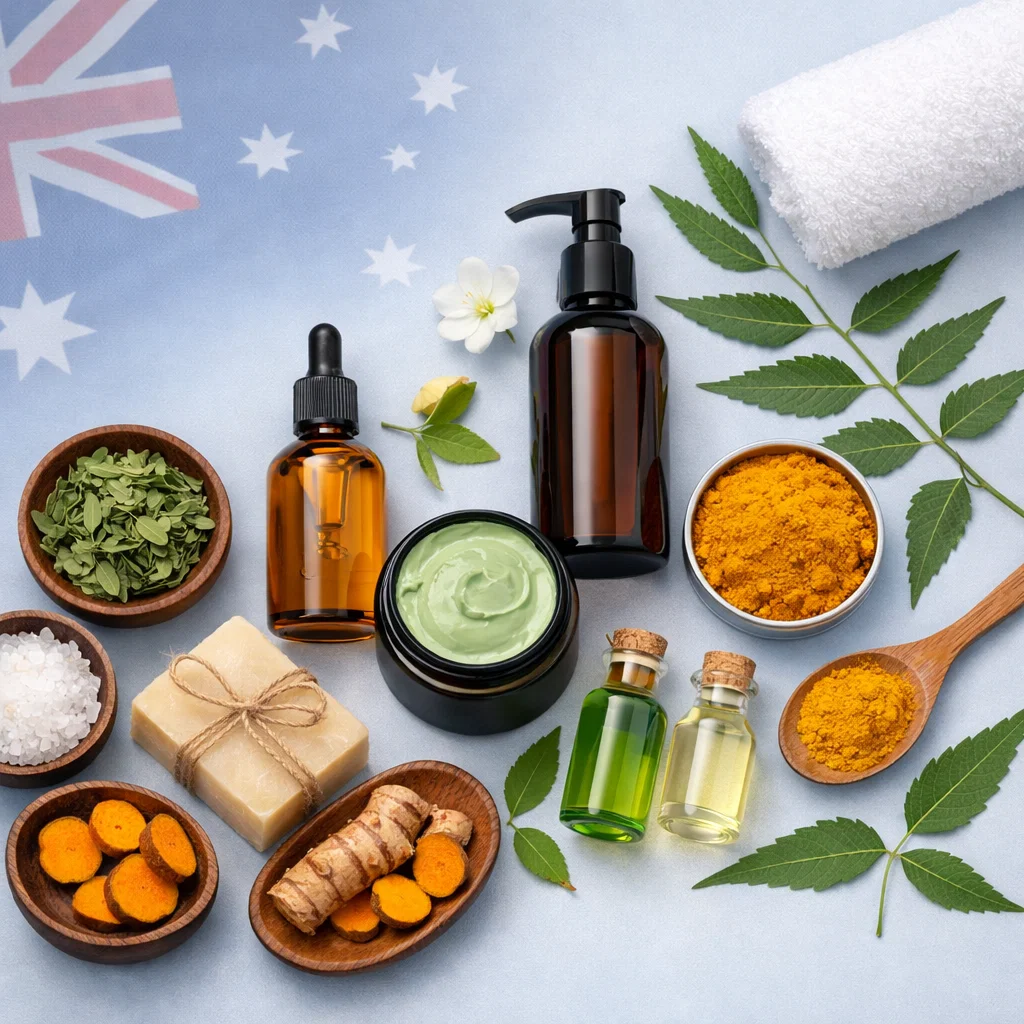
If you’re serious about exporting Indian herbal cosmetics to Australia, you need more than good formulations and beautiful packaging. You need clarity. Real clarity. The kind that prevents your shipment from sitting at customs while you Google “Why is my product detained?”
Let’s break this down properly. No legal jargon. No overcomplicated nonsense. Just what you actually need to know.
First: Why Australia Is Actually Worth It
Before we talk compliance (yes, we will), let’s talk opportunity.
Australian consumers:
- Actively look for plant-based skincare
- Read ingredient lists
- Care about sustainability
- Pay more for “natural” when they trust the brand
And Indian herbal brands have something powerful – heritage. Turmeric, neem, sandalwood, cold-pressed oils, Ayurvedic formulations – this isn’t a trend for us. It’s tradition.
That story sells.
But story alone doesn’t clear customs.
The Big Question: Is Your Product a Cosmetic or a Therapeutic Good?
This is where things get interesting. In Australia, products are divided mainly into two categories:
- Cosmetics
- Therapeutic goods
And this classification changes everything.
Cosmetic vs Therapeutic Goods Australia (TGA)
Here’s the simple version.
If your product:
- Moisturises
- Cleanses
- Softens
- Adds fragrance
It’s probably a cosmetic.
But if your product claims to:
- Treat acne
- Cure eczema
- Heal cracked skin
- Provide SPF protection
Cosmetic vs Therapeutic Comparison
It may fall under therapeutic goods and come under the Therapeutic Goods Administration (TGA).
See the difference?
The formula may be the same.
The claims change the category.
That’s why understanding the cosmetic vs therapeutic goods Australia (TGA) rules is not optional. It’s step one. One word like “treats” instead of “helps reduce appearance of” can shift your regulatory path entirely.
Yes, it’s that sensitive.
Let’s Talk About Australian Cosmetic Import Regulations
If your product qualifies as a cosmetic, you enter the world of Australian cosmetic import regulations.
The main authority you’ll deal with is:
AICIS – Australian Industrial Chemicals Introduction Scheme.
Now, now don’t let the long name scare you. It sounds more complicated than it is. But it does require attention.
AICIS Cosmetics Requirements: The Reality Check
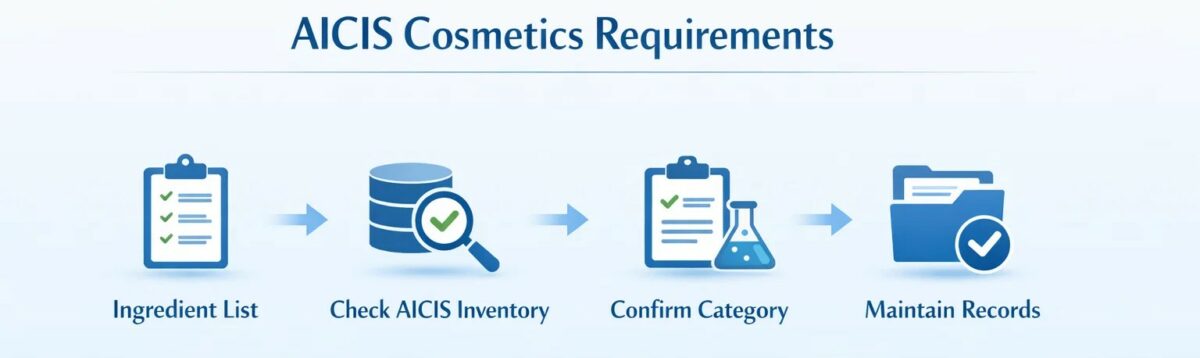
AICIS regulates industrial chemicals, and that includes cosmetic ingredients. So what do AICIS cosmetics requirements actually mean for you?
It means:
- Every ingredient in your product must be checked
- Even natural ingredients must be verified
- Records must be maintained
- The importer must be properly registered
And here’s the part that surprises many exporters: “Natural” does not mean “automatically allowed.”
Organic and Natural Ingredients AICIS Rules
Let’s say your cream contains:
- Neem oil
- Turmeric extract
- Rose essential oil
All natural. All traditional.
But under organic and natural ingredients AICIS rules, each of these must still:
- Be listed correctly
- Be used within permitted limits
- Comply with Australian chemical inventory standards
Australia doesn’t regulate based on intention. It regulates based on classification and safety frameworks. So yes, even your grandmother’s Ayurvedic formula needs proper documentation.
Myth vs Reality
AICIS Cosmetic Ingredient Compliance: How to Think About It
Instead of thinking, “This is complicated,” think, “This is structured.”
AICIS cosmetic ingredient compliance basically means:
- Make a complete ingredient list
- Verify each ingredient against the Australian inventory
- Confirm it’s allowed at your concentration level
- Keep documentation ready
If you’re working with an Australian importer, they may handle this. But as a brand, you should understand it yourself.
Blind trust is not a compliance strategy.
The INCI Ingredient List Australia Requires
Now let’s talk labels, because labels are where many exporters accidentally sabotage themselves. Australia requires ingredients to be listed using INCI names.
What Is INCI?
INCI stands for International Nomenclature of Cosmetic Ingredients.
Under INCI ingredient list Australia standards:
- Ingredients must be listed in descending order
- Botanical names must follow the correct format
- No local or Ayurvedic-only naming
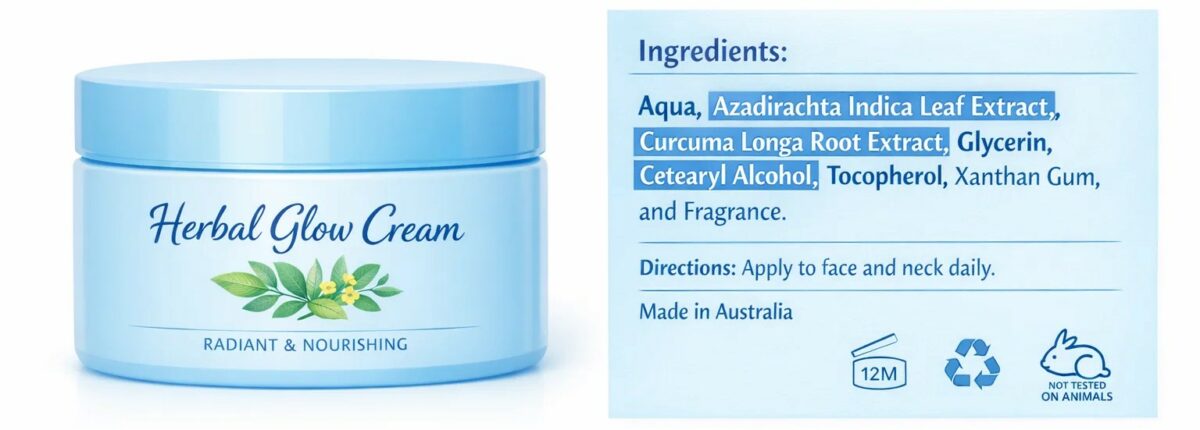
For example:
Instead of writing: Neem Extract
You must write: Azadirachta Indica Leaf Extract
It sounds technical, but this is global cosmetic practice. If you want to be taken seriously internationally, this is non-negotiable.
Cosmetics Ingredients Labelling Australia Rules
Beyond INCI, your label must also include:
- Product name
- Ingredient list
- Responsible supplier details
- Country of origin
- Batch number
These cosmetics ingredients labelling Australia rules are about transparency, and Australian consumers do read labels.
A lot. Hoenstly
If something feels vague, they won’t buy. If something feels misleading, regulators may step in.
Mandatory Label Checklist
Now the Sensitive Topic: ARTG Registration
This is where things shift from “manageable” to “serious.”
ARTG Registration Skincare / Sunscreen
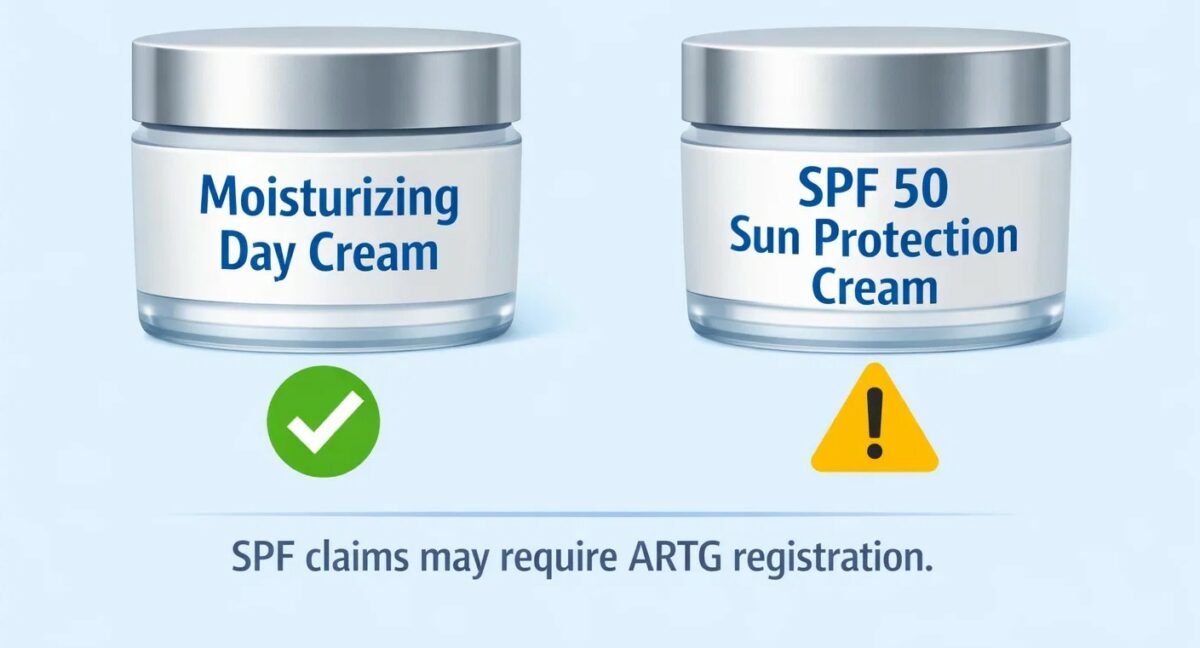
If your product includes SPF claims or therapeutic claims, you may need ARTG registration skincare / sunscreen approval.
For example:
- SPF 30 sunscreen → likely therapeutic
- Acne treatment cream → possibly therapeutic
- Anti-fungal oil → therapeutic
Once ARTG is involved, expect:
- More documentation
- Evidence requirements
- Longer timelines
So before you print packaging that says “SPF 50 Protection,” pause. Are you ready for the regulatory path that comes with that claim?
Essential Oils and Therapeutic Claims Australia Watch Closely
Essential oils are popular in herbal cosmetics. But wording matters. Under essential oils therapeutic claims Australia guidelines:
If you say:
- “Relieves joint pain”
- “Reduces anxiety”
- “Treats fungal infections”
You may enter therapeutic territory.
If you say:
- “Relaxing aromatic oil”
- “Soothing massage blend”
You likely remain a cosmetic.
Small language tweaks make a big regulatory difference.
This is not about hiding. It’s about understanding positioning.
Safe vs Risky Claims
Common Mistakes Indian Exporters Make (Let’s Be Honest)
Since we’re speaking openly, here are the common errors:
- Assuming herbal equals easy approval
- Ignoring AICIS cosmetics requirements
- Using incorrect INCI names
- Making bold medical claims casually
- Not understanding Australian cosmetic import regulations
Most compliance problems don’t happen because of bad products. They happen because of assumptions.
And assumptions are expensive in international trade.
So How Should You Actually Start?
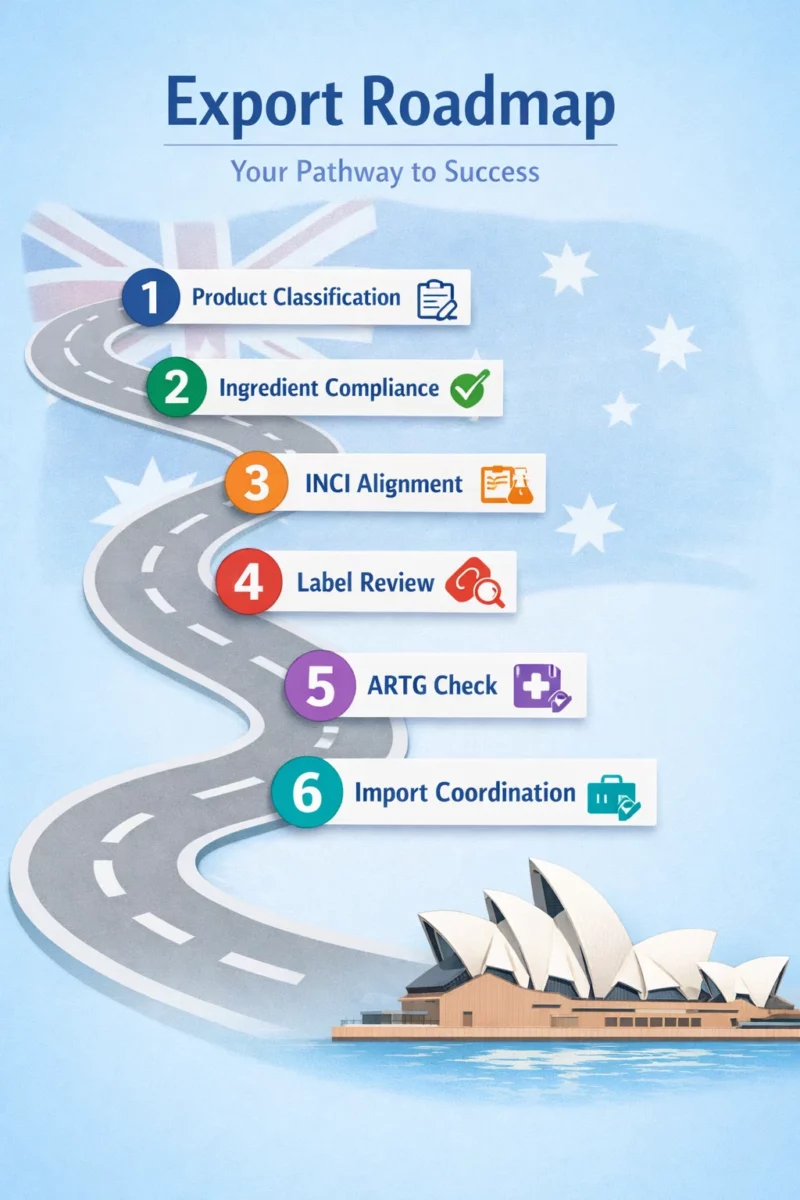
If you’re serious about exporting Indian herbal cosmetics to Australia, here’s the practical flow.
Step 1: Review Your Claims
Go through your packaging line by line.
Remove unnecessary therapeutic language unless you’re prepared for ARTG registration.
Step 2: Check Ingredient Compliance
Ensure AICIS cosmetic ingredient compliance for every ingredient.
No shortcuts.
Step 3: Fix Your INCI List
Align with INCI ingredient list Australia requirements properly.
Spellings matter. Order matters.
Step 4: Validate Your Labels
Follow cosmetics ingredients labelling Australia standards fully.
Make it clean. Transparent. Professional.
Step 5: Confirm If ARTG Applies
Review ARTG registration skincare / sunscreen requirements carefully if you use SPF or treatment claims.
Step 6: Work Closely With Your Australian Importer
Compliance is a shared responsibility. Clear communication prevents delays.
Is Exporting to Australia Hard?
It’s not hard.
It’s structured.
And structure is good.
Because once you meet Australian standards, you’re not just compliant there. You’re positioned strongly for other developed markets too.
If you approach exporting Indian herbal cosmetics to Australia casually, you’ll struggle.
If you approach it strategically, you’ll build something sustainable.
Quick Export Readiness Checklist
Final Thoughts: Compliance Is Not the Enemy
Australia does not dislike herbal products; in fact, it welcomes them. What it dislikes is ambiguity.
If you:
- Understand AICIS cosmetics requirements
- Follow INCI ingredient list Australia standards
- Respect cosmetics ingredients labelling Australia rules
- Clarify cosmetic vs therapeutic goods Australia (TGA) classification
- Review essential oils therapeutic claims Australia carefully
- Evaluate ARTG registration skincare / sunscreen needs
You’re not just exporting, you’re building an international brand properly, and that’s a different game entirely.
If you’re thinking long-term, Australia is worth it, just don’t treat it like a domestic shipment with a longer delivery time. It’s a regulated market, and once you respect that, it becomes a powerful opportunity.
Frequently Asked Question (FAQ’s)
If your product is classified as a cosmetic, you don’t need TGA approval. But you must comply with Australian cosmetic import regulations and AICIS cosmetics requirements. If you make therapeutic or SPF claims, ARTG registration may be required.
No. Under organic and natural ingredients AICIS rules, every ingredient must be checked for compliance. Natural does not mean automatically approved.
If your product claims to treat, cure, or prevent a medical condition, it may fall under cosmetic vs therapeutic goods Australia (TGA) rules. In that case, ARTG registration could apply.
Common reasons include incorrect INCI ingredient list Australia formatting, non-compliant cosmetics ingredients labelling Australia, and unverified AICIS ingredient compliance. Most delays are documentation-related.