
AI Overview
Ciao
Quindi vuoi iniziare ad esportare in Italia. Oh, sorry, thinking of Italy made me write in it too.
So, let’s be honest.
If you’re thinking about exporting, you’ve probably had this moment already. You look at your product, maybe a beautiful wooden tray, a handwoven textile, or a brass décor piece, and you think:
“Can this actually sell in Europe?”
Short answer? Yes.
Long answer? Yes, but only if you understand how the system works.
If you want to export handicrafts from India, Italy is one of the most promising markets you can enter. Italians understand craftsmanship. They value design. They respect handmade work. And most importantly, they are willing to pay for quality.
This guide will walk you through exactly how to start Indian handicrafts export to Italy, without making it feel like you need a law degree or a logistics company of your own.
Take it step by step.
Why Italy Is a Smart Market (And Not Just a Random Choice)
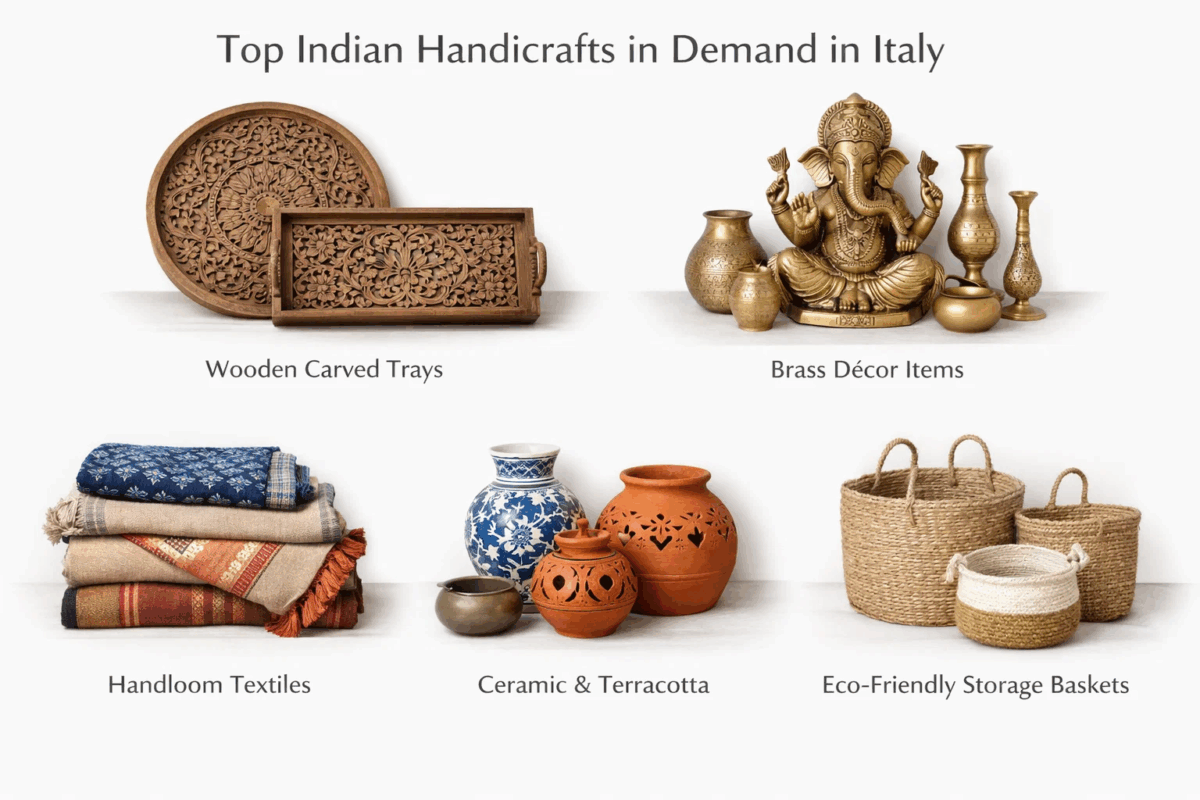
Italy is not just about fashion and pasta. It has a deep appreciation for art, interiors, and detail. Walk into a boutique home décor store in Milan or Florence, and you’ll immediately notice something: they love products with character.
There is consistent demand from Italian buyers show for:
- Handmade wooden décor
- Brass and metal accents
- Handloom textiles
- Ceramic and terracotta pieces
- Sustainable lifestyle products
What makes this even better? The European market is actively shifting toward sustainable and ethical handicrafts. Products made with natural materials, recycled inputs, or traditional techniques have a strong appeal.
So when people talk about opportunity in Indian handicrafts export to Italy, they’re not guessing. The demand is already there. The question is whether you’re prepared for it.
Step 1: Make Sure Your Product Is Actually Export-Ready
This is where many exporters make their first mistake. Just because something sells in your local market does not automatically mean it’s ready for Europe.
When you plan to export handicrafts from India, you must focus on:
- Consistency in finishing
- No sharp edges or loose threads
- Proper polishing and coating
- Strong durability
European buyers pay attention to details. They expect quality standards for export products to be high. Even small imperfections can lead to rejected shipments.
Also, depending on your category, you may need export quality certification especially for wooden items, treated materials, or textiles using dyes.
If you position your products as eco-conscious or handmade, be prepared to explain your sourcing. Buyers who prefer sustainable and ethical handicrafts often ask questions. That’s not a problem that’s an opportunity to stand out.
Export Readiness Checklist for Handicraft Exporters
✅ Makes the blog actionable and increases retention.
Step 2: The Legal Basics (Don’t Worry, It’s Not Complicated)
Before you officially export handicrafts from India, you need to set up your paperwork foundation.
Here’s what you must have:
- IEC (Import Export Code)
- GST (Goods and Services Tax) registration
- EPCH registration
EPCH stands for Export Promotion Council for Handicrafts.
Now here’s something most new exporters don’t realise the EPCH export benefits India handicrafts exporters receive can actually help you grow faster.
Through EPCH, you get:
- Access to trade fairs
- Buyer-seller meets
- International exposure
- Market insights
If you’re serious about exporting Indian handicrafts to Italy, EPCH events can connect you directly with international buyers instead of you chasing them blindly online.
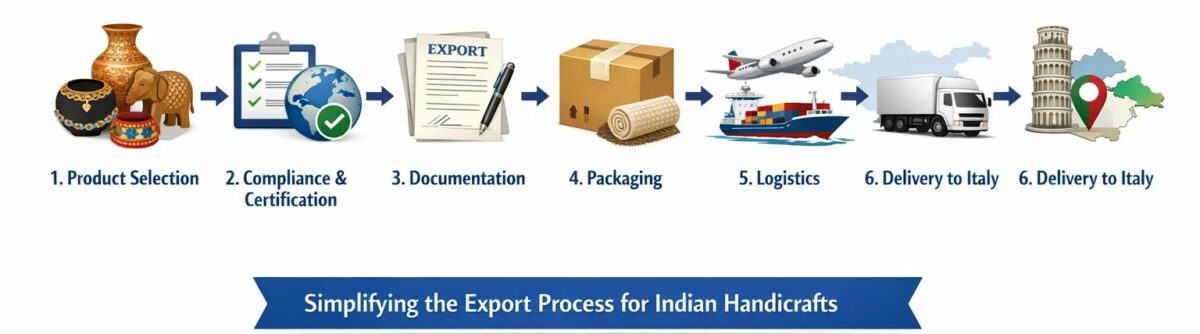
Step 3: Documentation Needed to Ship Handicrafts Internationally
This is the part that scares a lot of Indian exporters. Why, because all of this sounds too heavy: documentation, customs, compliance.
But the documentation needed to ship handicrafts internationally is simple, structured and predictable if you export to other countries. You will typically require:
- Commercial Invoice
- Packing List
- Shipping Bill
- Bill of Lading (B/L – Bill of Lading) or Air Waybill (AWB – Air Waybill)
- Certificate of Origin
- Any required export quality certification
The key is accuracy. Incorrect values, wrong product descriptions, or missing codes create delays.
You must also follow export compliance for handicrafts India regulations, including correct HS (Harmonised System) code classification and proper declaration.
Once you understand the documentation needed to ship handicrafts internationally, it becomes routine rather than stressful.
Documentation Needed to Ship Handicrafts Internationally
📌 Breaks down the documentation needed to ship handicrafts internationally in a clean, structured format.
Step 4: Quality and Compliance – Because Europe Is Strict
When you enter Europe, you’re entering a regulated market.
For successful Indian handicrafts export to Italy, pay attention to:
- Chemical safety in paints and coatings
- Non-toxic dyes
- Wood treatment standards
- Accurate labeling
Wood packaging must comply with ISPM-15 (International Standards for Phytosanitary Measures No. 15). This ensures pest-free treatment.
Following proper quality standards for export products protects you from shipment rejections and builds long-term credibility in front of your buyer.
Strong export compliance for handicrafts from India is not just about rules. It’s about protecting your brand reputation in a market that values reliability. (This should be one of the top priorities for every exporter.)
Step 5: Packaging Standards for Exports (Because Handmade Breaks Easily)
Handicrafts are beautiful. They are also fragile.
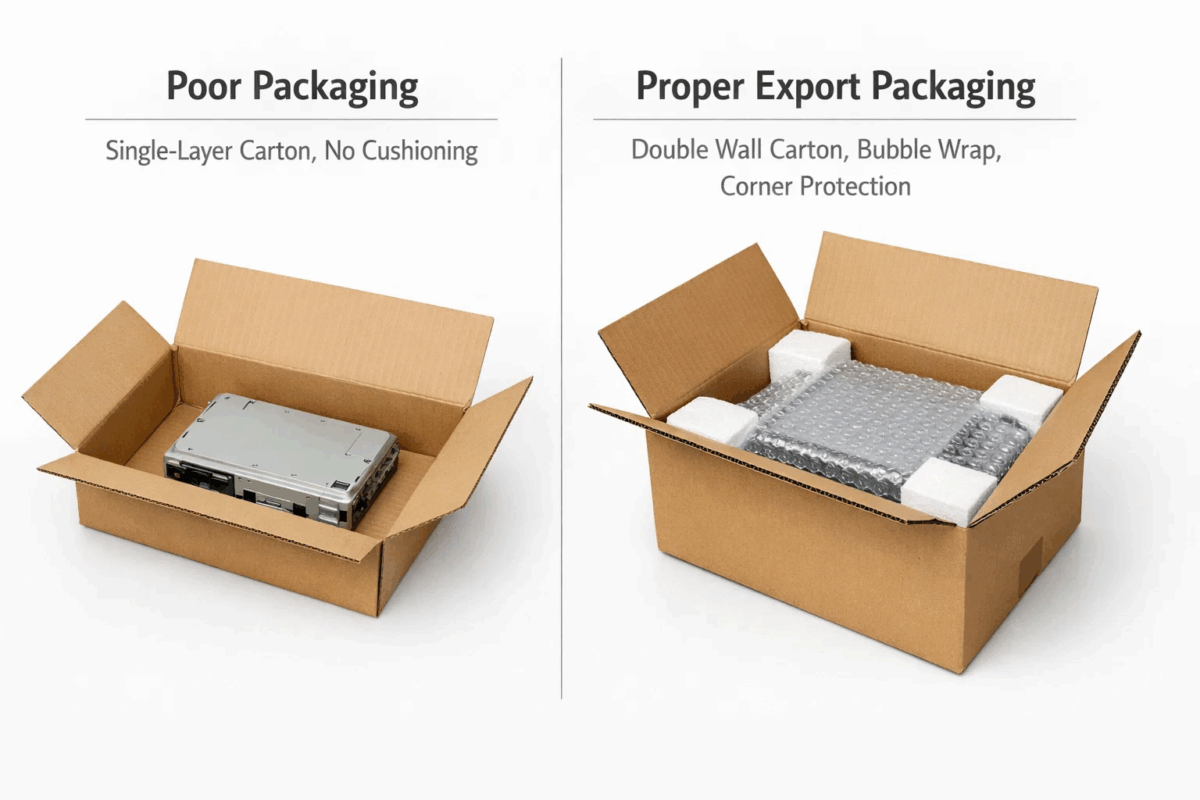
If you ignore packaging standards for exports, you risk damaged goods and unhappy buyers.
Use:
- Double-wall corrugated cartons
- Proper internal cushioning
- Bubble wrap or molded protection
- Moisture barriers for textiles
And here’s something important many European buyers prefer eco-friendly packaging export solutions. If you can reduce plastic and use recyclable materials, mention it clearly. Good packaging is not an expense. It’s insurance.
Step 6: Logistics for Handicraft Exports – Air or Sea?
Choosing the correct shipping method depends on the size of your consignment.
In many cases, exporters choose sea freight, which is slower and requires you to maintain a lot of documents for the same. However, on the other hand, air freight is supposed to be faster, but people do not choose this method because of the higher charges.
But here’s a catch: choosing the right courier partner can change this reality for you. Choosing ShipGlobal will give you the advantage of affordable shipping costs, end-to-end live tracking and 24/7 account manager support.
Air freight is faster but expensive. Sea freight is slower but economical for bulk shipments.
When planning logistics for handicraft exports, calculate:
- Freight cost
- Insurance
- Customs clearance
- Delivery timelines
Professional freight partners simplify logistics for handicraft exports and ensure your documentation matches shipment requirements. Once your system is set, shipping becomes predictable.
Air Freight vs Sea Freight Comparison
📦 Helps readers understand logistics for handicraft exports instantly.
Step 7: How to Actually Find Italian Buyers
You don’t need to fly to Milan tomorrow. Then, where to start and how to get your buyers. Start with:
Trade Fairs
International trade fairs are powerful. Through EPCH connections, you can showcase directly to buyers. In India, these are organised by DGFT, FIEO and other government organisations which are promoting exporting.
B2B Portals
Platforms like Alibaba and Global Sources connect exporters to global buyers searching for Indian products.
eCommerce Marketplaces
This is one of the easiest ways to start shipping from India to the world. Start with Amazon Global Selling, Etsy, eBay, Walmart, etc. These work well for smaller exporters focusing on sustainable and ethical handicrafts.
Understanding the demand of Italian buyers for eco-conscious, well-finished products will help you pitch better and close orders faster.
Step 8: Pricing Without Losing Money
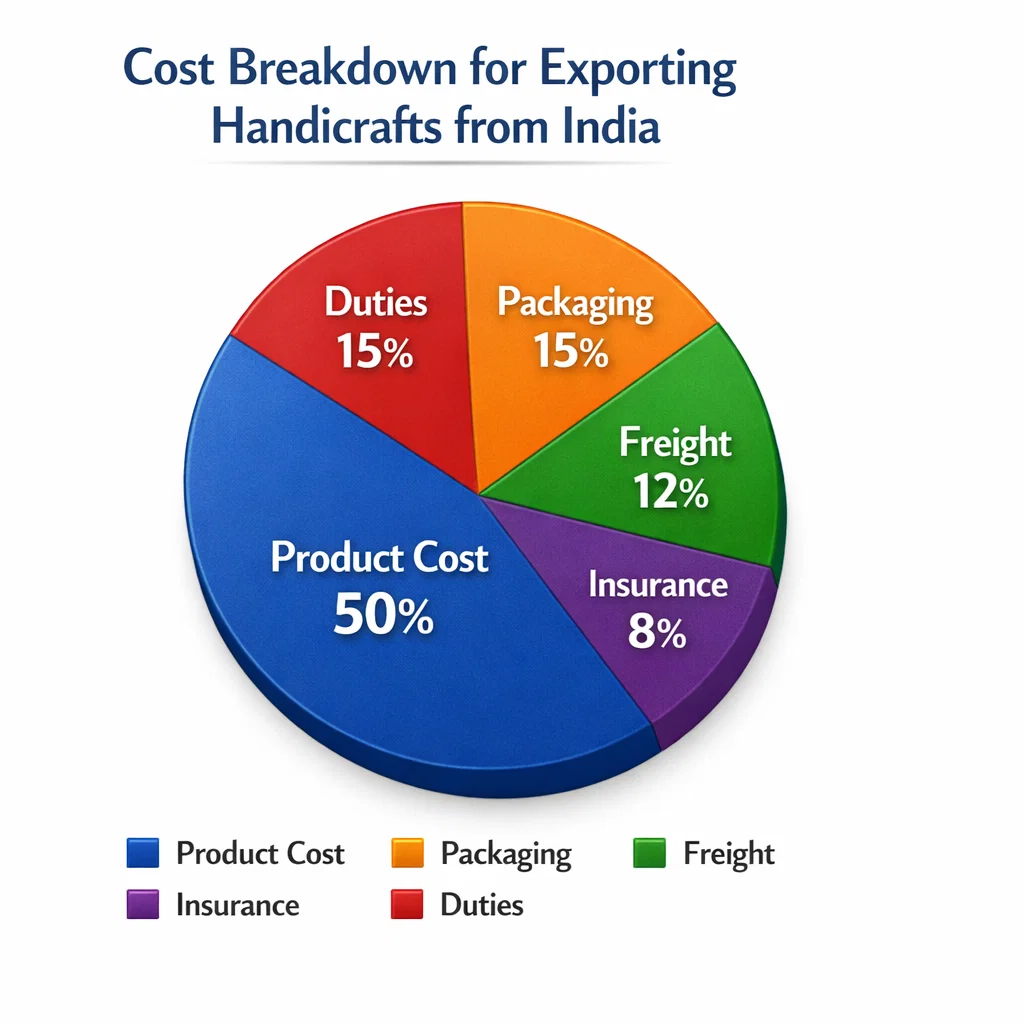
Pricing is one of the key factors to sell your products internationally but also keeping the margin amount good. When you export handicrafts from India, your price must include:
- Product cost
- Packaging
- Freight
- Insurance
- Platform or agent commissions
Many beginners underprice just to secure the first order. That usually leads to cash flow stress. Healthy margins ensure you can continue exporting Indian handicrafts to Italy sustainably.
Restricted Handicrafts You Should NEVER Ignore
Shipping handicrafts to Italy or the EU? Some items can trigger customs rejection, confiscation, or legal penalties. Check these high-risk categories before you ship.
🌳 Wood & Natural Materials
HIGH RISKuntreated wood, ISPM-15 rules, fumigation requirements, EU import restrictions
❗ Untreated wood may be destroyed or rejected
🐘 Animal & Wildlife Products
VERY HIGH RISKivory, bone, shell, leather, wildlife-based handicrafts
❗ Governed by CITES → confiscation + legal penalties
🏺 Antique & Heritage Items
antiques, cultural artifacts, archaeological or heritage products
❗ Items over ~100 years need export license
🧪 Paints & Chemical Coatings
lead paint, dyes, varnish, toxic coatings, chemical-treated items
❗ Must meet EU REACH compliance standards
Always verify compliance if your product includes wood, animal material, coatings, or heritage value — one mistake can lead to shipment loss.
Final Thoughts
Starting to export handicrafts from India to Italy is not about luck. It’s about preparation. When you understand documentation, compliance, packaging standards for exports, and logistics for handicraft exports, the process becomes structured.
Italy values craftsmanship. If your product meets quality standards for export products and follows export compliance for handicrafts India, you are already positioned well.
Start small. Ship carefully. Build relationships. And remember every established exporter once shipped their first small carton.
Frequently Asked Questions (FAQ’s)
It depends on what you’re shipping. If you plan to export handicrafts from India made of treated wood, painted décor, or dyed textiles, you may need export-quality certification to meet European safety rules. Since Indian handicrafts export to Italy falls under EU (European Union) regulations, always check compliance before shipping especially if you market your products as sustainable and ethical handicrafts.
The basic documentation needed to ship handicrafts internationally includes:
1. Commercial Invoice
2. Packing List
3. Shipping Bill
4. Bill of Lading (B/L – Bill of Lading) or Air Waybill (AWB – Air Waybill)
5. Certificate of Origin
Make sure everything follows the export compliance for handicrafts India guidelines to avoid customs delays.
Most exporters start through trade fairs, global B2B portals, or e-commerce marketplaces like Etsy and Amazon Europe. Study the demand Italian buyers have, especially for eco-conscious décor and sustainable and ethical handicrafts, and ensure your products meet quality standards for export products before pitching.
The biggest mistakes are ignoring packaging standards for exports, poor planning of logistics for handicraft exports, and incomplete documentation needed to ship handicrafts internationally. Even small compliance gaps can delay your shipment when you export handicrafts from India.