
Whether you’re an importer, exporter, or simply curious about global trade, HS codes for footwear are crucial to understand. Using the correct HS codes ensures smooth customs clearance, accurate duty payments, and compliance with international trade laws. In this blog, we’ll dive deep into footwear HS codes, break down categories, and show you how to navigate them using interactive tables.
What Are HS Codes
HS codes (Harmonized System codes) are internationally standardized numbers assigned to products for trade purposes. Managed by the World Customs Organization (WCO), these codes help countries:
- Apply the correct tariffs and duties
- Track import/export statistics
- Ensure compliance with trade regulations
For understanding Automotive HS Codes: A Complete Guide for Traders
If you’re involved in importing or exporting motor vehicles or automotive parts, understanding HS codes is crucial. The Harmonized System (HS) codes classify products for customs, tariffs, and trade statistics. In this guide, we’ll cover automotive HS codes (8701–8708), explain how to classify parts correctly, and provide an interactive HTML table to make it easy to reference.
📦 What is Footwear HS Code?
Footwear HS Code is an essential part of global trade documentation, particularly for businesses involved in the import and export of shoes and related products. The Harmonized System (HS) Code is a universally accepted classification developed by the World Customs Organization (WCO) to identify and categorize traded products for customs purposes.
For footwear manufacturers, exporters, and importers, using the correct HS code is critical for determining applicable duties, ensuring compliance, and streamlining customs clearance.
Each HS code for footwear is typically a 6-digit number, with further subdivisions by country for more specific product classifications (usually 8 or 10 digits). The general HS code for footwear falls under Chapter 64 of the harmonized tariff schedule.
Importance Of Accurate Footwear HS Code
Using the correct footwear HS code ensures:
- Proper Customs Valuation: Ensures duties and taxes are calculated accurately.
- Avoidance Of Delays: Reduces chances of shipment holds or reclassification at customs.
- Eligibility For Trade Benefits: Enables usage of Free Trade Agreements (FTAs) and preferential duty rates.
- Legal Compliance: Prevents penalties or legal disputes arising from misclassification.
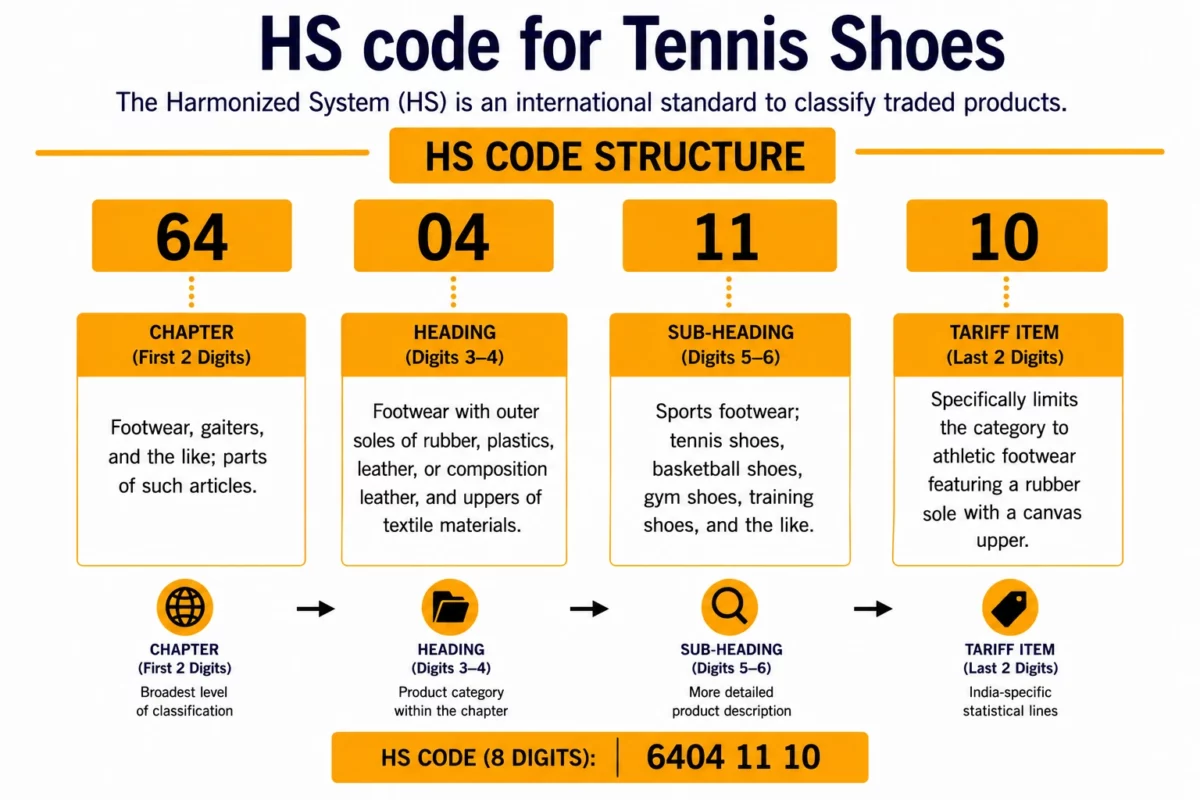
Misclassification of HS codes can result in overpayment or underpayment of customs duties, delayed shipments, and compliance issues.
👟 Footwear Classification by HS Code
6401
Footwear Type: Waterproof Footwear
Description: Footwear with outer soles and uppers of rubber or plastic, often waterproof
Example Products: Rain boots, rubber boots, waterproof work shoes
6402
Footwear Type: Sports Footwear
Description: Footwear with rubber or plastic outer soles and textile uppers
Example Products: Running shoes, basketball shoes, athletic trainers
6403
Footwear Type: Leather Footwear
Description: Footwear with outer soles of rubber or leather and leather uppers
Example Products: Formal leather shoes, dress shoes, office shoes
6404
Footwear Type: Textile Uppers With Rubber/Plastic Soles
Description: Footwear with textile uppers and rubber or plastic outer soles
Example Products: Canvas shoes, espadrilles, slip-ons
6405
Footwear Type: Other Footwear
Description: Footwear not covered elsewhere (miscellaneous types)
Example Products: Slippers, sandals, house shoes, jute footwear
6406
Footwear Type: Parts Of Footwear
Description: Parts like uppers, soles, heels, insoles, and accessories
Example Products: Shoe soles, leather uppers, buckles, insoles
👟 Browse this guide on mobile or desktop — always fully readable.